Hanoi Street Food Culture: Eating Like a Local
Eat Hanoi with local timing and judgement — stall heuristics, meal windows, hygiene sense and funnels into pho, bun cha, banh mi and guided food walks.
By Shaw18 min readHanoi, Vietnam

Introduction — answer first
Travellers search "How do I eat street food in Hanoi like a local?" wanting reassurance, practical rules, and a map of what to try when. Yes — street food belongs at the centre of your trip, not as a dare or a single evening novelty. No — you do not need to fear every plastic stool if you apply normal travel hygiene and respect meal timing. Yes — read this page before booking a food tour, so you pay a guide for alley navigation and portion pacing, not for paragraphs you could absorb free. See also our complete guide to visiting Hanoi.
Shaw, our food editor, tells every first-time guest the same sequence: culture read → spontaneous day-one pho near your hotel → optional guided food walk on day two or three → independent returns to favourite stalls for the rest of the stay. Hanoi rewards eaters who sync with the city's clock — dawn soup, midday charcoal, evening beer corners — and who understand that one dish per shop is a feature, not a limitation.
This is the food pillar for Hanoi Travel Mate. Dish-specific depth lives in linked guides below; here you learn how locals eat, not just what Instagram lists repeat.
A city built around sidewalk dining
Unlike cities where dining migrated indoors decades ago, Hanoi still cooks and sells on the pavement. Shop-house ground floors open to the street; aluminium tables spill across lanes; motorbikes squeeze past elbows without ceremony. Families run stalls for generations — grandmother ladles broth, daughter grills pork, grandson handles cash — and regulars return on a weekly rhythm that creates social glue stronger than any restaurant reservation system.
Street food here is not poverty tourism. Office workers in pressed shirts eat bun cha at noon; lawyers drink egg coffee on tiny stools; students share one bowl and two sets of chopsticks when budgets tighten. The plastic furniture is uniform; the quality is not. Your job as a visitor is to read signals — queue composition, pot activity, cooked-to-order cues — not to chase the most decorated storefront.
Geography concentrates in the Old Quarter and Hoan Kiem margins, but excellent stalls exist in Ba Dinh residential strips, French Quarter side streets, and West Lake morning clusters. Central hotels put you inside walking distance of the densest food map; see where to stay in Hanoi if you are still choosing a base.
The meal clock — when locals eat what
Hanoi organises appetite by time of day and dish identity. Fighting the clock means empty shops, stale pots, or tourist menus that stay open all day without turnover. Working with the clock means shoulder-to-shoulder breakfast energy and charcoal smoke that actually smells like dinner.
Breakfast — 05:30 to 10:00
The city wakes in broth steam. Pho dominates — beef or chicken, clear northern bowls, quay on the side if you want crunch. Banh mi suits walkers who need a handheld exit toward Dong Xuan Market. Banh cuon, xoi (sticky rice), and bun thang appear at specialists who often sell out by mid-morning.
Visitor move: Schedule your first or second morning for pho before hotel buffet temptation. Jet lag often wakes you at 06:00 — use biology, not willpower. Full pho ordering: Hanoi pho guide.
Lunch — 11:00 to 14:00
Midday belongs to grills and composed plates. Bun cha — charcoal pork, herb plate, dipping broth — is the Hanoi lunch identity Obama made famous but locals never forgot. Bun dau mam tom (tofu, noodles, shrimp paste) divides foreigners on smell but wins on authenticity. Com rang, pho cuon, and nem ran fill office-worker speed lanes.
Visitor move: Walk from Hoan Kiem Lake toward bun cha alleys before 13:00 — popular pots thin after. Full bun cha framework: Hanoi bun cha guide.
Afternoon — 15:00 to 17:00
The dead zone for many specialists — broth shops closed, grills idle. Use this window for coffee, not heroic street feasting. Egg coffee, ca phe sua da, and sidewalk watching are the correct afternoon sport. Deep read: Hanoi coffee culture.
Evening — 18:00 to 22:00
Sunset reopens the street kitchen. Grilled meats, shellfish, snail dishes, nem chua, and night-market snacks spread onto sidewalks. Bia hoi corners fill — social drinking with food, not bar snacks alone. Ta Hien Beer Street is the loudest concentration; Shaw recommends one block off for better food-to-noise ratio on nights you want flavour over festival.
Visitor move: Save ambitious evening grazing for day two or three after you have breakfast pho confidence — or book Hanoi Street Food Tour for structured intro.
Comparison table — Hanoi meal clock
| Time window | Signature dishes | Local crowd | Visitor fit | Skip if |
|---|---|---|---|---|
| 05:30–08:30 | Pho, banh mi, banh cuon, xoi | Office workers, students, market porters | Best first bowl | You ate hotel buffet |
| 09:30–11:00 | Late pho, banh mi | Stragglers, weekend families | Good after slow wake | Shop already closed |
| 11:00–14:00 | Bun cha, bun dau, com | Lunch rush | Best for grills | After 13:30 at famous pots |
| 15:00–17:00 | Coffee, che, light snacks | Café pause | Coffee yes; big meal no | Expecting pho service |
| 18:00–21:00 | Grills, seafood, beer food | Social evening | Best for variety | Already stuffed from tour |
| After 22:00 | Night pho, late snacks | Post-beer comfort | Fun, not essential day one | Early flight next morning |
Season shifts the clock — summer pushes evening later; winter makes hot pho at dawn even more attractive. See best time to visit Hanoi.
How to eat like a local — hygiene heuristics
Street food safety anxiety is the number-one reason visitors overpay for bland hotel food and miss the city. Shaw does not promise sterile kitchens — he promises better heuristics than appearance alone.
Signals that favour "yes"
- Queue of locals with helmets stacked — turnover implies fresh ingredients
- Cooked to order — meat hitting hot grill or broth ladled from active pot
- Single-dish specialist — shop does one thing thousands of times
- Visible prep cycle — vendor buying produce at dawn market, not mystery thaw
- Hot food served hot — boiling soup, sizzling plate, not lukewarm buffet tray
- High chopstick churn — disposable chopsticks in volume, bowls washed in rotation
Signals that suggest caution
- Empty at peak meal time when neighbours are packed — ask why
- Pre-cooked protein sitting uncovered through a slow afternoon
- All-day tourist menu in five languages with photos and no local customers
- Raw herbs or salad on day one if your stomach is historically sensitive — not forbidden, just staged
- Ice from unknown source — less issue at busy cafés with constant ice delivery; more caution at isolated stalls
- Shellfish in hot weather without clear turnover — save for busy evening grill
First 24 hours — stomach diplomacy
Day one: hot, cooked, busy. Day two: expand to herbs and raw vegetable garnishes. Day three: try shrimp paste (mam tom) if curious. This is not medical advice — it is experience management that reduces preventable misery without avoiding the whole cuisine.
What "safe" does not mean
Safe does not mean air-conditioned. Safe does not mean English menu. Safe does not mean TripAdvisor rank. Safe means you applied the same judgement you would at a busy taco stand in Mexico City or a night market in Bangkok — with extra attention to fish sauce ubiquity if you have allergies.
Guided first evening: Hanoi Street Food Walk pre-vets stalls and explains which smells are normal versus warning flags.
Condiments — taste first, adjust second
Northern Vietnamese cooking assumes balanced broth before guest customisation. Flooding pho with chilli before the first sip is the tourist tell Shaw corrects daily.
Standard table set
| Condiment | Typical use | Shaw's rule |
|---|---|---|
| Lime | Pho, bun cha broth, some grills | Half wedge first; acid brightens without masking |
| Fresh chilli | Slice into broth or dip | Add after first taste |
| Chilli sauce / tuong ot | Banh mi, fried items | Vendor often applies; say it if you want less |
| Vinegar garlic (toi dam) | Pho, bun thang | Sharp; start with a spoon, not a pour |
| Fish sauce (nuoc mam) | Table adjustment rare at good shops | Trust kitchen balance first |
| Herbs — basil, perilla, mint | Bun cha, some soups | Tear into broth; do not eat whole stem |
| Shrimp paste (mam tom) | Bun dau | Separate dip; smell is stronger than taste for many |
Dish-specific condiment culture
Pho: Broth is the argument — read Hanoi pho guide for cut choices and quay etiquette.
Bun cha: Dipping bowl is personal chemistry — herbs in, chilli sparingly, lime last.
Banh mi: Vendor assembles balance — ask for it (less chilli) or khong pate if avoiding liver pate. Guide: Vietnamese banh mi.
Coffee: Condensed milk sweetness is default in ca phe sua da; egg coffee is its own dessert logic — coffee culture guide.
Allergies and dietary limits — honest expectations
Hanoi is pork-forward, fish-sauce pervasive, peanut-present. Vegetarian survival is possible; silent vegan assumption is not. Communicate before cooking starts — written Vietnamese beats improvised charades.
Common hidden ingredients
| Allergen | Where it hides | Communication |
|---|---|---|
| Fish sauce | Broths, marinades, dipping sauces, stir-fry | Khong nuoc mam — verify broth base |
| Shrimp paste | Bun dau, some dipping sauces, fermented accents | Khong mam tom |
| Peanuts | Sauces, garnishes, che desserts | Khong dau phong — high cross-contact risk |
| Shellfish | Evening grills, noodle toppings | Khong hai san |
| Gluten | Banh mi bread, some soy sauce, fried coatings | Rice noodles safer; not celiac-certified street |
| Dairy | Minimal except coffee | Easier than Western Europe |
| Eggs | Egg coffee, banh mi, noodles | Specify khong trung |
Vegetarian and vegan
Buddhist vegetarian restaurants near temples offer structured meat-free meals — different product from street stalls. Street pho chay and tofu plates exist but require routing; fish sauce in "vegetable" broth is common unless confirmed. Private food tours handle this better than default group walks — see food tours guide.
Message template for vendors or guides
Copy into phone notes:
"Toi bi di ung: [peanut / shellfish / gluten]. Khong [nuoc mam / mam tom / dau phong]. Mon nay co duoc khong?"
Send to tour operator 48 hours ahead for Hanoi Street Food Tour or street food walk bookings.
Core dishes — funnel to deep guides
Street food culture is the framework; dish guides are the chapters. Do not try to master everything from one page — sequence by meal clock and read depth when hungry.
| Dish | Meal slot | One-line identity | Deep guide |
|---|---|---|---|
| Pho bo / pho ga | Breakfast | Clear northern broth, minimal bowl | Hanoi pho guide |
| Bun cha | Lunch | Charcoal pork, herbs, dipping broth | Hanoi bun cha guide |
| Banh mi | Breakfast / snack | Short crisp baguette, local fillings | Banh mi guide |
| Egg coffee | Afternoon | Whipped yolk on strong Robusta | Coffee culture |
| Bun thang | Breakfast | Delicate chicken noodle soup | This culture guide + Old Quarter lanes |
| Banh cuon | Breakfast | Steamed rice rolls, herb plate | Morning specialists near Dong Xuan |
| Bun dau mam tom | Lunch | Tofu, noodles, shrimp paste dip | Lunch only; smell is normal |
| Nem ran / cha gio | Any | Fried spring rolls | Often side; quality varies |
| Che | Afternoon dessert | Sweet soup / pudding cups | Lower allergy communication difficulty |
First 48 hours Shaw sequence:
- Morning: Pho near hotel — pho guide
- Lunch day two: Bun cha test — bun cha guide
- Afternoon: Egg coffee — coffee guide
- Evening day two or three: Street food tour or self-guided alley loop using this page
- Handheld anytime: Banh mi — banh mi guide
When to pay for guidance versus read: Hanoi food tours guide.
Comparison table — street food vs restaurant vs hotel
| Factor | Street stall | Sit-down restaurant | Hotel dining |
|---|---|---|---|
| Price | Lowest | Mid to high | Highest |
| Authenticity signal | High if busy | Variable | Often low for Hanoi identity |
| Menu breadth | Usually one dish | Wide | International buffer |
| Hygiene visibility | Full open kitchen | Partial | Hidden |
| Social texture | Maximum | Moderate | Minimal |
| Allergy control | Harder | Easier | Easiest |
| Best for | Daily eating | Special meals, AC break | Jet-lagged day zero only |
| Shaw's default | Yes | Sometimes | Rarely |
Hotels excel at sleep and luggage, not at teaching you how Hanoi eats. One air-con lunch mid-trip is fine; making it your food strategy wastes the city.
Old Quarter food geography — cluster map
Most visitors eat inside the Hoan Kiem / Old Quarter food universe without naming it. Shaw maps by function, not by unhelpful "top ten addresses" that rot every season.
Hoan Kiem Lake ring — orientation anchor
Circumambulate the lake between meals — geographic reset and appetite walk. Morning exercise groups and photographers share the path; evening couples and weekend pedestrian closures change mood. Lake detail: Hoan Kiem Lake Hanoi. Coffee stops on the north and east edges bridge breakfast pho toward midday bun cha.
Dong Xuan and north Old Quarter — dawn supply chain
Dong Xuan Market wholesale peaks 06:00–09:00 — periphery pho and bun thang where porters eat beat sanitised tourist food courts. Pair with Long Bien Bridge same morning for coherent north-side story. O Quan Chuong Gate marks the old city edge on return loops.
Guild streets and hem — lane depth
Hang Bac, Hang Be, Hang Ma, and parallel hem (alleys) hide single-dish shops behind motorbike parking. Old Quarter guide prioritises walking sequence; food logic says one lane off loudest backpacker strip improves noise-to-quality ratio.
Ta Hien and beer corners — evening social layer
Ta Hien Beer Street is social theatre — excellent for atmosphere after you understand ordering; overwhelming as first-night food school. Eat dinner on parallel lane; drink on Ta Hien if you want noise.
Train Street and regulated zones
Hanoi Train Street coffee culture changed with safety enforcement — verify access locally; do not treat outdated blog posts as law. Coffee culture guide covers legal café alternatives.
French Quarter and West Lake — contrast days
French Quarter guide offers boulevard cafés and sit-down restaurants when heat or feet demand chairs with backs. West Lake hosts morning pho clusters and expat brunch — different rhythm, not day-one essential if you stay central.
Markets and where ingredients come from
Street food quality upstream is market quality. Vendors who buy at dawn from wet markets — Dong Xuan, Hang Da, neighbourhood corners — cook what they carried on motorbike baskets hours later. Watching that chain explains why sold-out by 10:00 beats open all day.
Weekend fairs and seasonal spikes before Tet change supply — prices jump, crowds swell. Tet week closes many stalls; read Tet in Hanoi if your dates overlap lunar new year.
History on the plate — why Hanoi tastes this way
Chinese technique, French bread and coffee, Vietnamese herb discipline, and northern climate restraint stack in the same bowl. Pho evolves from noodle soup traditions; banh mi from colonial baguette; egg coffee from wartime milk scarcity ingenuity. Street food is living history, not museum diorama — the French Quarter balcony above your pho shop is part of the meal.
Colonial cafés and sidewalk stalls coexist — neither cancels the other. Shaw sends architecture lovers to French Quarter guide afternoon, then returns them to a plastic stool at 18:00 because that is where Hanoi declares contemporary identity loudest.
Street food vs food tour — when to book
| Situation | Self-guided | Guided walk/tour |
|---|---|---|
| Day 1 jet lag | One pho near hotel | Skip tour |
| Day 2–3 evening | Possible if confident | Recommended for menu decode |
| Severe allergies | Risky alone | Private tour with notice |
| Teens first Asia trip | Overwhelming | Group tour normalises stools |
| Week two repeat visitor | Explore west lanes | Optional deep private |
| Rainy season | Slippery alleys | Guide routes covered stops |
Products: Hanoi Street Food Walk for first evening decode; Hanoi Street Food Tour for full tasting arc. Buying guide comparison: food tours guide.
Do not book two food tours on one trip unless the second is private deep dive — diminishing returns after one structured evening.
Seasonal eating — heat, rain, and winter broth
| Season | Street food adjustment |
|---|---|
| Oct–Apr (cool dry) | Full clock; evening tours ideal; bun cha lunch perfect |
| May–Sep (hot wet) | Shift breakfast earlier; evening after 18:30; hydrate between stops |
| Rain | Stalls under awnings still operate; shoes that wash; tour still runs |
| Tet | Many closures — plan hotel backup; verify locally |
Timing hub: Best time to visit Hanoi. Summer visitors: coffee and che beat heavy bun dau at midday.
Sample food days — Old Quarter anchored
Day one — arrival lite
```
07:00 Pho within 5–10 min walk of hotel — no tour yet
10:00 Lake loop — Hoan Kiem
12:00 Banh mi or light bun if hungry — not feast
15:00 Egg coffee — coffee culture
19:00 Simple grill alley OR early night — skip Ta Hien frenzy
```
Day two — confidence build
```
06:30 Optional Dong Xuan periphery — market guide
11:30 Bun cha — bun cha guide
17:30 Hanoi Street Food Tour or street food walk
```
Day three — independent repeat
```
07:00 Return to favourite pho from day one or tour list
12:00 Try bun dau or pho cuon — new dish
15:00 Café work break
18:00 Self-guided Ta Hien parallel lane dinner — Ta Hien guide
```
Wider trip integration: Planning your trip to Hanoi · Complete guide.
Payment, price, and tipping
- Cash dominant — carry 50,000 and 100,000 VND notes; change scarce at dawn
- Price posted on many stalls; if not, ask "Bao nhieu?" before sit
- No tip expected at street stalls — round up 5,000–10,000 VND for exceptional service if you wish
- Tour tips — separate economy; see food tours guide
- Cards — rare at stools; cafés near lake sometimes accept QR apps locals use
Typical 2026 ranges (confirm at stall): pho 40,000–70,000 VND; bun cha 50,000–80,000 VND; banh mi 25,000–45,000 VND; egg coffee 25,000–45,000 VND; beer glass 10,000–15,000 VND.
Common mistakes — avoid these
- Chilli before first sip — Broth insult; adjust after taste.
- Hotel buffet before dawn pho — Wasted capacity and cultural timing.
- Landing night food tour — Jet lag kills appetite and retention.
- Fear-based hotel-only eating — Misses the city's primary social interface.
- All-day shop at 07:00 empty — Locals know; you should too.
- Ta Hien first night — Noise before literacy.
- Two food tours, zero solo repeats — Tour entertainment without learning.
- Ignoring allergy communication — Assumption is not strategy.
- Photographing cooks without nod — Respect beats content.
- Same day as 15 km heritage walk + evening food tour — Feet and stomach revolt — split days per walking tours guide.
Local expert insights — Shaw's field notes
The meal clock is the real map. Lists of addresses rot; timing persists. Empty pho shop at 14:00 is not closed "because bad" — it sold out because good.
Fish sauce smell at a busy stall is not failure. It is inventory honesty. Worry more about silence and empty seats at peak.
One dish shops win. A stall serving fourteen things and pho and banh mi and com usually serves none excellently.
Portion discipline beats bucket list. Three perfect bites across a day beat seven mediocre checkboxes.
Guides sell pacing, not magic safety — you still apply heuristics day four alone.
Coffee is afternoon infrastructure, not dessert trivia — egg coffee is Hanoi invention worth scheduling, not accident.
North is not south. Saigon-trained pho expectations disappoint northern bowls — reset in pho guide.
Second visit to same stall signals respect — vendors remember repeat foreigners who ordered confidently without fuss.
Closing — what to read next
You understand Hanoi street food when you can order one bowl confidently, name the meal clock slot, and walk one alley off Ta Hien without panic — not when you photographed twelve dishes in one evening.
Dish depth:
Booking and tours:
Old Quarter cluster:
- Hanoi Old Quarter guide
- Dong Xuan Market
- Hoan Kiem Lake
- Ta Hien Beer Street
- Long Bien Bridge
- O Quan Chuong Gate
Trip hub:
- Complete guide to visiting Hanoi
- Planning your trip to Hanoi
- Where to stay in Hanoi
- Things to see in Hanoi
You ate like a local when you tasted before chilli, returned to the same stall twice, and knew why bun cha belongs at noon.
FAQ — quick answers
Is Hanoi street food safe? Busy stalls serving hot cooked food are generally fine for healthy travellers applying normal precautions — high turnover, cooked-to-order, staged first-day caution. This is not medical advice.
What should I eat first in Hanoi? Pho at breakfast on day one or two — then bun cha lunch, then coffee afternoon. Sequencing beats random grazing.
What is the best area for street food? Old Quarter and Hoan Kiem margins — highest density; excellent food exists citywide. Stay central for walking access: where to stay.
Should I join a food tour? Optional but valuable day two or three evening if menus feel opaque — read this culture page first so you do not pay to hear basics. Compare food tours guide.
How much does street food cost? Roughly 30,000–80,000 VND per dish at local stalls in 2026 — confirm posted prices; cash small notes.
Can vegetarians eat Hanoi street food? Possible with effort — fish sauce hides in many broths; temple vegetarian restaurants safer; private tours route better than default group walks.
What about peanut allergies? High risk cuisine — communicate in writing; consider private tour with explicit stall approval; carry usual medication.
When is bun cha eaten? Lunch 11:00–14:00 primarily — charcoal shops thin after. Bun cha guide.
Is Ta Hien Beer Street good for food? Atmosphere yes; first-night school no — eat on parallel lanes, drink on Ta Hien if you want noise. Ta Hien guide.
Street food walk vs street food tour? Both decode menus — compare inclusions and start times on product pages: walk · tour · buying guide.
Local tips
- →Eat the signature dish for Hanoi Street Food Culture when the stall is busy with locals — turnover beats décor.
- →Hanoi Street Food Culture: For Hanoi food crawls, start hungry but not starving; pace stops 20–30 minutes apart.
- →Group Hanoi Street Food Culture with nearby sights in the same Hanoi district to cut cross-town Grab time.
- →Walk to Hanoi Street Food Culture early; Hanoi heat and scooter density rise after 09:30.
Good to know
- Hanoi Street Food Culture prices move; confirm at the counter before you sit if the board is unclear.
- Hanoi Street Food Culture: Morning pho and lunch bun cha windows differ — Hanoi specialists often sell out.
- Near Hanoi Street Food Culture, Hanoi street vendors often need small cash even when hotels take cards.
- Tet and festival weeks change opening patterns for Hanoi Street Food Culture — verify that week’s hours.
Before you go
- Carry small VND notes for Hanoi Street Food Culture; many excellent stalls remain cash-first.
- Hanoi Street Food Culture: If travelling with allergies, learn key ingredient words before you order around Hanoi.
- Screenshot offline maps for the blocks around Hanoi Street Food Culture before you enter dense Hanoi lanes.
Common mistakes
- ✕Chasing only Instagram façades for Hanoi Street Food Culture and skipping working neighbourhood stalls.
- ✕Hanoi Street Food Culture: Drinking strong egg coffee late when you still need sleep before a Hanoi dawn start.
- ✕Cramming Hanoi Street Food Culture into a multi-district sprint that ignores Hanoi traffic reality.
- ✕Relying only on hotel concierge timing for Hanoi Street Food Culture without a backup route.
Practical information
- How to get there
- Street food clusters across the Old Quarter and beyond — start near Hoan Kiem and walk with purpose.
- Best time to visit
- Breakfast pho; lunch bun cha; evening snacks and food tours after 17:00.
- Suggested itinerary
- Pho breakfast → Old Quarter walk → bun cha lunch → coffee → evening street food walk.
- Nearby attractions
- Old Quarter
- Dong Xuan Market
- Hoan Kiem Lake
- Ta Hien
Frequently asked questions
- Why is Hanoi famous for street food?
- Hanoi has a long culinary history, strong local traditions, and thousands of small family-run food businesses that continue serving traditional recipes.
- Is street food safe to eat?
- Reputable vendors with high customer turnover generally maintain fresh ingredients and preparation routines. Visitors should use normal travel precautions.
- What food should I try first in Hanoi?
- Pho, Bun Cha, Banh Mi, Egg Coffee, and Banh Cuon are among the most popular introductions to Hanoi cuisine.
- What is the best area for street food?
- The Old Quarter remains one of the city’s most popular food districts, although excellent food can be found throughout Hanoi.
- Should I join a food tour?
- Food tours are an excellent way to discover hidden local eateries and learn the stories behind Hanoi’s culinary traditions.
From the road
Related real moment
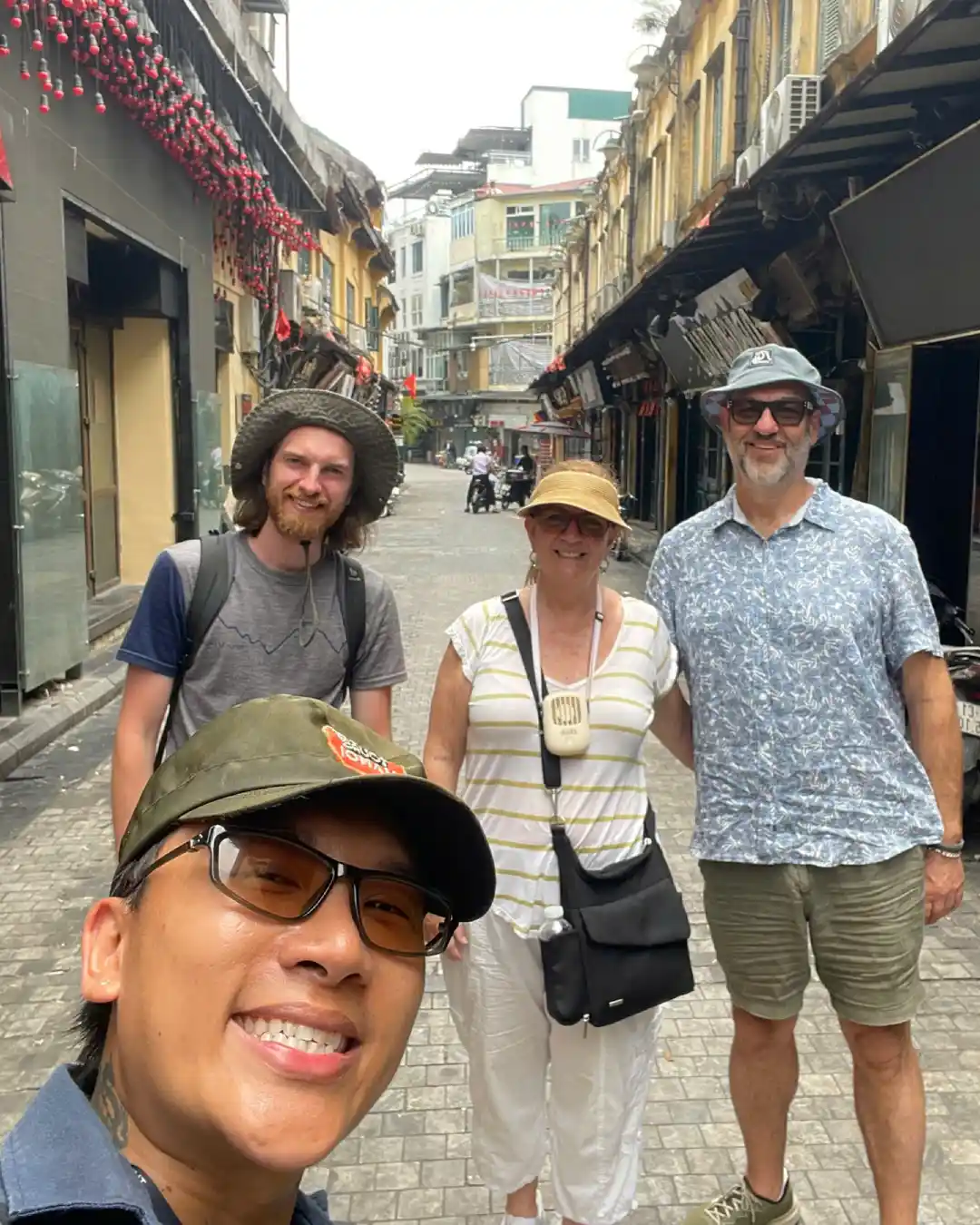
A photo journal from Hanoi — not a traveller review, and not proof that every detail in this guide happened on that walk.
Related content
Destination hub
Hanoi →Related stories
- Hanoi Pho GuideMaster Hanoi pho — broth style vs Saigon, when locals eat, how to order, condiment etiquette and how to fold a bowl into a wider street-food day.
- Hanoi Bun Cha GuideEat bun cha like a Hanoian — grilled pork, dipping broth, herbs, lunch timing, shop heuristics and how it fits a street-food day without tourist-trap noise.
- Vietnamese Banh Mi: From French Baguette to National IconUnderstand banh mi as living food history — French baguette roots, Vietnamese reinvention, Hanoi fillings and where a sandwich fits between pho, coffee and Old Quarter walks.
- Hanoi Food Tours GuideCompare Hanoi food tour formats — evening street food walks, morning market routes and private tastings — with booking timing, allergies and funnel advice from street food culture.
- Hanoi Egg Coffee Guide: From Sidewalk Cafés to Egg CoffeeUnderstand Hanoi coffee culture — sidewalk stools, robusta drip, egg coffee history, and how to taste like a local without treating every café as a tourist stop.
- Cha Ca La Vong Hanoi Guide: Turmeric Fish RitualUnderstand Hanoi’s cha ca turmeric fish specialty — how to eat it, Cha Ca Street tradition, quality signals and how it fits a food-tour night.