Hanoi Bun Cha Guide
Eat bun cha like a Hanoian — grilled pork, dipping broth, herbs, lunch timing, shop heuristics and how it fits a street-food day without tourist-trap noise.
By Shaw15 min readHanoi, Vietnam

Introduction — answer first
Travellers search "bun cha Hanoi — what is it and where to eat" wanting a dish definition, lunch timing honesty, and whether the Obama restaurant is mandatory. Bun cha is Hanoi's lunch anchor — grilled pork, noodles, herbs, dipping broth eaten in small composed bites. Go for lunch, not dinner at family specialists that close when the day's pork sells out. See also our complete guide to visiting Hanoi.
Shaw, our food editor, places bun cha after dawn pho culture in every trip briefing: pho teaches broth patience; bun cha teaches assembly and grill smoke. The 2016 visit by President Barack Obama and Anthony Bourdain to Bun Cha Huong Lien on Le Van Huu Street is useful local colour — it proved a sitting president would eat on plastic stools — but it did not invent bun cha or exhaust Hanoi's excellent alternatives.
This guide explains the dish architecture, how to eat without spilling broth down your shirt, when and where patterns cluster, how to choose stalls, pairing with street food culture, tourist-list honesty, and where a food tour helps versus independent lunch.
What bun cha is — components on the table
The grill side
A bun cha plate typically delivers two pork forms:
- Cha vien — small seasoned patties, charcoal-grilled, edges crisp
- Cha mieng — thin marinated belly or shoulder slices, same grill
Smoke is part of the flavour — alley shops vent grills to the street; you smell lunch before you see stools.
The noodle and herb side
Bun — white round rice noodles, room temperature, often in a separate bowl or plate. Herbs — perilla (tia to), mint, lettuce, sometimes coriander and bean sprouts depending on shop. Herbs cool the bite against hot meat and sharp broth.
The dipping broth (nuoc cham)
Not soup to drink like pho — a seasoned dipping medium: fish sauce, vinegar, sugar, lime, garlic, chilli, sometimes pickled green papaya or carrot shreds floating. You dip small noodle bundles with meat and herbs, then eat from chopsticks or spoon.
Nem cung — optional add-on
Nem ran (fried spring rolls) often arrive as side order — break rolls, dip in same broth. Common combo; not mandatory. Adds crunch and sharing volume for pairs.
How to eat bun cha — step by step
- Separate bowls stay separate — Do not pour noodles into broth pot
- Pinch noodle portion — Small bundle, not half the bowl at once
- Add herb leaf — One or two leaves, not salad volume first bite
- Pick meat — Patty or slice onto noodle bundle
- Dip into broth — Submerge briefly; lift to mouth
- Repeat — Compose bite by bite
- Sip broth sparingly — Some locals finish broth after solids; tourists need not drink all
Chopstick vs spoon
Chopsticks handle noodles and meat; spoon catches drips and lifts broth-dipped bundles. Both hands active is normal — napkin on lap advised.
Portion pacing
Bun cha is lunch-sized, not snack — but faster than Western lunch service. Expect 20–35 minutes seated unless you linger over beer (some shops serve bia hoi adjacent; not universal).
When locals eat bun cha — timing table
| Window | Reality | Visitor action |
|---|---|---|
| 11:00–12:30 | Peak local lunch | Target arrival |
| 12:30–13:30 | Still service at busy shops | Acceptable |
| After 14:00 | Many specialists closing | Risk sold-out |
| After 16:00 | Often no bun cha | Switch to banh mi or coffee |
| Evening | Wrong meal clock | Choose grills or Ta Hien instead |
Breakfast bun cha exists near markets for early workers — not the visitor default. Dinner bun cha is a category error unless you find rare all-day shops — assume lunch.
Where bun cha concentrates — geography
Old Quarter specialists
Densest cluster within walking distance of Hoan Kiem Lake — alley entrances, low signage, grill smoke cue. Use Old Quarter guide for orientation; use smoke and local helmets for shop choice.
Ba Dinh and west lake edges
Residential lunch shops serve office workers — less English, strong turnover 11:30–12:30. Pair with Ba Dinh district day if mausoleum morning precedes lunch — schedule mausoleum early, bun cha after.
The Obama restaurant — honest framing
Bun Cha Huong Lien (Le Van Huu area) gained global name recognition after the 2016 meal filmed for television. Facts worth knowing:
- Shop existed decades before cameras
- Quality is solid neighbourhood standard, not mystical
- Queues and tour buses increased after fame
- English menu and consistent hours help uncertain visitors
- Equivalent or superior bowls exist without queue in adjacent wards
Shaw's advice: Go if curious about media history; do not skip other specialists because only one address feels "authorised." Compare turnover at 11:45 — locals eating beats wall portraits.
Choosing a stall — signals vs listicles
Green flags
- Grill active before you sit
- Pork batch turning on charcoal, not reheated grey
- Local office crowd 11:30–12:30
- Broth pot refreshed, not scummed overnight look
- Nem fried to order if ordered
Yellow flags
- Empty at noon with aggressive sidewalk pullers
- Photos only foreign faces
- All-day bun cha with idle grill
Red flags
- Pre-dipped noodle bowls served like pho — wrong format
- Raw pork smell without grill heat
- Broth sweetness like dessert — imbalance
Same framework as street food culture — busy, focused, cooked-to-order.
Bun cha vs other Hanoi lunch options
| Dish | Format | Best time | Contrast with bun cha |
|---|---|---|---|
| Bun cha | Dip-assemble | Lunch | — |
| Pho | Broth soup | Breakfast | Broth drinking vs dipping |
| Bun thang | Layered noodle soup | Lunch | Spoon soup, not grill |
| Com tam | Rice plate | Lunch | Southern influence; less Hanoi core |
| Banh mi | Handheld | Breakfast/snack | Portable, no grill wait |
First-time visitors with three lunches might schedule bun cha day two, pho mornings, and one exploratory Dong Xuan periphery bowl day three.
Ordering language — practical phrases
- "Mot suon bun cha" — One bun cha set (common shorthand)
- "Them nem" — Add spring rolls
- "It cay" — Less spicy (broth may still carry chilli)
- "Khong hanh" — No raw garlic if sensitive
Point at neighbouring table if language fails — acceptable with smile. Food tour first lunch removes phrase anxiety for later solo returns.
Bun cha and street food culture — integration
Bun cha embodies principles from Hanoi street food culture — eating like a local:
- Meal clock discipline — Lunch, not generic "noodles anytime"
- Plastic stool ergonomics — Knees high, table low; embrace it
- Shared tables — Strangers beside you; bags on lap
- Fish sauce transparency — Broth and marinades; allergy cards matter
- Alley navigation — Best shops hide behind front facades
After bun cha, egg coffee fits afternoon slot — coffee culture guide. Evening belongs to grills and beer culture, not second bun cha.
Tourist traps and commission lunch spots
Some Old Quarter restaurants serve bun cha at inflated prices with wide menus and uniformed waiters — acceptable for groups needing AC, not reference quality for the dish. Indicators:
- Menu ten pages — bun cha plus pizza
- Prices in USD only
- No visible grill within smell range
- Located on loudest tourist intersection
Independent specialists specialise — often one family, one dish family, decades. Trust specialisation.
Bun cha on food tours vs solo lunch
| Mode | Best for | Limitation |
|---|---|---|
| Solo lunch day 2 | Applying culture guide signals | Portion mystery first time |
| Food tour stop | Menu translation, pacing across dishes | May not be peak noon slot |
| Private food walk | Allergy routing | Cost |
Food tours guide recommends evening tour after one solo lunch — bun cha at noon, tour at 18:00 for grills and egg coffee — not two tours.
Product: Hanoi Street Food Tour
Dietary notes
Bun cha contains pork, fish sauce, sugar, often gluten-free noodles but not celiac-safe cross-contact. Vegetarian bun cha is rare — do not assume. Peanut use varies by nem recipe — ask if ordering rolls.
Halal: Not default — verify dedicated shops, not random grill alley.
Trip timeline — where bun cha sits
From planning your trip:
| Day | Activity |
|---|---|
| 1 | Dawn pho; skip bun cha if exhausted |
| 2 | Bun cha lunch 11:30; evening food tour optional |
| 3 | Return favourite or try second specialist |
| 4 | Day trip — lighter lunch on road |
Do not schedule bun cha immediately before long Ba Dinh walking if you already ate heavy breakfast pho and full nem combo — stomach capacity is finite.
Brief history — why Hanoi owns bun cha
Bun cha is Hanoi-identified in Vietnamese food geography — northern lunch grammar rather than nationwide default. Historical roots tie to Red River Delta charcoal cooking and urban lunch stalls serving workers who needed fast protein, fresh herbs, and rice noodles without soup-bowl ceremony. Central and southern cities favour different lunch noodles — do not expect bun cha dominance outside north without searching.
UNESCO and domestic food discourse increasingly cite Hanoi bun cha as intangible meal culture — meaning specialists guard recipe nuance: patty ratio, belly marinade, broth sweet-sour balance. That identity pressure keeps family shops focused on one dish rather than menu creep.
The Obama–Bourdain meal in 2016 at Bun Cha Huong Lien attached global narrative to an existing neighbourhood shop — media moment, not recipe invention. Useful context: sitting head of state on plastic stool normalised street lunch dignity for international viewers; unhelpful context: treating one address as exclusive authority. Shaw sends curious visitors once if queue reasonable; sends everyone to any busy noon grill for actual learning.
Drinks and sides beyond nem
Tra da — iced tea — default table request; cuts grill fat.
Soda chanh — lemon soda — occasional pairing; not traditional requirement.
Bia hoi — rare at pure bun cha specialists focused noon turnover; appears at hybrid lunch beer spots — do not expect beer culture at every grill.
Pickled garlic or chilli — side saucers vary; separate from dipping broth.
Nem ran ordering: "Mot nem" one roll test before "hai nem" two — rolls are filling alongside full bun cha set.
Bun cha geography — micro-areas
| Micro-area | Lunch character | Pair with |
|---|---|---|
| Hang Manh cluster | Famous density | Old Quarter guide |
| Le Van Huu / Obama lane | Media queue | Residential walk |
| Ba Dinh back lanes | Office workers | Ba Dinh day after mausoleum |
| West Lake south | Quieter specialists | West Lake guide |
| Dong Xuan periphery | Market labour lunch | Dong Xuan Market morning |
Walk two blocks radius from hotel at 11:30 scanning grill smoke — often beats map pin from outdated listicle.
Portion size and sharing — pairs and solo
One suon set feeds one hungry adult. Couples sometimes share one set plus nem if afternoon sightseeing — not stingy, practical. Groups of four: two sets plus double nem beats four full sets unless marathon eaters.
Solo female travellers: bun cha shops are routine local lunch — busy noon safer than empty evening alley; same street food culture safety framework applies — sit where families sit.
After lunch — what not to schedule immediately
Avoid full Ba Dinh walking loop minutes after heavy nem combo — schedule mausoleum morning, bun cha midday, lake afternoon.
Avoid guided evening food tour same day if lunch was maximal — tour pacing suffers; shift tour to following evening from food tours guide.
Egg coffee 30 minutes after bun cha — digestion buffer; coffee culture cafés tolerate post-lunch sit.
Bun cha vs pho — same trip, different grammar
Both dishes anchor street food culture but never substitute for each other at wrong clock:
| Question | Pho | Bun cha |
|---|---|---|
| Liquid role | Drink broth as centre | Dip briefly; broth not soup main |
| Heat source | Simmer pot | Charcoal grill |
| Default time | Dawn | Midday |
| Herb use | Garnish bowl | Compose each bite |
| Skill tested | Condiment patience | Dip assembly |
| Tour inclusion | Morning self / rare tour | Lunch self; evening tour variant |
Eat both on a four-night trip minimum — three-night trip still fits pho day one, bun cha day two if lunch clock respected.
Allergy and communication cards
Print or save Vietnamese lines:
- "Toi bi di ung voi tom va cua" — shellfish allergy
- "Khong dau phong" — no peanut
- "Toi an chay" — vegetarian (expect limited success at grill)
Show phone text before sitting — grill already fired wrong protein wastes everyone's time. Food tour guide first lunch reduces error rate — then solo day three with card confidence.
Rainy season lunch — plastic roof reality
Summer afternoon storms hit noon — covered alley bun cha survives rain; open grill without awning skips service. Umbrella queue under tin roof normal — locals wait; you wait. Flip-flops on wet tile caution.
From best time to visit Hanoi — rainy season does not cancel bun cha; adjusts seating location.
Repeat visits — second lunch strategy
Second bun cha lunch should test a different micro-area — if day one was Old Quarter fame lane, day three try Ba Dinh office strip or West Lake south specialist. Order without nem second time to isolate grill quality comparison. Bring street food culture turnover checklist mentally — second visit success means you chose shop without map pin.
If second lunch equals first shop by choice — loyalty validated; Shaw marks trip eating success.
Local expert insights
Dip, don't soak — Noodles fall apart if submerged too long; quick dip preserves texture.
Herb ratio is personal — Locals use more perilla than tourists expect; start moderate.
Obama shop queue economics — Hour wait may exceed value; walk two blocks for empty equal quality.
Grill smoke stains shirts — Accept or choose upwind seat.
Second visit order nem — First visit focus on core bun cha; nem adds volume day two.
Broth not drunk like pho — Finishing broth optional; no performance needed.
11:45 Tuesday beats 13:15 Saturday — Office lunch rhythm peaks midweek.
Pair with iced tea (tra da) — Cut smoke fat; default table request.
Closing — what to read next
Success: day three lunch at a shop you found solo, ordered mot suon bun cha, dipped without instruction.
Read next:
- Pho guide — dawn counterpart
- Street food culture — master clock
- Food tours guide — street food tour timing
- Banh mi guide — handheld breakfast
- Complete guide to visiting Hanoi
Evening: Ta Hien beer street — separate meal, not bun cha repeat.
FAQ — quick answers
Question: What is bun cha?
Answer: Hanoi dish of charcoal-grilled pork, cold rice noodles, fresh herbs, and a sweet-sour dipping broth — you assemble each bite yourself.
Question: When should I eat bun cha?
Answer: Lunch, ideally arriving 11:00–12:30 — many specialists close early afternoon when pork sells out.
Question: Is the Obama bun cha restaurant the best?
Answer: Solid and famous, not uniquely superior — worth visiting for history; not mandatory for excellent bun cha elsewhere.
Question: How do I eat bun cha correctly?
Answer: Do not merge bowls — dip small bundles of noodles, herbs, and meat briefly into the broth, then eat from chopsticks or spoon.
Question: Should I add nem (spring rolls)?
Answer: Optional but common — order them nem if you want crunch; skip on first bowl if appetite is uncertain.
Question: Can I find bun cha at night?
Answer: Rarely — treat bun cha as lunch; choose evening grills or street snacks instead.
Question: Does a food tour replace solo bun cha lunch?
Answer: No — eat one independent lunch to learn pacing; use Hanoi Street Food Tour for evening multi-dish context.
Question: How much does bun cha cost?
Answer: Roughly 50,000–80,000 VND per set at local shops in 2026 — nem and drinks extra; cash preferred.
Local tips
- →Eat the signature dish for Hanoi Bun Cha Guide when the stall is busy with locals — turnover beats décor.
- →Hanoi Bun Cha Guide: For Hanoi food crawls, start hungry but not starving; pace stops 20–30 minutes apart.
- →Group Hanoi Bun Cha Guide with nearby sights in the same Hanoi district to cut cross-town Grab time.
- →Walk to Hanoi Bun Cha Guide early; Hanoi heat and scooter density rise after 09:30.
Good to know
- Hanoi Bun Cha Guide prices move; confirm at the counter before you sit if the board is unclear.
- Hanoi Bun Cha Guide: Morning pho and lunch bun cha windows differ — Hanoi specialists often sell out.
- Near Hanoi Bun Cha Guide, Hanoi street vendors often need small cash even when hotels take cards.
- Tet and festival weeks change opening patterns for Hanoi Bun Cha Guide — verify that week’s hours.
Before you go
- Carry small VND notes for Hanoi Bun Cha Guide; many excellent stalls remain cash-first.
- Hanoi Bun Cha Guide: If travelling with allergies, learn key ingredient words before you order around Hanoi.
- Screenshot offline maps for the blocks around Hanoi Bun Cha Guide before you enter dense Hanoi lanes.
Common mistakes
- ✕Arriving at 15:00 — Sold out; embarrassment not tragedy — plan lunch clock.
- ✕Pouring noodles into broth bowl — Wrong dish grammar; compose dips.
- ✕Only visiting fame address — Misses neighbourhood specialists.
- ✕Dinner search — Wrong meal; frustration guaranteed.
- ✕Oversized first dip — Broth splash; start small.
- ✕Skipping herbs — Dish loses balance — at least try one leaf.
- ✕Full hotel breakfast before bun cha test — Wastes grill quality.
- ✕Expecting AC fine dining — Smoke and stools are feature.
- ✕One bun cha = done with Hanoi food — Culture guide lists five clocks.
- ✕Filming grill without acknowledgment — Work space; ask briefly.
Practical information
- How to get there
- Specialist bun cha shops across central Hanoi — many concentrated near Old Quarter and nearby residential streets.
- Best time to visit
- Lunch window; many specialists wind down after the day's pork is gone.
- Suggested itinerary
- Morning walk → bun cha lunch → coffee → afternoon rest → optional evening food walk.
- Nearby attractions
- Old Quarter lunch shops
- Hoan Kiem Lake
- Beer Street (optional later)
- Coffee shops
Frequently asked questions
- What is bun cha?
- Hanoi dish of charcoal-grilled pork, cold rice noodles, fresh herbs, and a sweet-sour dipping broth — you assemble each bite yourself.
- When should I eat bun cha?
- Lunch, ideally arriving 11:00–12:30 — many specialists close early afternoon when pork sells out.
- Is the Obama bun cha restaurant the best?
- Solid and famous, not uniquely superior — worth visiting for history; not mandatory for excellent bun cha elsewhere.
- How do I eat bun cha correctly?
- Do not merge bowls — dip small bundles of noodles, herbs, and meat briefly into the broth, then eat from chopsticks or spoon.
- Should I add nem (spring rolls)?
- Optional but common — order them nem if you want crunch; skip on first bowl if appetite is uncertain.
- Can I find bun cha at night?
- Rarely — treat bun cha as lunch; choose evening grills or street snacks instead.
- Does a food tour replace solo bun cha lunch?
- No — eat one independent lunch to learn pacing; use Hanoi Street Food Tour for evening multi-dish context.
- How much does bun cha cost?
- Roughly 50,000–80,000 VND per set at local shops in 2026 — nem and drinks extra; cash preferred.
From the road
Related real moment
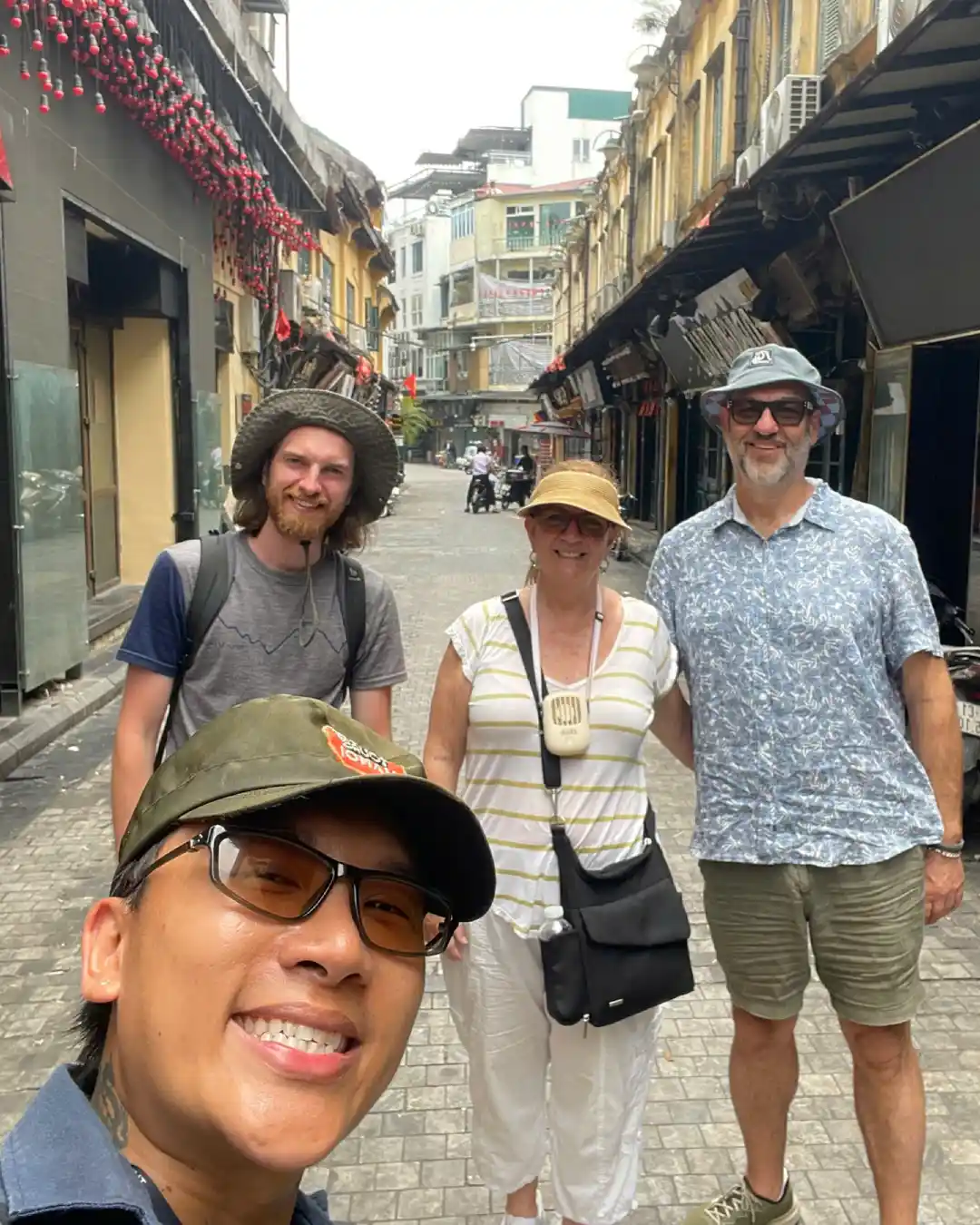
A photo journal from Hanoi — not a traveller review, and not proof that every detail in this guide happened on that walk.
Related content
Destination hub
Hanoi →Related stories
- Hanoi Street Food Culture: Eating Like a LocalEat Hanoi with local timing and judgement — stall heuristics, meal windows, hygiene sense and funnels into pho, bun cha, banh mi and guided food walks.
- Hanoi Pho GuideMaster Hanoi pho — broth style vs Saigon, when locals eat, how to order, condiment etiquette and how to fold a bowl into a wider street-food day.
- Vietnamese Banh Mi: From French Baguette to National IconUnderstand banh mi as living food history — French baguette roots, Vietnamese reinvention, Hanoi fillings and where a sandwich fits between pho, coffee and Old Quarter walks.
- Hanoi Food Tours GuideCompare Hanoi food tour formats — evening street food walks, morning market routes and private tastings — with booking timing, allergies and funnel advice from street food culture.
- Ta Hien Beer Street: Hanoi After DarkNavigate Ta Hien Beer Street after dark — energy, noise, safety, food pairings and quieter Old Quarter alternatives — so nightlife fits your trip instead of hijacking it.
- Cha Ca La Vong Hanoi Guide: Turmeric Fish RitualUnderstand Hanoi’s cha ca turmeric fish specialty — how to eat it, Cha Ca Street tradition, quality signals and how it fits a food-tour night.