Hanoi Train Street Guide: Life Along the Tracks
Visit Hanoi Train Street the right way — current access reality, café seating rules, safety, photo etiquette and how to pair it with an Old Quarter walking day.
By Anna16 min readPhung Hung & Tran Phu sections, Hoan Kiem District, Hanoi
Introduction — answer first
Is Hanoi Train Street still open? Sometimes — and only under conditions that change. Since roughly 2019, authorities have repeatedly restricted tourist access after viral social media brought crowds into a working residential corridor. On days when the lane is open, entry is usually limited to customers seated at registered cafés along Phung Hung or the parallel Tran Phu stretch. Police barriers may block casual walk-throughs at peak hours. Barriers can appear without warning if crowd behaviour or safety incidents trigger enforcement. See also our complete guide to visiting Hanoi.
Is it safe? It can be safe only when you treat it as active rail infrastructure, not a theme-park set. The trains are full-size scheduled services. They do not stop for photos. They will not deviate if someone steps too close. Café staff who live with this rhythm every day are your authority — move immediately when they say move, sit only where they indicate, and never place bags, tripods, phones or coffee cups on the rails. Romantic Instagram captions about "dancing with danger" misrepresent a neighbourhood where real families raise children beside a freight and passenger corridor.
Is it worth visiting? That depends on your trip length and tolerance for uncertainty. If you have two nights in Hanoi, skip Train Street and invest time in Hoan Kiem Lake, St Joseph's Cathedral and a structured Old Quarter walk — our guide to walking tours explains why foot-level context beats checklist tourism. If you have four or more nights, you understand access may fail, and you will follow rules without argument, a cautious café visit can add a memorable industrial-Hanoi texture. If access is closed, pivot to Long Bien Bridge — same 1902 railway story, legally public, historically richer.
Dinh, who edits trip planning for Hanoi Travel Mate, frames it plainly: Train Street is not a entitlement. Residents did not vote for global fame. City authorities did not design a visitor centre. You are a guest in someone's front yard when the barriers lift. Behave accordingly.
How Train Street exists — history without myth
The 1902 railway and French colonial planning
The track through Hanoi is part of the French colonial north–south railway, begun in the early twentieth century and often referred to historically as the Transindochinois. The Hanoi section was laid in 1902, linking the protectorate capital to port cities and highland trade routes. Engineers planned for right-of-way clearance — not for tube-house neighbourhoods pressed against sleepers.
Understanding that origin matters when you visit. This is not a heritage tram loop built for tourists. It is the same corridor that carries freight and passenger traffic between Hanoi and provinces to the north and south. Delays, horn blasts at odd hours and maintenance crews are normal. The "show" is a side effect of urban density meeting infrastructure, not a scheduled performance for your reel.
For wider colonial context — boulevards, opera house, railway ambition — read French influences in Hanoi and pair mentally with Long Bien Bridge, opened 1903 on the same network.
Tube houses on a margin nobody planned
The houses along Phung Hung and Tran Phu are classic Hanoian tube houses: narrow street frontages, deep rectangular plans, often two to four storeys with light wells and staggered room depths. Post-war decades saw central Hanoi densify rapidly. Any flat strip beside the rails was claimed, built on and passed down through families. Street width in places shrinks to roughly two metres — enough for a café table, not enough for careless crowd behaviour.
Over the past decade, ground floors converted to small cafés with seating arranged to pull back when horns sound. That conversion created livelihoods and friction simultaneously: income from curious visitors, noise and litter for upstairs neighbours, and enforcement attention when videos showed tourists sitting on rails.
From local lane to global hashtag
Train Street entered international travel media as a visual paradox — domestic life inches from steel wheels. By the late 2010s, tour buses, tripod armies and drone shots transformed a residential lane into a capacity problem. Authorities responded with barriers, café licensing requirements and periodic full closures. Access has opened and tightened again since — sometimes with little public notice.
Do not trust a blog post from six months ago that says "just walk down Phung Hung." Confirm the morning of your visit — ask your hotel, a café owner near the western Old Quarter, or a guide on the Heritage Old Quarter tour. Our standing advice in the complete guide to visiting Hanoi matches what local enforcement says: assume rules change.
Current access reality — what to expect today
Police barriers and café-only entry
When the lane is open to visitors at all, the practical model is usually:
- Barriers or staff at entry points filter foot traffic
- Walk-in gawking without a café seat is often refused
- Seated customers wait for the next scheduled passage, notified by staff
- Peak-hour closures may apply when crowds or events strain capacity
This is not uniform corruption or "pay to play" in the cynical sense — it is an attempt to limit headcount in a space where a train cannot swerve. Order coffee or a soft drink, sit where directed, and accept that some cafés turn away visitors when full.
If barriers are down and staff say closed today, do not argue, sneak around side alleys or offer bribes. Side entries still cross private homes and active track — trespassing irritates residents and can carry fines. Walk instead to Dong Xuan Market or the Bach Ma Temple quarter near O Quan Chuong Gate.
Train schedules — verify locally
Several trains pass daily, but timetables shift with seasonal revisions, freight priority and maintenance. Published online schedules are often wrong within weeks. The café where you sit tracks the next passage — ask them, not Reddit.
Typical visitor experience when access works:
- Arrive 30–45 minutes before an expected slot if staff confirm one
- Horn sounds; staff clear seating and pull barriers inward
- Train passes at low speed in the narrowest sections — still fast enough to kill carelessness
- Passage lasts seconds to a minute; alley resumes normal life immediately
Never assume a train is the "last one of the day" and step onto rails for an empty-track photo. Empty track means not yet, not safe.
Finding Train Street — geography and entry points
Where it sits in your mental map
Train Street sections run along the western flank of the Old Quarter, parallel to the north–south rail line that also serves Long Bien direction. From Hoan Kiem Lake, walk west through shop streets toward Tran Phu and Phung Hung — roughly 10 minutes from the lake's northwestern edge depending on crowds and heat.
Useful anchors:
- Tran Phu near the Dien Bien Phu railway crossing — common approach from the south
- Phung Hung near the old French viaduct murals — approach from the north with visible rail heritage artwork
Grab drivers understand "Phố Phùng Hưng" or "đường sắt Hà Nội" — specify you need the café lane, not the main station.
Pairing with an Old Quarter day
Train Street works best as a late-morning or mid-afternoon module, not the first thing you do jet-lagged. A sensible west-side arc:
| Time | Stop |
|---|---|
| 07:30–09:00 | Dong Xuan Market wholesale periphery + breakfast |
| 09:00–10:00 | Bach Ma Temple and O Quan Chuong Gate |
| 10:00–11:30 | Train Street if open — café seat, one train watch |
| 12:00–13:30 | Lunch toward St Joseph's Cathedral |
| Evening | Ta Hien beer street — separate vibe, same Old Quarter footprint |
Our Old Quarter guide orders districts by character; Train Street belongs in the "industrial edge" bucket with Long Bien, not with temple calm.
For self-guided vs guided trade-offs — when a local guide saves time at barriers — see free vs paid Hanoi walking tours. The City Highlights Walking Tour may include Train Street only when access permits; good operators re-route without treating closure as a crisis.
Safety-first visit protocol
Non-negotiable rules
- Follow café staff instructions — immediately, without debating
- Never place anything on the tracks — bags, tripods, phones, children, props; fines and real danger both apply
- Stay seated or standing only in designated zones until staff clear you
- No drones — prohibited over the railway corridor; enforcement is serious
- Travel light — strollers, large backpacks and wide tripods clog a two-metre lane and slow evacuation
- Do not touch carriages or lean into the envelope as trains pass
- Assume horns mean now, not five minutes
Shaw, who photographs Hanoi for our library, refuses staged "reaction shots" that require stepping toward rails: "The image isn't worth a hospital bill or a resident's bad week."
What responsible behaviour looks like
- Order fairly priced café service; tipping modestly when staff manage crowds well
- Keep voice down between trains — upstairs neighbours hear everything
- Ask before photographing residents not employed by the café
- Leave when finished; don't occupy a prime table through multiple cycles unless the café invites you
- Carry trash out if bins overflow — litter triggers resident complaints and closures
What to do if access is denied
Closure is normal. Alternatives with similar storytelling:
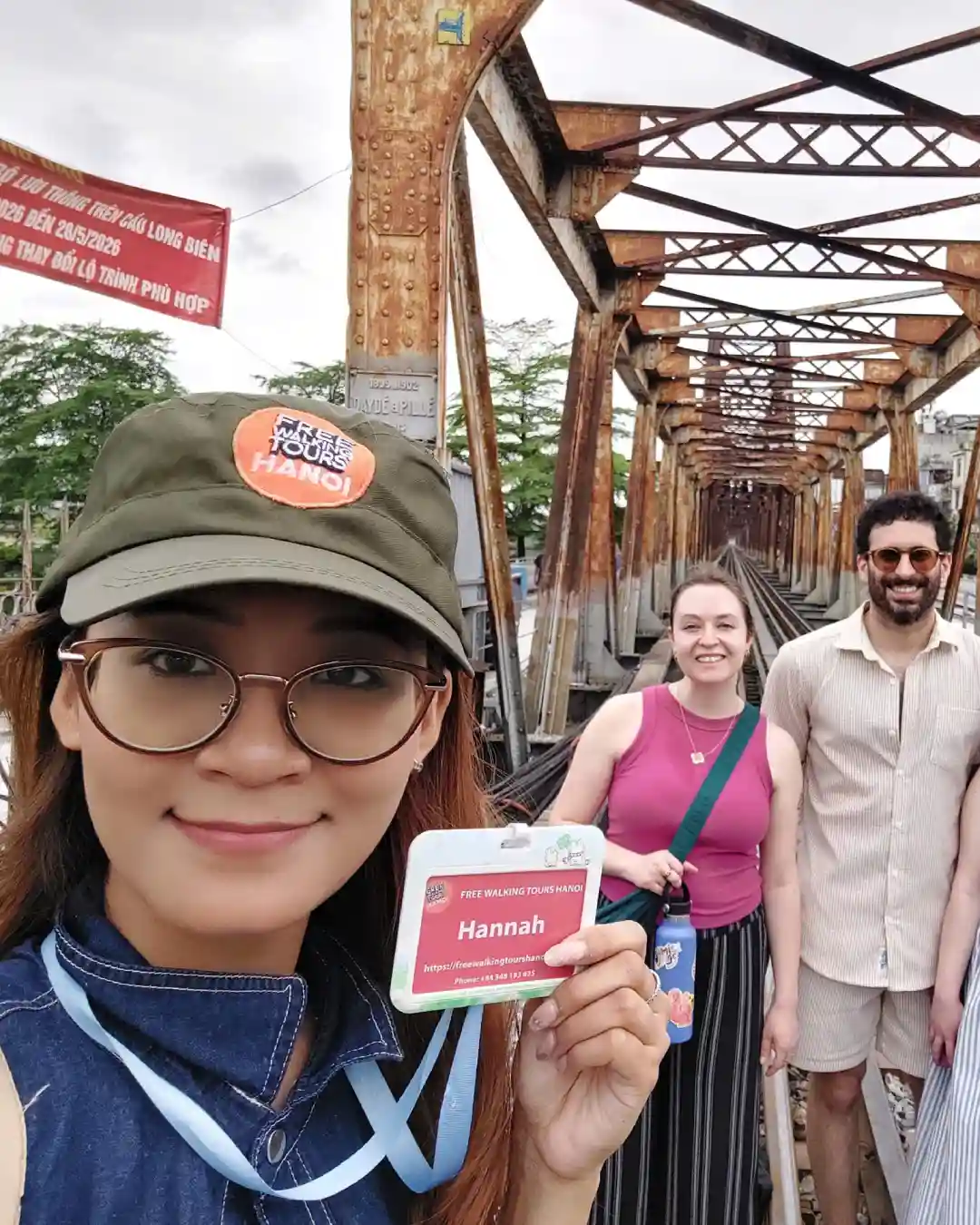
- Long Bien Bridge — walk the 1902 line over the Red River legally
- Mainline viewing points near Dien Bien Phu crossing — public sidewalks, no café requirement, less intimacy but honest rail watching
- Return another day early morning when enforcement sometimes eases — still confirm locally
Do not hire unofficial "fixers" promising guaranteed track access. Unpredictable enforcement exists precisely because bad actors created risk.
Photo etiquette — capture the scene without harming it
Train Street photography fueled the overcrowding crisis. You can still document responsibly.
Do:
- Shoot from staff-approved positions only
- Use fast shutter settings; trains move faster than they appear on phone screens
- Capture context — laundry, tube-house depth, murals — not only the train nose
- Credit the neighbourhood honestly in captions: working homes, not a film set
Don't:
- Run toward the train for a tracking shot
- Block evacuation paths for other seated guests
- Use flash in residents' faces during passage
- Launch drones — prohibited; wires, trains and legal risk converge badly
- Post captions glamorising risk — algorithms reward it; residents pay the price
For wider Old Quarter photo ethics — market vendors, temple worshippers, cathedral steps — our shopping guide and St Joseph's Cathedral guide repeat the same principle: permission, distance, humility.
Comparison — Train Street vs nearby Old Quarter experiences
| Train Street | Long Bien Bridge | Hoan Kiem Lake loop | Ta Hien at night | |
|---|---|---|---|---|
| Cost | Café order if open | Free | Free | Drink/food spend |
| Access stability | Low — changes often | High — public bridge | Very high | High |
| Safety model | Active rail — staff-led | Active traffic + trains | Pedestrian priority | Crowds + traffic |
| Resident impact | High if misbehaviour | Moderate | Low–moderate | High weekends |
| Best for | Rail proximity novelty | River scale, war history | Orientation, calm | Social evening energy |
| First-timer priority | Optional / caution | After night 3 | Day 1 | Evening 2+ |
| Guided tour value | Conditional | High | Self-walk fine | Self-walk fine |
When Train Street closes, Long Bien satisfies the same curiosity about French-era rail with fewer access gambles. When you want street-life density without rail risk, walk Hanoi street names and their stories routes through the 36 guild streets instead.
Architecture and daily life — what you are actually looking at
There is no single "Train Street style." You see layered tube-house fabric: ground-floor commerce, upper residential floors, metal gates, air-conditioner drips, satellite dishes. Murals on Phung Hung reference the French viaduct heritage — worth studying before the train arrives.
Between passages, watch ordinary Hanoi rhythms:
- Motorbikes squeezing through gaps too tight for cars
- Vendors pushing carts across crossings when barriers open
- Children homework at tables that will be cleared when horns sound
That duality — mundane Tuesday becoming thirty seconds of steel thunder — is the real story. The train is not a prop; the street is not a stage. Framing it that way helps you stay respectful when cameras come out.
Link this observation to deeper Old Quarter urbanism in our Old Quarter guide and walking tours explainer.
Food, coffee and timing
Cafés along the lane serve Vietnamese coffee, iced tea, basic snacks — not full kitchens. Eat a real breakfast at Dong Xuan or a bún chả lunch elsewhere before treating Train Street as a coffee stop. Dinh's planning rule: never visit hungry — impatience makes people ignore staff cues when a train is due.
Timing tips:
- Weekday late morning sometimes sees lighter crowds than weekend Instagram peaks
- Midday heat makes the lane feel narrower; hydration matters
- Evening passages occur but lighting and enforcement differ — confirm same-day
- Tet and national holidays — unpredictable access; prioritize family sites over viral lanes
After a cautious visit, reward yourself with a proper meal away from the tracks — our editors route guests toward Old Quarter specialists listed in the shopping and street-food circuits guide.
Tours, guides and when to pay for help
Train Street is not a reliable fixed stop on every itinerary. Quality operators on the Free tour of Hanoi and Heritage Old Quarter routes will:
- Check access that morning
- Skip gracefully if barriers are down
- Replace time with Bach Ma, O Quan Chuong or Dong Xuan depth
Paid City Highlights Walking Tour guides add value through historical framing — French rail, tube-house economics, why enforcement oscillates — not through secret track privileges. Anyone promising guaranteed rail sitting without café protocol is selling fantasy.
Read free vs paid Hanoi walking tours before booking. For broader tour taxonomy — food tours, private cars, day trips — see our planning your trip to Hanoi hub.
Local expert insights
Dinh (trip planning editor): "Build Train Street as Module C in a west Old Quarter day — never Module A. If Module C fails because barriers are closed, Modules A and B still made the day worthwhile. That mental model prevents the 'ruined holiday' meltdown we see in hotel lobby chats."
Shaw (photography / food routes): "The best Train Street photo is often before the train — tube-house perspective lines, mural colour, a café table with condensation rings. If you miss the passage because staff moved you early, you still got the neighbourhood. Chasing the train shoulder is how elbows and lenses end up in the danger envelope."
Paul (heritage walks contributor): "Guests ask how Train Street differs from Long Bien. Long Bien is public infrastructure with documented war history. Train Street is domestic proximity — ethically thinner ice. When in doubt, choose Long Bien and spend your curiosity budget there."
Anna (operations): "Weekend 10:00–13:00 is the worst window — heat, crowds, short tempers. If access is open and you insist on going, try weekday 09:30 after market energy drops. Confirm barriers first — don't Grab across town on hope."
Neighbourhood reality check: Residents have petitioned for quieter enforcement years. Your courteous visit does not fix structural conflict, but rude visits accelerate closure. One loud group ignoring staff can ruin a week of café income for families who did not choose influencer fame.
Closing — what to read next
Hanoi Train Street is a conditional experience — visually striking, ethically complicated, physically risky if you treat rules as suggestions. When access works and you follow café staff without ego, you witness one of Southeast Asia's most unusual urban edges. When access fails, Hanoi still delivers — Old Quarter guild streets, Hoan Kiem Lake dawn, Long Bien Bridge river light, Bach Ma Temple calm near O Quan Chuong Gate.
Suggested reading order:
- Hanoi Old Quarter guide — district map and pacing
- Walking tours — best way to understand the city — foot-level context
- Long Bien Bridge — same railway, public access
- Free vs paid walking tours — booking wisely
- Planning your trip to Hanoi — slot Train Street in a multi-day plan
- Complete guide to visiting Hanoi — authority hub including cautious Train Street notes
- Ta Hien beer street after dark — evening counterweight
- This story's live page — check for on-site updates
Suggested tours when you want guided sequencing:
Confirm access the morning you walk. Follow instructions without debate. Leave the lane cleaner and quieter than you found it. That is how a curiosity survives without costing neighbours another closure.
FAQ — quick answers
Is Hanoi Train Street open to tourists today? There is no permanent public yes. Access depends on daily enforcement, café licensing and crowd conditions. Confirm locally each morning — hotel front desk, café phone, or your guide — before crossing town.
Do I need to sit in a café to enter? When barriers allow visitor entry at all, yes in practice. Casual walk-throughs are commonly refused. Order from a registered lane café, sit where staff assign, and wait for the next passage.
How often do trains pass? Several times daily on a scheduled mix of passenger and freight services, but timetables change seasonally. Ask staff at your café; do not rely on social media screenshots.
Is it safe to watch the train from café tables? It is safe only if you follow staff instructions, stay out of the track envelope until cleared, and never place objects on rails. Trains are real, heavy and non-stop.
Can I walk Train Street for free without buying coffee? Usually no when tourist access is permitted — the café model limits headcount. Prices are generally modest; pay for the seat, not a bribe for rule-breaking.
Are drones allowed for photos? No. Drone use over the railway corridor is prohibited and dangerous near wires, trains and dense housing.
What if barriers are closed when I arrive? Pivot. Visit Long Bien Bridge, explore Dong Xuan Market, or walk O Quan Chuong Gate to Bach Ma — do not trespass via side alleys.
Should first-time visitors prioritise Train Street? No. Prioritise Hoan Kiem Lake, core Old Quarter orientation and one guided or self-planned heritage walk. Add Train Street only with extra time, confirmed access and willingness to skip it if rules change.
Local tips
- →Arrive at Hanoi Train Street Guide at opening or late afternoon — Hanoi midday tour groups peak hard.
- →Pair Hanoi Train Street Guide with one nearby stop in the same district, not a city-wide scavenger hunt.
- →Group Hanoi Train Street Guide with nearby sights in the same Hanoi district to cut cross-town Grab time.
- →Walk to Hanoi Train Street Guide early; Hanoi heat and scooter density rise after 09:30.
Good to know
- Hanoi Train Street Guide ticket rules and camera policies can change — verify at the gate, not only in blogs.
- Shade and seating near Hanoi Train Street Guide are limited; carry water in warm Hanoi months.
- Near Hanoi Train Street Guide, Hanoi street vendors often need small cash even when hotels take cards.
- Tet and festival weeks change opening patterns for Hanoi Train Street Guide — verify that week’s hours.
Before you go
- Before you go: check whether Hanoi Train Street Guide closes for ceremonies or maintenance that week.
- Wear shoes you can remove quickly if Hanoi Train Street Guide requires it.
- Screenshot offline maps for the blocks around Hanoi Train Street Guide before you enter dense Hanoi lanes.
Common mistakes
- ✕Trusting outdated blog access advice — rules change; confirm locally same day
- ✕Visiting as first priority jet-lagged — orientation at Hoan Kiem Lake first always
- ✕Arguing with barriers or staff — closure is not negotiable; pivot gracefully
- ✕Sitting on rails between trains — empty track ≠ safe track
- ✕Bringing large tripods or strollers — blocks evacuation; annoys residents
- ✕Flying drones — illegal over corridor; dangerous near wires and trains
- ✕Romanticising danger online — encourages copycat behaviour that triggers enforcement
- ✕Combining with heavy drinking — Ta Hien night before Train Street noon leads to slow reactions; save beer street for evening after
- ✕Ignoring café purchase expectation — walking in without supporting a licensed seat stresses the access model
- ✕Treating residents as extras — ask permission; accept no; move on
- ✕Skipping the Old Quarter context — Train Street without guild streets feels hollow; read street names and their stories
- ✕Expecting trains on demand — freight delays happen; patience or departure
Practical information
- How to get there
- Western Old Quarter near Phung Hung / Tran Phu railway corridor — walk from Hoan Kiem in about 10–15 minutes.
- Best time to visit
- Confirm café access and train windows locally; avoid blocking tracks; midday heat is harsh in the narrow lane.
- Suggested itinerary
- Old Quarter morning walk → Train Street café window → lunch noodles → Dong Xuan or lake rest.
- Nearby attractions
- Old Quarter west edge
- Long Bien Bridge
- Hoan Kiem Lake
- Phung Hung murals
Frequently asked questions
- Is Hanoi Train Street still open to visitors?
- Yes, with restrictions. Access is generally limited to customers of registered cafés along the lane, and police barriers may close the street at peak hours.
- How often does the train pass?
- Several times a day, but times shift with the seasonal timetable. The café where you are seated will know the next passage.
- Is it safe?
- It is safe provided you follow café staff instructions, stay clear of the tracks when a train is announced, and do not place anything on the rails.
- Can I visit Train Street for free?
- Walking past the police barrier usually requires sitting at one of the cafés along the lane. Café orders are inexpensive.
From the road
Related real moment
A photo journal from Hanoi — not a traveller review, and not proof that every detail in this guide happened on that walk.

Related content
Knowledge hub
Hanoi Landmarks →Historic landmarks, temples, markets and iconic places that define Hanoi.
Destination hub
Hanoi →Related stories
- Free vs Paid Hanoi Walking Tours: Which to BookCompare free tip-based and paid Hanoi walking tours — group size, tip norms, route depth and when each format wins — so you book the walk that matches your day, not just the lowest sticker price.
- Long Bien Bridge Guide: History, Walk & Local LifeWalk Hanoi's working Red River bridge — 1902 French-era steel, wartime scars, Bai Giua gardens and practical safety tips — with Old Quarter and Dong Xuan pairings.
- Dong Xuan Market Guide: Hanoi's Historic Trading HubNavigate Dong Xuan Market like a local — wholesale floors, honest bargaining, nearby food, weekend night market and how to pair it with Long Bien and Old Quarter walks.
- Hanoi Old Quarter Guide: Streets, Food & Walking LogicNavigate Hanoi's Old Quarter with local walking logic — guild streets, markets, food timing, night energy and how to pair the lake without turning the district into a checklist sprint.
- Hanoi Street Names and Their StoriesDecode Hanoi's Hang streets — silk, silver, bamboo and more — with walking lore that turns Old Quarter navigation into living history rather than a map of random names.
- Complete Guide to Visiting Hanoi (2026)The ultimate 2026 cornerstone guide to Hanoi — how many days, top sights, neighbourhoods, food, transport, itineraries, safety, budget and day trips from local experts.