Hanoi Pho Guide
Master Hanoi pho — broth style vs Saigon, when locals eat, how to order, condiment etiquette and how to fold a bowl into a wider street-food day.
By Shaw15 min readHanoi, Vietnam

Introduction — answer first
Travellers search "Hanoi pho — where to eat and how to order" wanting three things: confirmation that pho belongs on day one, practical ordering language, and honest guidance on tourist-famous shops versus neighbourhood turnover stalls. Yes — eat pho early in your trip, ideally breakfast on your first or second morning, at a shop where locals outnumber tour groups and the broth pot is visibly active. See also our complete guide to visiting Hanoi.
Shaw, our food editor, sequences Hanoi eating around meal clocks: pho at dawn, bun cha at midday, grills and beer later. Pho is not a dinner-only Instagram dish here — it is how the city wakes up, shoulder-to-shoulder on plastic stools, scooters threading past your elbow. This guide covers what distinguishes Hanoi pho, how it differs from southern bowls, when and where locals eat, how to order cuts of beef, broth etiquette, tourist-shop honesty, and how pho fits into a wider Old Quarter morning or food tour without treating one bowl as the whole story.
What Hanoi pho actually is
Broth, noodles, and restraint
Northern pho builds flavour from long-simmered beef bones, charred onion and ginger, star anise, cinnamon, and fish sauce balance — aiming for clarity and depth, not sweetness or opacity. Rice noodles (banh pho) are flat and width varies by shop; meat arrives thin-sliced, often with a separate plate of rare beef (tai) that cooks in the hot broth at the table.
Hanoi bowls stay visually spare compared with southern versions: herbs may be offered, but the default presentation is cleaner — broth, noodles, meat, perhaps scallion and cilantro. That restraint is intentional, not a short-changed tourist portion.
Pho bo vs pho ga
Pho bo is the default Hanoi introduction — order tai (rare), nam (well-done flank), chin (well-done brisket), or combinations. Adventurous eaters add sach (tripe) or gan (tendon); beginners stick to tai nam.
Pho ga (chicken) peaks in cooler months and suits lighter appetites. Specialist chicken shops open early with poached bird; broth runs golden and gentle. If beef feels heavy after a long flight, ga is a smart day-one choice.
Hanoi pho vs Saigon pho — comparison table
| Element | Hanoi (north) | Saigon (south) |
|---|---|---|
| Broth | Clear, savoury, subtle spice | Often sweeter, bolder spice |
| Herbs | Modest plate; optional | Generous herb mound — basil, bean sprouts |
| Sauce culture | Taste first; adjust slowly | Hoison, sriracha more common at table |
| Bowl aesthetic | Minimalist | Abundant, colourful |
| Meal timing | Strong breakfast identity | All-day, late-night culture too |
| Shop type | Single-dish specialists | Wider menu common |
| Visitor mistake | Adding chilli before tasting | Assuming north = south |
If you have eaten pho only in Ho Chi Minh City or abroad, reset expectations. The north rewards quiet broth reading; the south rewards herb assembly. Both are legitimate — neither is "wrong pho."
When locals eat pho — and when you should
The breakfast default
Most Hanoi pho shops open between 05:30 and 06:30, peak between 07:00 and 09:00, and close when broth or meat sells out — sometimes by 10:00 at popular specialists, occasionally by noon. Locals treat pho as a morning ritual before office hours; students grab bowls on the way to class.
Best visitor strategy: Schedule pho on your first morning after light sleep — not after a hotel buffet, not after Ta Hien beer. Jet lag often wakes you early; use biology, not willpower.
Lunch and late night — real but secondary
Many shops serve lunch with a second service; some night pho stalls open after 21:00 for post-beer comfort. Night bowls suit shift workers and social eaters — not the primary cultural window for first-time understanding.
| Time slot | Local pattern | Visitor fit |
|---|---|---|
| 06:00–08:30 | Peak breakfast turnover | Best — energy, freshness, social texture |
| 09:30–11:00 | Late breakfast, some shops closing | Good if you slept in |
| 12:00–14:00 | Lunch second shift at select shops | Fine; verify shop still open |
| After 21:00 | Night pho clusters | Fun, not essential for first bowl |
| 15:00–17:00 | Often dead zone | Skip unless you know a specific shop |
Where to eat — geography without a fake "top ten"
Shaw refuses to publish a static ranked list — shops close, quality shifts with family generations, and turnover beats fame. Instead, use selection signals:
What a good pho shop looks like
- Single-dish focus — Menu is pho, maybe quay (fried dough sticks) and drinks
- Morning queue of locals — Motorbike helmets stacked, office badges, school uniforms
- Visible broth station — Large pot, ladles moving, steam consistent
- Cooked-to-order meat — Rare beef added at serve, not pre-grey in broth
- Plastic stools, no glamour — Decoration inversely correlates with breakfast quality in many lanes
Old Quarter vs residential strips
Old Quarter hosts famous names and excellent neighbourhood pots side by side — tourist density is higher near Hoan Kiem Lake and Dong Xuan Market approaches. Walk one lane off the loudest backpacker strips for better noise-to-quality ratio — same logic as our street food culture guide.
Ba Dinh and French Quarter edges hold local breakfast pho where tour buses rarely stop — useful if your hotel sits west of the lake. Pair a Ba Dinh morning with Temple of Literature timing after breakfast digestion.
Tourist-famous shops — honest take
Certain addresses appear on every listicle — some deserve reputation, some ride foreign-language menus and consistent hours rather than superior broth. Indicators of tourist-optimised pho:
- Photos of celebrity visitors as primary marketing
- All-day service with empty seats at 07:00 while locals queue elsewhere
- Multi-page menus beyond pho and drinks
- Aggressive hawkers pulling sidewalk traffic
Indicators of local-optimised pho:
- Sells out by mid-morning
- Minimal English; confident body-language ordering
- Cash-only, small change needed
- Same families serving decades; inconsistent holiday closures
Neither is automatically bad — a famous shop can still brew excellent broth. Use turnover and taste, not Instagram age, as judge.
How to order pho — step by step
Basic order script
- Sit where directed — shared tables are normal
- Say "Mot pho bo" (one beef pho) or hold up one finger
- Specify cut if asked: "tai nam" is the safe default
- Accept or decline quay (fried dough sticks) — optional carb side
- Receive broth bowl; sip before condiments
- Add lime, chilli, vinegar garlic incrementally
- Pay at counter or table depending on shop — watch locals
Meat vocabulary worth knowing
| Vietnamese | Meaning | For whom |
|---|---|---|
| tai | Rare thin beef | Default recommendation |
| nam | Well-done flank | Texture preference |
| chin | Brisket | Richer chew |
| sach | Tripe | Adventurous |
| gan | Tendon | Gelatinous texture fans |
| bo vien | Meatballs | Some shops offer |
Chicken: "pho ga" — whole leg quarter shops differ from shredded ga stalls.
Dietary and allergy notes
Pho broth contains beef or chicken, often fish sauce, and cross-contact with shellfish-based condiments at shared tables. Vegetarian pho exists at specialised shops but not at random beef specialists. Communicate allergies with cards in Vietnamese if possible — a food tour guide helps on early trip days.
Broth etiquette — the mistake foreigners make first
Taste before you transform
Hanoi's pho broth is the product — months of reputation in one pot. Locals sip first, then adjust. Tourists often flood bowls with chilli paste, hoisin, and lime before tasting — equivalent to salting soup before spooning.
Shaw's sequence:
- First sip — pure broth, note salt, anise, body
- Second sip — with noodle and meat together
- Lime — quarter wedge, not whole fruit squeeze
- Chilli — scrape, don't dump
- Vinegar garlic (gio) — small spoon if you want edge
- Herbs — if offered, add gradually
Shared condiment hygiene
Communal chilli pots and vinegar jars sit on tables — spoon transfer, not double-dipping personal chopsticks. Napkins are often paper squares or tissue packs; carry pocket tissue in Vietnam anyway.
Pace and noise
Eat at local speed — pho breakfast is efficient, not leisurely brunch. Slurping is fine; phone videos at someone else's bowl are not.
What pho costs — and how to pay
Expect 40,000–70,000 VND per bowl at neighbourhood specialists in 2026 — famous addresses may charge more. Quay adds a few thousand. Cash remains default; some shops accept QR pay.
Tipping is not expected at street pho — leave clean table, return stacked bowls if locals do.
Compare with bun cha lunch pricing and banh mi breakfast — pho is mid-range affordable, not cheapest snack.
Pho in your trip timeline
From planning your trip to Hanoi:
| Day | Pho role | Notes |
|---|---|---|
| Day 1 morning | First bowl near hotel | Jet lag ally; no tour yet |
| Day 2 dawn | Compare second shop | Apply culture guide signals |
| Day 2 evening | Optional — skip if food tour | Food tour may omit pho |
| Day 3+ | Independent favourite return | Success metric |
Do not schedule pho before 04:30 airport pickup — broth sits heavy. Do eat pho before Ba Dinh mausoleum morning queue — empty stomach beats hanger.
Season: Winter mornings reward pho steam; summer heat makes 06:30 start smarter — see best time to visit Hanoi.
Pair pho with the wider food cluster
Pho is one pillar of Hanoi street food culture, not the entire temple:
- Same morning: Banh mi if you want handheld contrast — usually choose one, not both full size
- Midday: Bun cha — different protein, different rhythm
- Afternoon: Egg coffee
- Evening: Ta Hien beer street — separate meal clock
Old Quarter guide maps morning pho lanes geographically. Dong Xuan Market periphery holds dawn bowls if you market early.
Pho on a food tour vs solo
| Approach | Pros | Cons |
|---|---|---|
| Solo dawn pho | Authentic pacing; cheapest; repeat visits easy | Menu anxiety day one |
| Street food tour evening | Alley confidence; multi-dish context | Often skips dawn pho |
| Guide morning extension | Rare — private only | Premium cost |
Recommended arc: solo pho day one, guided evening day two, solo return day three to a shop you discovered — workflow from food tours guide.
Pho ga specialists — when beef feels heavy
Chicken pho occupies a parallel specialist lane in Hanoi — shops that poach whole birds overnight, skim golden broth, and serve shredded or thigh-cut chicken with the same condiment discipline as beef. Ga shops often smell of star anise and chicken fat together — lighter on the palate after long-haul flights or summer humidity.
Order "pho ga" plain or "ga tron" (mixed chicken cuts) if the vendor offers choice. Some ga-only shops close earlier than beef rivals because bird batch size is smaller. Shaw recommends ga when travellers report beef fatigue on day four but still want noodle soup breakfast — not a downgrade, a regional habit.
Comparison within Hanoi:
| Style | Broth colour | Typical visitor moment |
|---|---|---|
| Pho bo tai nam | Clear brown | First morning default |
| Pho bo chin gan | Richer body | Second visit adventure |
| Pho ga | Golden lighter | Jet lag or heat |
| Pho cuon (rolls) | N/A — different dish | Evening snack, not soup |
Do not confuse pho cuon (rolled noodle sheets with beef herbs) with breakfast pho soup — both valid, different clock. Street food culture guide lists roll vendors near West Lake edges.
Quay — the optional dough stick side
Quay (giò cháo quẩy — fried dough sticks) accompany pho optionally — tear and dip into broth for salt-sponge texture, or eat alongside rare beef. Many locals skip quay entirely; tourists order because menus suggest it. One stick shared between two people suffices — full quay order before broth tasting fills stomach prematurely.
Price is modest — add only if you want carb ballast before a walking morning toward Temple of Literature or Old Quarter lanes.
Shop types compared — where your bowl comes from
| Shop type | Service window | Broth signal | Tourist ratio |
|---|---|---|---|
| Alley specialist | Dawn–mid-morning | Single pot, sells out | Low if one lane off main strip |
| Famous named shop | Extended hours sometimes | Consistent recipe | Medium–high |
| Hotel-adjacent pho | All day | Diluted for international palate | High |
| Night pho cart | After 21:00 | Comfort broth | Local night workers |
| Food court pho | Mall hours | Variable | Convenience not craft |
Use this table with turnover observation — extended hours alone do not disqualify a shop if locals still fill seats at 07:00.
Family, kids, and accessibility at pho stalls
Pho shops welcome children — shared tables, quick service, soft noodles accessible. High chairs are rare; kid on lap or stool normal. Split one bowl for young child plus quay side often works.
Accessibility: Plastic stools sit low; pavement uneven; not wheelchair-standard street pho. Hotels and mall pho offer lift access but trade atmosphere. Parents with strollers stash compact foldables beside table — do not block alley traffic.
Noise and smoke: morning pho is low smoke compared with grill lunch — reasonable family breakfast before water puppet theatre planning.
Seasonal pho notes
Winter (Nov–Feb): Steam rising at 07:00 is social comfort — broth depth appreciated; queue longer at famous shops.
Summer (Jun–Aug): Eat earlier — 06:30 beat heat; sweat at plastic stool normal; iced tea (tra da) alongside broth common.
Tet: Many family shops close multi-day — verify before assuming dawn pho; see Tet in Hanoi.
Monsoon rain: covered alley shops thrive — carry sandals; floors wet.
From best time to visit Hanoi — align first pho morning with season wake time.
Local expert insights
The broth tells you the shop's age — Young shops chase salt; mature pots taste rounded without heaviness.
Quay is not mandatory — Many locals skip fried dough; tourists buy because it photographs well.
Night pho solves beer, not culture — After Ta Hien, night bowls comfort; they do not replace dawn education.
Second shop matters more than first — First bowl is jet lag; second confirms you can choose stalls.
Pho ga in summer — Shaw orders ga when heat kills beef appetite — still Hanoi legitimate.
Empty at 08:00 is a red flag — Unless known holiday or new shop, trust queues.
Celebrity wall photos — Correlation with good broth is weak; correlation with English menus is strong.
Train day caution — Pre-train street pho is fine; post-beer pho before overnight train is personal risk.
Closing — what to read next
You ate well if day two breakfast happens at a different shop you picked using turnover signals — not because a blog ranked it tenth.
Read next:
- Street food culture — meal clocks and stall safety
- Bun cha guide — lunch anchor
- Food tours guide — when to book street food tour
- Complete guide to visiting Hanoi — trip integration
- Old Quarter guide — morning geography
Optional: French influences for colonial food context adjacent to noodles, not pho-specific.
FAQ — quick answers
Question: What is pho?
Answer: Vietnamese rice-noodle soup with seasoned broth — in Hanoi, usually beef (pho bo) or chicken (pho ga) with minimal garnish compared with southern styles.
Question: When do Hanoians eat pho?
Answer: Primarily breakfast, roughly 06:00–10:00; lunch and late-night bowls exist at select shops but dawn is the cultural default.
Question: Should I add chilli and lime immediately?
Answer: No. Taste broth first, then adjust condiments gradually — locals treat the pot as the chef's primary work.
Question: Is famous tourist pho better than neighbourhood pho?
Answer: Not automatically. Busy local turnover and broth clarity beat wall photos; some famous shops deserve fame, some sell convenience.
Question: How much does pho cost in Hanoi?
Answer: Typically 40,000–70,000 VND at local specialists in 2026 — confirm at the stall; carry cash and small notes.
Question: Pho bo or pho ga for first bowl?
Answer: Pho bo tai nam is the classic first order; choose ga if you want lighter broth after travel fatigue.
Question: Should I book a food tour for pho?
Answer: Eat solo at dawn first; book Hanoi Street Food Tour for evening alley context on day two or three if menus still intimidate.
Question: Hanoi pho vs Saigon pho — which is authentic?
Answer: Both. North emphasises clear broth and restraint; south emphasises herbs and sweetness — regional identity, not ranking.
Local tips
- →Eat the signature dish for Hanoi Pho Guide when the stall is busy with locals — turnover beats décor.
- →Hanoi Pho Guide: For Hanoi food crawls, start hungry but not starving; pace stops 20–30 minutes apart.
- →Group Hanoi Pho Guide with nearby sights in the same Hanoi district to cut cross-town Grab time.
- →Walk to Hanoi Pho Guide early; Hanoi heat and scooter density rise after 09:30.
Good to know
- Hanoi Pho Guide prices move; confirm at the counter before you sit if the board is unclear.
- Hanoi Pho Guide: Morning pho and lunch bun cha windows differ — Hanoi specialists often sell out.
- Near Hanoi Pho Guide, Hanoi street vendors often need small cash even when hotels take cards.
- Tet and festival weeks change opening patterns for Hanoi Pho Guide — verify that week’s hours.
Before you go
- Carry small VND notes for Hanoi Pho Guide; many excellent stalls remain cash-first.
- Hanoi Pho Guide: If travelling with allergies, learn key ingredient words before you order around Hanoi.
- Screenshot offline maps for the blocks around Hanoi Pho Guide before you enter dense Hanoi lanes.
Common mistakes
- ✕Chilli before sip — Broth insult; adjust after taste.
- ✕Hotel buffet before pho mission — Wastes the bowl.
- ✕Searching pho at 15:00 — Many specialists closed; check hours.
- ✕Expecting Saigon herb mountain — North restraint is style, not error.
- ✕Ordering well-done only — Tai teaches texture; try default combo.
- ✕Filming vendors without nod — Ask or skip; breakfast rush is work.
- ✕Only eating pho at loudest tourist strip — One lane west often wins.
- ✕Skipping cash small notes — 200k notes at 45k bowl frustrates everyone.
- ✕Treating pho as dinner plan A — Bun cha and grills own later clocks.
- ✕One pho = "did Hanoi food" — Culture guide exists for reason.
Practical information
- How to get there
- Specialist pho shops across central Hanoi — ask for busy local breakfast counters near your hotel.
- Best time to visit
- Early morning is classic; pots can finish — do not assume late brunch availability everywhere.
- Suggested itinerary
- Pho 07:00–08:30 → lake or Old Quarter walk → coffee → lunch bun cha.
- Nearby attractions
- Old Quarter breakfast shops
- Hoan Kiem Lake
- Dong Xuan perimeter
- Coffee shops
Frequently asked questions
- What is pho?
- Vietnamese rice-noodle soup with seasoned broth — in Hanoi, usually beef (pho bo) or chicken (pho ga) with minimal garnish compared with southern styles.
- When do Hanoians eat pho?
- Primarily breakfast, roughly 06:00–10:00; lunch and late-night bowls exist at select shops but dawn is the cultural default.
- Should I add chilli and lime immediately?
- No. Taste broth first, then adjust condiments gradually — locals treat the pot as the chef's primary work.
- Is famous tourist pho better than neighbourhood pho?
- Not automatically. Busy local turnover and broth clarity beat wall photos; some famous shops deserve fame, some sell convenience.
- How much does pho cost in Hanoi?
- Typically 40,000–70,000 VND at local specialists in 2026 — confirm at the stall; carry cash and small notes.
- Pho bo or pho ga for first bowl?
- Pho bo tai nam is the classic first order; choose ga if you want lighter broth after travel fatigue.
- Should I book a food tour for pho?
- Eat solo at dawn first; book Hanoi Street Food Tour for evening alley context on day two or three if menus still intimidate.
- Hanoi pho vs Saigon pho — which is authentic?
- Both. North emphasises clear broth and restraint; south emphasises herbs and sweetness — regional identity, not ranking.
From the road
Related real moment
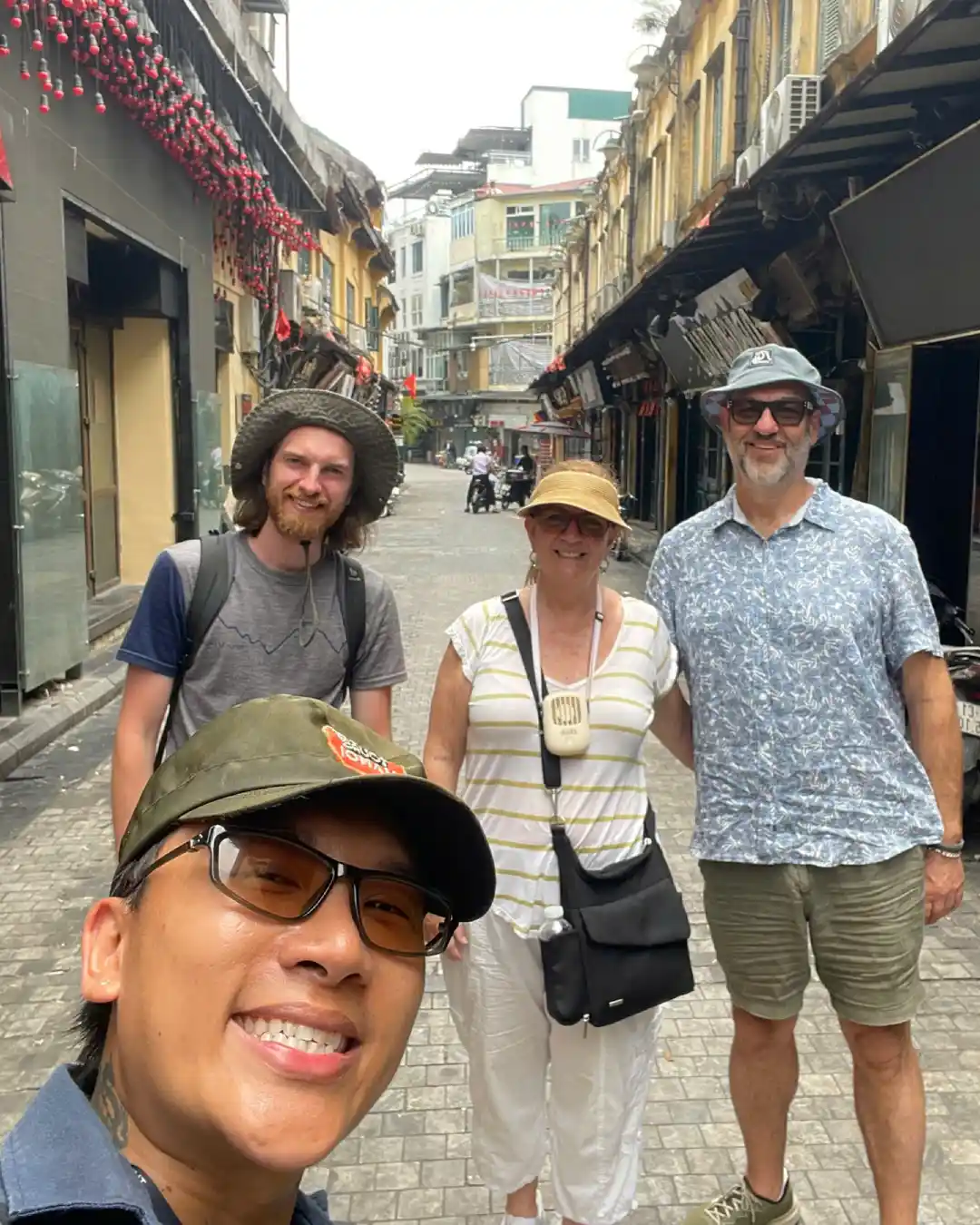
A photo journal from Hanoi — not a traveller review, and not proof that every detail in this guide happened on that walk.
Related content
Destination hub
Hanoi →Related stories
- Hanoi Street Food Culture: Eating Like a LocalEat Hanoi with local timing and judgement — stall heuristics, meal windows, hygiene sense and funnels into pho, bun cha, banh mi and guided food walks.
- Hanoi Bun Cha GuideEat bun cha like a Hanoian — grilled pork, dipping broth, herbs, lunch timing, shop heuristics and how it fits a street-food day without tourist-trap noise.
- Vietnamese Banh Mi: From French Baguette to National IconUnderstand banh mi as living food history — French baguette roots, Vietnamese reinvention, Hanoi fillings and where a sandwich fits between pho, coffee and Old Quarter walks.
- Hanoi Food Tours GuideCompare Hanoi food tour formats — evening street food walks, morning market routes and private tastings — with booking timing, allergies and funnel advice from street food culture.
- Hanoi Egg Coffee Guide: From Sidewalk Cafés to Egg CoffeeUnderstand Hanoi coffee culture — sidewalk stools, robusta drip, egg coffee history, and how to taste like a local without treating every café as a tourist stop.
- Cha Ca La Vong Hanoi Guide: Turmeric Fish RitualUnderstand Hanoi’s cha ca turmeric fish specialty — how to eat it, Cha Ca Street tradition, quality signals and how it fits a food-tour night.