Hanoi Egg Coffee Guide: From Sidewalk Cafés to Egg Coffee
Understand Hanoi coffee culture — sidewalk stools, robusta drip, egg coffee history, and how to taste like a local without treating every café as a tourist stop.
By Shaw16 min readHanoi, Vietnam

Introduction — answer first
Travellers search "Hanoi coffee culture" and "egg coffee Hanoi" wanting three things: what makes the capital’s café life different, whether egg coffee is a gimmick, and how to taste without a tourist-trap queue. Hanoi treats coffee as a seated pause in public space — stools on the pavement, phin drip filters, condensed milk for sweetness and shelf life, and egg coffee as a mid-century Hanoi invention that still tastes like a dessert-coffee hybrid when whipped correctly.
This page maps culture + practical tasting order. For dish-level egg coffee technique and house comparisons, also read egg coffee Hanoi guide. For street food sequencing the same day, use Hanoi street food culture.
Shaw’s rule: do not drink egg coffee as your only coffee in Hanoi — you will miss the daily robusta-and-stool ritual that locals actually repeat.
Why Hanoi coffee feels different
Robusta, phin, and time
Vietnam grows mostly robusta, especially in the Central Highlands. Hanoi cafés traditionally brew with a small metal phin filter that drips slowly into a glass. The result is stronger and more bitter than many Western filter coffees — condensed milk softens the edge in cà phê sữa (hot) and cà phê sữa đá (iced).
Time is part of the product. A phin is not a double ristretto. Sitting for fifteen minutes is normal; rushing signals you misunderstood the format.
Sidewalk stools as social infrastructure
Tiny plastic stools on pavements — especially in the Old Quarter and around Hoan Kiem Lake — are not a poverty aesthetic. They are a low-friction public living room: cheap seats, fast service, conversation facing traffic. Students, retirees and office workers share the same curb language.
Anna’s family tip: stools work with kids if you pick a quieter side street; main Hang intersections are loud and splashy after rain.
Coffee styles you will actually order
| Order name | What you get | When to choose |
|---|---|---|
| Cà phê đen / đá | Black robusta, hot or iced | If you like bitterness; start small |
| Cà phê sữa / sữa đá | Condensed milk, hot or iced | Default first order for most visitors |
| Bạc xỉu | Milk-forward, lighter coffee | If robusta feels too heavy |
| Cà phê trứng | Egg yolk froth + coffee | Signature Hanoi dessert-coffee |
| Coconut / salt coffee | Modern café variants | Second or third café day — not day-one essentials |
French colonial introduction of coffee is real history — read the cultural layer in French influences in Hanoi — but today’s sidewalk ritual is Vietnamese, not a Paris import.
Egg coffee — invention, taste, honesty
Cà phê trứng whipped egg yolk with sugar and condensed milk over hot coffee. Origins sit in mid-twentieth-century Hanoi when fresh milk was hard to source; the yolk foam became both texture and richness. Good egg coffee tastes like a warm tiramisu foam meeting bitter robusta — not scrambled eggs.
Paul’s honesty: some famous houses sell atmosphere as much as foam. A quieter café that whips to order can beat a queue with a tired batch. If the foam collapses into watery yellow liquid, send it back politely or choose another house next morning.
Deep technique and house notes: egg coffee Hanoi guide.
A practical tasting map (not a shop directory)
Day-one pattern
- 07:30 — Sidewalk sữa đá near your Old Quarter or lake hotel; watch school and market traffic.
- After lunch — Rest; do not stack egg coffee immediately after heavy bun cha.
- Late afternoon day two — Egg coffee in a seated house; stay for the full foam.
Districts that change the mood
- Old Quarter / Hoan Kiem — densest stool culture; best orientation
- French Quarter — more indoor tables, colonial façades; pair with French Quarter guide
- West Lake — longer sessions, expat and local mix; good third-day calm
Dinh’s ops note: Grab drop-offs on Hang streets clog; walk the last block with the café name pinned.
How coffee fits a Hanoi itinerary
Coffee is the pause between walking chapters — lake loop, guild streets, Ba Dinh protocol. Use it to recover feet, not as a standalone “attraction day.” After three cafés in one morning you stop tasting; two intentional stops beat five stickers.
Planning frames: complete guide to visiting Hanoi · planning your trip to Hanoi. Food pairing the same evening: Hanoi street food tour.
Practical visitor checklist
- Cash first — many stools still prefer VND notes; GrabPay and cards appear more in indoor cafés.
- Heat strategy — iced sữa đá after 10:00; hot phin before the sun hits Hang streets.
- Allergy honesty — egg foam is obvious; condensed milk is not dairy-free; ask before ordering “milk” substitutes.
- Photo etiquette — stools face the street; do not block the aisle with tripods. Ask before filming foam whipping.
- Language mini-kit — cà phê sữa đá, cà phê trứng, ít đường (less sugar), không đá (no ice).
Anna’s family note: one coffee stop with kids works; a three-café crawl does not. Pick a quieter side street off the loudest Hang intersection and leave before nap collapse.
Conversion — when a food tour helps
Independent stools teach the daily rhythm. A guided street food tour helps when you want tasting order, hygiene confidence and alley navigation in one evening — especially if your first two Hanoi nights are short. Heritage context the same morning: Old Quarter walking tour.
Shaw’s close: Hanoi coffee culture rewards repetition more than collection — return to one stool at a different hour before chasing a tenth menu board.
Local tips
- →For Hanoi coffee culture, sit through a full phin drip — standing defeats the format.
- →Order egg coffee as a second-day tasting, not your only coffee in the capital.
- →Shaw’s tip: busy sidewalk stools with local regulars beat empty “Instagram only” façades.
- →Walk between cafés via Hoan Kiem or guild streets — do not Grab every two blocks.
Good to know
- Hanoi coffee culture prices move; confirm at the counter if the board is unclear.
- Egg coffee foam should taste dessert-like, not scrambled — send back collapsed watery foam politely.
- French colonial history introduced the crop; today’s stool ritual is Vietnamese daily life.
- West Lake and French Quarter cafés change the mood after you learn Old Quarter baseline.
Before you go
- Carry small VND notes for Hanoi Egg Coffee Guide; many excellent stalls remain cash-first.
- Hanoi Egg Coffee Guide: If travelling with allergies, learn key ingredient words before you order around Hanoi.
- Screenshot offline maps for the blocks around Hanoi Egg Coffee Guide before you enter dense Hanoi lanes.
Common mistakes
- ✕Treating egg coffee as the only “real” Hanoi coffee and skipping sữa đá.
- ✕Stacking five sweet café stops before tasting plain robusta milk coffee.
- ✕Photographing baristas mid-whip without asking during Hanoi coffee culture visits.
- ✕Using coffee crawls as a substitute for walking the Old Quarter.
Practical information
- How to get there
- Old Quarter and Hoan Kiem sidewalk cafés are walkable from lake-edge hotels; pin the last block and walk.
- Best time to visit
- 07:00–09:00 for local stool energy; late afternoon for egg coffee when you can linger.
- Suggested itinerary
- Dawn sữa đá → Old Quarter walk → rest → day-two egg coffee → optional street food tour evening.
- Nearby attractions
- Hoan Kiem Lake
- Old Quarter guild streets
- French Quarter cafés
- West Lake
Frequently asked questions
- What is Hanoi famous for in coffee culture?
- Sidewalk stool cafés, robusta phin drip with condensed milk, and egg coffee (cà phê trứng) — a mid-century Hanoi invention with whipped yolk foam.
- What is egg coffee?
- Hot coffee topped with a whipped mixture of egg yolk, sugar and condensed milk. It should taste creamy and dessert-like, not eggy or scrambled.
- Is Vietnamese coffee strong?
- Typically yes — robusta brewed via phin is bolder and more bitter than many Western filter coffees. Condensed milk softens the classic sữa đá.
- Where should I try coffee in Hanoi?
- Start with Old Quarter or Hoan Kiem sidewalk stools for daily culture, then one seated egg coffee house. Add French Quarter or West Lake cafés on a later day.
- Why is coffee so important in Hanoi?
- It is a daily social pause — conversation, people-watching and neighbourhood routine — not only a caffeine transaction.
- Should I drink egg coffee every day?
- No. Treat egg coffee as a signature tasting; use sữa đá or đen for everyday rhythm so you still understand local habit.
- Is egg coffee safe if I am worried about raw egg?
- Foam is whipped with sugar and condensed milk; houses vary in hygiene. Choose busy shops with fresh batches, or skip if you have egg allergies or pregnancy restrictions — confirm with your clinician.
- How do I order iced milk coffee?
- Ask for cà phê sữa đá. Hot is cà phê sữa. Black is cà phê đen or đen đá.
From the road
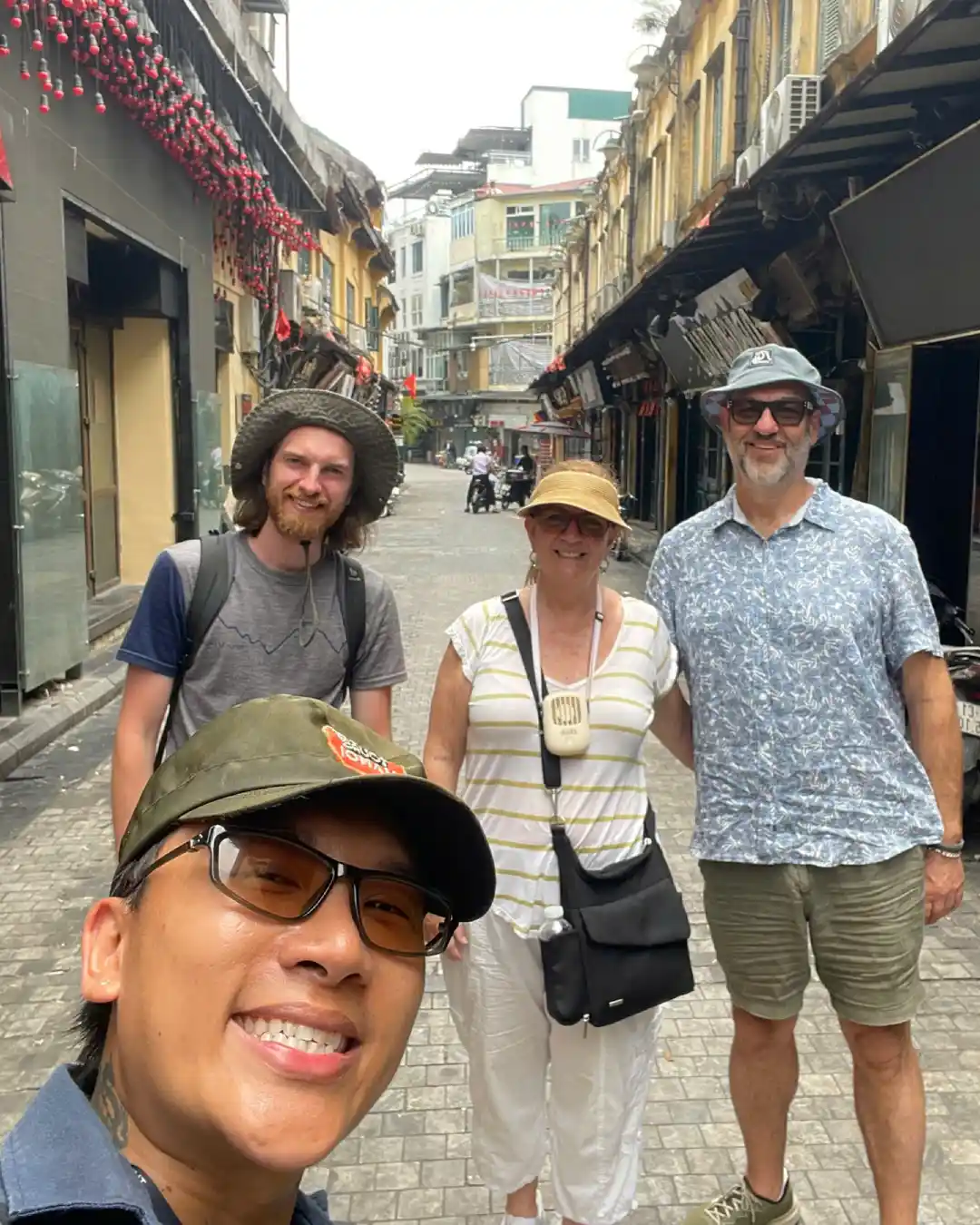
Related real moment
A photo journal from Hanoi — not a traveller review, and not proof that every detail in this guide happened on that walk.
Related content
Destination hub
Hanoi →Related stories
- Hanoi Street Food Culture: Eating Like a LocalEat Hanoi with local timing and judgement — stall heuristics, meal windows, hygiene sense and funnels into pho, bun cha, banh mi and guided food walks.
- How to Order Egg Coffee in Hanoi: Etiquette, Phrases & Where to Drink ItA practical how-to for ordering egg coffee in Hanoi — the right phrases, etiquette and tourist-vs-local spots. A supporting guide to our complete Hanoi coffee culture pillar.
- Hanoi Pho GuideMaster Hanoi pho — broth style vs Saigon, when locals eat, how to order, condiment etiquette and how to fold a bowl into a wider street-food day.
- Hanoi Bun Cha GuideEat bun cha like a Hanoian — grilled pork, dipping broth, herbs, lunch timing, shop heuristics and how it fits a street-food day without tourist-trap noise.
- Hanoi Food Tours GuideCompare Hanoi food tour formats — evening street food walks, morning market routes and private tastings — with booking timing, allergies and funnel advice from street food culture.
- Ta Hien Beer Street: Hanoi After DarkNavigate Ta Hien Beer Street after dark — energy, noise, safety, food pairings and quieter Old Quarter alternatives — so nightlife fits your trip instead of hijacking it.