Hanoi Old Quarter Guide: Streets, Food & Walking Logic
Navigate Hanoi's Old Quarter with local walking logic — guild streets, markets, food timing, night energy and how to pair the lake without turning the district into a checklist sprint.
By Dinh18 min readHoan Kiem District, Hanoi
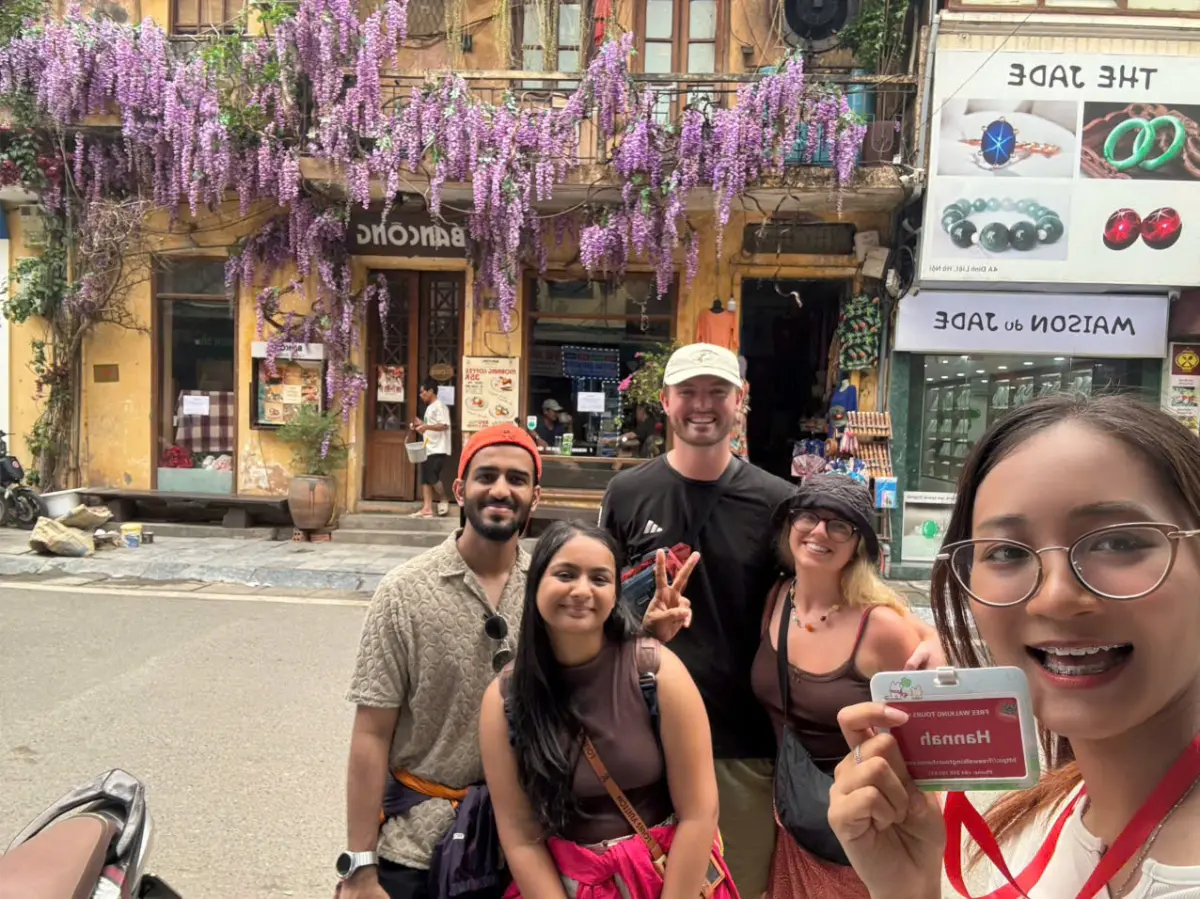
Introduction — answer first
What is the Hanoi Old Quarter? A living commercial quarter where street names still echo medieval craft guilds — Hang Bac (silver), Hang Gai (hemp/silk), Hang Dao (fabric dyes) — layered with modern hostels, coffee chains, and delivery bikes. It is not a preserved open-air museum like Hoi An's old town; it is where Hanoi works, eats, and sleeps. See also our complete guide to visiting Hanoi.
How many days do you need? With 48 hours in Hanoi, allocate one guided or self-guided walking morning plus one independent evening. With four nights, add a dawn market run to Dong Xuan, a temple stop at Bach Ma, and a lake loop — without trying to "complete" every street.
Shaw, our heritage editor, tells guests: "The Old Quarter rewards return visits at different hours. The same Hang Ma at 07:00 (funeral paper offerings) and 21:00 (neon and beer fumes) is two neighbourhoods sharing one name."
For street-name etymology and pronunciation, read Hanoi street names and their stories — this guide focuses on how to walk, eat, and stay safe inside the grid.
The "36 streets" — guild logic without memorising a list
What the number actually means
Guidebooks repeat "36 streets" as if cartographers agreed. Historians debate the exact count — some include parallel alleys (hem), others count only main Hang (merchandise) and Hang-prefixed lanes. For visitors, the useful frame is guild clustering: related trades occupied adjacent streets to share suppliers, apprentices, and temple sponsorship.
Emperor Ly Thai To's 1010 move to Thang Long established a capital that needed organised craft production. Guilds regulated quality, trained members, and funded communal houses and neighbourhood temples — which is why Bach Ma Temple sits on Hang Buom amid hardware shops, not in a forest.
Streets that still match their names
| Street | Historical trade | What you notice today |
|---|---|---|
| Hang Bac | Silver and jewellery | Gold shops, repair counters, wedding bands |
| Hang Gai | Hemp, then silk | "Silk" scarves, tailoring, ao dai fittings |
| Hang Dao | Dyed fabrics | Textiles, ready-made clothing |
| Hang Ma | Paper votives, festival goods | Ghost money, Tet decorations year-round |
| Hang Quat | Fans, ceremonial items | Incense, ritual objects, festival stock |
| Hang Buom | Sails, canvas | Mixed retail; Bach Ma Temple anchor |
| Hang Dong | Copper/bronze | Metalware, kitchen goods |
| Hang Chieu | Mats | Household goods, less tourist-facing |
Many streets diversified after Doi Moi economic reforms — Hang Thiec still sells tin goods but also phone cases. The name is memory, not inventory audit.
Paul's walking tip: "Pick three streets whose names you can pronounce, walk them end to end, then one hem off each — depth beats breadth."
Deep naming context: Hanoi street names and their stories.
Tube houses — why the Old Quarter looks like this
Narrow frontage, deep rooms
Nhà ống (tube houses) dominate Old Quarter architecture: narrow street front (often three to five metres), long depth toward a courtyard or light well, sometimes internal mezzanines. Tax and inheritance patterns historically charged by street width — builders went deep instead of wide.
From the sidewalk you see shopfront on ground floor, family or storage above, sometimes a steep internal stair you will never climb. Facades mix French balcony ironwork, Vietnamese tile roofs, and 2010s hostel signage — honest palimpsest, not curated restoration.
Alleys (hem) as second city
Every main street sprouts hem — residential alleys where dogs bark, laundry dries, and kids play badminton. Hem etiquette: walk single file, announce presence at blind corners, do not photograph open doorways without consent. Some hem hide micro-cafés and bun thang counters worth finding on second visit.
Day vs night — two different districts
Morning (06:00–10:00)
Best for: Dong Xuan Market wholesale, pho and bun thang breakfast, temple incense at Bach Ma, photography without flash crowds.
Dinh schedules market before lake for north-side hotels — geography and appetite align. Coffee on Hang Be or Hang Non after market; avoid Grab surge at 08:00 school run.
Midday (11:00–15:00)
Hot May–September. Shift to museum or café — not heroic street wandering. If you must walk, favour shaded hem and sit-down lunch over standing snacks.
Afternoon (15:00–18:00)
Tailors on Hang Gai expect fittings; silver street quieter; lake rim fills with school groups and tour pods. Good window for St Joseph's threshold walk toward French Quarter.
Evening (18:00–23:00)
Old Quarter transforms: sidewalk grills, beer crates, delivery chaos. Ta Hien Beer Street concentrates nightlife — full detail in that guide, not duplicated here. Summary: expect noise, plastic stools, fair prices if you check menus, and pickpocket awareness after 21:00.
Train Street access changes with enforcement — treat as optional specialist stop linked from dedicated guide; do not plan dinner around uncertain track access.
Food in the Old Quarter — where to eat without regret
Breakfast anchors
| Dish | Where logic | Price band (VND) |
|---|---|---|
| Pho | Busy corner, boiling pot visible | 45,000–65,000 |
| Bun thang | Hang Hom / Cau Go alleys | 45,000–70,000 |
| Banh cuon | Morning-only steamers | 35,000–55,000 |
| Xoi | Sticky rice takeaway | 20,000–40,000 |
Anna's rule: "Follow school uniforms and office lanyards, not English menus with photos only."
Culture depth: Hanoi street food culture — eating like a local · Hanoi pho guide · Hanoi bun cha guide.
Lunch and dinner
Old Quarter specialises in casual, not white-tablecloth — except a few hotel restaurants on Hang Be. Evening options: bun cha, cha ca (some venues; verify address), banh xeo, nem lui. Beer corners on Ta Hien and parallel lanes — see Ta Hien guide.
Food tours: Hanoi street food walk for day-one decoding.
Dietary and hygiene notes
- Vegetarian: Buddhist adjacent stalls exist; fish sauce hides in "vegetable" spring rolls — ask clearly
- Gluten: Rice noodles default; soy sauce in marinades
- First-day stomach: Hot cooked food, peel fruit, bottled water — standard travel medicine
Markets and shopping — functional vs souvenir
Dong Xuan and north quarter
Dong Xuan Market is the wholesale heart — best 06:00–09:00. Pair with Long Bien morning per that guide. Not a night market; evenings redirect to Ta Hien.
Tailoring and "silk"
Hang Gai sells everything labelled silk — quality spans polyester tourist scarf to legitimate tailoring. Allow 24–48 hours for ao dai or suit; get written price for fabric grade.
Curated shopping beyond guild streets: 10 best shopping places in Hanoi.
Bargaining
Expected on tourist-facing goods, not on marked menu food. Start polite counter-offer; walk away if absurd. Fixed-price boutiques increase yearly — read tag first.
Temples and gates — spiritual punctuation
Old Quarter temples are neighbourhood scale, not national monuments:
- Bach Ma Temple — White Horse legend, Hang Buom; oldest-surviving feel
- Ngoc Son Temple — on lake island; separate ticket guide
- O Quan Chuong Gate — last old city gate on east wall trace
Dress shoulders and knees covered; remove shoes where indicated; do not block incense holders for photos. Buddhism primer: Buddhism in Hanoi.
Comparison — Old Quarter vs French Quarter vs Ba Dinh
| Old Quarter | French Quarter | Ba Dinh | |
|---|---|---|---|
| Character | Guild commerce, tube houses | Boulevards, opera, cafés | State monuments, museums |
| Best on foot | Yes — core experience | Yes — shade wider sidewalks | Partial — long distances |
| Evening | Street food, beer | Cocktail bars, opera area | Quiet; mausoleum closed |
| Stay here if | First-timers, food focus | Boutique hotels, quieter sleep | Early mausoleum access |
| Guide | This page | French Quarter guide | Ba Dinh day guide |
Many guests sleep Old Quarter, walk French Quarter afternoon, Grab Ba Dinh one morning.
Where to stay decision tree: Where to stay in Hanoi.
Sample itineraries — 4 hours to 3 days
Half-day (first timer)
```
07:30 Breakfast pho near hotel
08:30 Heritage Old Quarter tour OR self walk Hang Bac → Hang Gai
11:00 Hoan Kiem Lake rim coffee
12:00 Ngoc Son Temple if queue tolerable
```
Full day
Add north loop: Bach Ma → Dong Xuan (if dawn missed, skim only) → O Quan Chuong Gate. Rest midday. Evening: Ta Hien or water puppet show — Water puppet theatre guide.
Three-day layering
- Day 1: Guided foundation + lake
- Day 2: Self guild walk using street names guide + shopping
- Day 3: Dawn market + east edge; optional Train Street if access open
Do not stack Train Street + Ta Hien + night market fantasy one evening — exhaustion and duplication.
Safety and scams — calm vigilance
Traffic
Crossing streets: slow, steady, predictable — do not stop mid-stream. Motorbikes flow around you if your path is linear. Hand-holding groups help first-timers.
Pickpockets and bags
Crowded weekend lake rim, Ta Hien after 21:00, Dong Xuan aisles — front pack or cross-body, zip toward body. Phones on cafe tables walk away.
Common tourist friction
| Situation | Response |
|---|---|
| Shoe shine unsolicited | Firm no; agree price before any service |
| "Closed temple" redirect | Verify on official signage; ignore fake closures |
| Motorbike taxi meter games | Use Grab; agree G7/Xanh SM price upfront |
| Tailor deposit pressure | Written quote; pay reasonable deposit only |
Violent crime against tourists is rare; annoyance level is moderate. Women solo generally safe at night on lit main streets — trust gut on empty hem.
Anna: "Worst outcomes I see are sprained ankles on wet tile and dehydration — not drama."
Where to stay — Old Quarter as base camp
Old Quarter hotels range $15 hostel bunks to $200 boutique. Trade-offs:
- Pros: Food steps away, walking culture, social atmosphere
- Cons: Noise until 23:00, narrow sidewalk Grab pickup, fewer pools
Streets like Hang Be, Hang Bac upper floors, Ma May balance access and sleep. Light sleepers: earplugs, high floor, rear room.
Full neighbourhood comparison: Where to stay in Hanoi.
Getting there and moving around — Grab, walk, and cyclo reality
On foot first
The Old Quarter rewards walking as default transport. Distances between Hang Bac, Ta Hien, Dong Xuan, and the lake rim rarely exceed fifteen minutes. Motorbike taxis for two-block hops often sit in traffic longer than you would walk — save Grab for rain, mobility needs, or late-night returns after beer.
Grab and taxi drop-offs
Pin hotel alley entrance, not main street midpoint — drivers stop where legal; you may still walk 50 metres into hem. Noon–14:00 and 17:00–19:00 see school and office surges; walking beats waiting curbside.
Cyclo (cycle rickshaw) — negotiate once
Cyclo exists for tourist novelty, not resident commute. Agree price and route before sitting; 200,000–400,000 VND short loop benchmarks vary by season and charm offensive. Shaw prefers walking tours over cyclo for first orientation — you learn alley logic cyclo skips.
Motorbike rental — usually skip inside quarter
Riding in Old Quarter first day is high-stress; parking scarce; theft risk on luggage mounts. Rent only after suburban day trips if licensed and insured.
City-wide transport context: Getting from Hanoi airport to city centre · Planning your trip to Hanoi.
Hem exploration — the Old Quarter's second map
Why alleys matter
Main Hang streets show shopfront theatre; hem show where people live. A fifteen-minute hem detour reveals kitchen smoke, shrine niches, motorbike parking choreography, and micro-businesses — watch repair, laundry, tutoring centres.
Hem etiquette expanded
- Walk single file; announce at blind corners with soft "xin loi"
- Dogs — rarely aggressive; do not chase for photos
- Children — smile; do not distribute candy uninvited ( dental/clinic politics )
- Open doorways — look through only if invited; no telephoto into living rooms
- Flash photography at night — disorient residents; use high ISO instead
Three hem worth one detour each
| Hem area | Access from | What you notice |
|---|---|---|
| Ma May heritage lane | Ma May main | Restored shophouse museums, quieter pace |
| Ta Hien parallel alleys | North of beer street | Residential exhaust fans, laundry at height |
| Hang Bac side hem | Silver street north | Gold workshop backrooms glimpses, hammer sound |
Heritage depth on naming: Hanoi street names and their stories.
Accommodation micro-zones — where sleep quality differs
Hang Be / Hang Bac upper floors
Central but noisy until 23:00 — request rear room, high floor, sealed windows. Good for first-timers wanting lake ten-minute walk.
Ma May / Ta Hien fringe
Nightlife adjacent — earplugs non-negotiable weekends. Social travellers love it; light sleepers hate it. Link evenings: Ta Hien Beer Street.
North quarter (Hang Buom / Dong Xuan edge)
Quieter nights, dawn market access, slightly longer lake walk. Good for repeat visitors and photographers.
Full hotel strategy: Where to stay in Hanoi.
Old Quarter vocabulary — ten words that unlock interactions
| Vietnamese | Meaning | When to use |
|---|---|---|
| Xin chao | Hello | Entering shop |
| Bao nhieu? | How much? | Market stall |
| Dat qua | Too expensive | Polite bargain |
| Cho thu | Try / sample | Dried fruit |
| Ngon qua | Very delicious | Compliment cook |
| Cam on | Thank you | Close interaction |
| Khong can | Don't need | Decline hawker |
| O dau? | Where? | Lost in hem — show map pin |
| Ben trai/phai | Left/right | Motorbike taxi direction |
| Em oi | Hey (to younger staff) | Get waiter attention politely |
Mispronunciation forgiven — smile and point equal dawn rush currency.
Local expert insights
Shaw (heritage): "Return to Hang Ma before Tet — the paper-offering street explains Vietnamese festival economy better than any museum label."
Anna (food): "Book one guided food experience, then order bun thang alone on day three — confidence is the souvenir."
Paul (history): "Stand at O Quan Chuong Gate and look outward — the Old Quarter protected a citadel that no longer surrounds it. Orientation flips."
Dinh (planning): "If you only walk once, walk east to west with sun at your back morning — photos and heat both improve."
Weekend note: Hoan Kiem pedestrian zone spills into lake streets — Old Quarter access still open but detours common. Check Hoan Kiem Lake guide.
Closing — what to read next
The Old Quarter is Hanoi's default first chapter — walk it in layers, not one frantic lap.
Continue with:
- Hoan Kiem Lake Hanoi — compass and dawn loops
- Hanoi French Quarter guide — afternoon boulevard contrast
- Hanoi street names and their stories — guild name depth
- Dong Xuan Market Hanoi — dawn wholesale
- Bach Ma Temple — neighbourhood guardian shrine
- Ta Hien Beer Street after dark — evening specialist
- Hanoi Train Street — access and safety (when open)
- Free vs paid walking tours — operator choice
- 10 best shopping places in Hanoi — beyond guild impulse buys
You walked well if you can name three streets by trade, ate one meal without English menu, and used the lake to reorient without opening maps.
FAQ — quick answers
How many days should I spend in the Hanoi Old Quarter? At least one full morning and one evening for first-timers; three nights in or adjacent to the quarter allows dawn market, guild walks, and lake loops without rush.
What are the 36 streets of Hanoi? A guild naming tradition — streets called Hang + merchandise (silver, silk, fans). Exact count varies; walk clusters using our street names guide rather than memorising lists.
Is the Old Quarter safe at night? Generally yes on lit main streets — use normal urban caution for bags and traffic. Specialist nightlife: Ta Hien Beer Street.
Where should I eat in the Old Quarter? Busy pho and bun thang stalls at breakfast; follow local turnover. Avoid empty English-only menus. Deep guides: street food culture · pho guide.
Do I need a guide for the Old Quarter? Not mandatory — but one morning heritage walk accelerates confidence. Compare free vs paid tours. Heritage Old Quarter tour focuses guild and temple context.
How do I get from the Old Quarter to Hoan Kiem Lake? Walk south or east — the lake borders the quarter. Five to fifteen minutes from most Hang streets. Full lake logic: Hoan Kiem Lake guide.
Is Train Street in the Old Quarter? Edge of the grid — access rules change; read Train Street guide instead of assuming open tracks.
What should I buy in the Old Quarter? Coffee, spices, small crafts, tailored ao dai if you have time — verify quality on Hang Gai. Broader strategy: 10 best shopping places.
Old Quarter vs French Quarter — where should I stay? Old Quarter for first-time foot access and food; French Quarter for quieter boulevards and boutique hotels. Decision tree: Where to stay in Hanoi.
Can I visit the Old Quarter with kids? Yes with supervision — traffic and crowds challenge strollers; choose morning hours, short loops, and sit-down food. Avoid peak Ta Hien without age-appropriate expectations.
Local tips
- →Use Hoan Kiem Lake as your Old Quarter compass — walk toward water when lost.
- →Pick three Hang streets you can pronounce and walk each end-to-end before diving into hem alleys.
- →Book one heritage morning in the Old Quarter, then self-walk evenings — Shaw’s foundation rule.
- →Dong Xuan Market at dawn and Ta Hien after dark are different Old Quarter days; do not force both into one exhausted loop.
Good to know
- The Old Quarter itself is free; Bach Ma, Ngoc Son and some temples may charge or accept donations.
- Weekend pedestrian spill from Hoan Kiem slows edge streets after 19:00 — plan detours, not panic.
- Tube-house fronts hide deep courtyards; do not photograph open doorways in hem without consent.
- Grab often stops one block from narrow Old Quarter pins — walking the last 50 metres is normal.
Before you go
- Before you go: save Hanoi Old Quarter Guide offline and note your must-see versus nice-to-see list.
- Share meeting points with your group if Hanoi Old Quarter Guide involves a timed entrance.
- Screenshot offline maps for the blocks around Hanoi Old Quarter Guide before you enter dense Hanoi lanes.
Common mistakes
- ✕Trying to “do all 36 streets” of the Old Quarter in one day.
- ✕Booking three overlapping Old Quarter walking tours from different platforms.
- ✕Shopping Hang Gai “silk” on jet-lag morning one before quality eyes open.
- ✕Expecting a car-free Hoi An fantasy — motorbikes are the Old Quarter bloodstream.
Practical information
- How to get there
- Centred on Hoan Kiem Lake — most Old Quarter lanes are walkable from lake hotels within 5–15 minutes; Grab for rain or late Ta Hien returns.
- Best time to visit
- Dawn for quiet guild streets and Dong Xuan; 16:00–20:00 for food atmosphere; midday May–September shift indoors.
- Suggested itinerary
- Lake dawn → guild streets → Dong Xuan → lunch noodles → rest → evening food walk or Ta Hien.
- Nearby attractions
- Hoan Kiem Lake
- Dong Xuan Market
- French Quarter
- Train Street
Frequently asked questions
- How many days should I spend in the Hanoi Old Quarter?
- **At least one full morning and one evening** for first-timers; **three nights** in or adjacent to the quarter allows dawn market, guild walks, and lake loops without rush.
- What are the 36 streets of Hanoi?
- A **guild naming tradition** — streets called Hang + merchandise (silver, silk, fans). Exact count varies; walk **clusters** using our [street names guide](/stories/hanoi-street-names-and-their-stories) rather than memorising lists.
- Is the Old Quarter safe at night?
- **Generally yes on lit main streets** — use normal urban caution for bags and traffic. Specialist nightlife: [Ta Hien Beer Street](/stories/ta-hien-beer-street-hanoi-after-dark).
- Where should I eat in the Old Quarter?
- **Busy pho and bun thang stalls at breakfast**; follow local turnover. Avoid empty English-only menus. Deep guides: [street food culture](/stories/hanoi-street-food-culture-eating-like-a-local) · [pho guide](/stories/hanoi-pho-guide).
- Do I need a guide for the Old Quarter?
- **Not mandatory** — but one **morning heritage walk** accelerates confidence. Compare [free vs paid tours](/stories/free-vs-paid-hanoi-walking-tour-guide). [Heritage Old Quarter tour](/hanoi/hanoi-heritage-old-quarter) focuses guild and temple context.
- How do I get from the Old Quarter to Hoan Kiem Lake?
- **Walk south or east** — the lake borders the quarter. Five to fifteen minutes from most Hang streets. Full lake logic: [Hoan Kiem Lake guide](/stories/hoan-kiem-lake-hanoi).
- Is Train Street in the Old Quarter?
- **Edge of the grid** — access rules change; read [Train Street guide](/stories/hanoi-train-street) instead of assuming open tracks.
- What should I buy in the Old Quarter?
- **Coffee, spices, small crafts, tailored ao dai if you have time** — verify quality on Hang Gai. Broader strategy: [10 best shopping places](/stories/10-best-shopping-places-in-hanoi).
From the road
Related real moment
A photo journal from Hanoi — not a traveller review, and not proof that every detail in this guide happened on that walk.

Related content
Destination hub
Hanoi →Related stories
- Free vs Paid Hanoi Walking Tours: Which to BookCompare free tip-based and paid Hanoi walking tours — group size, tip norms, route depth and when each format wins — so you book the walk that matches your day, not just the lowest sticker price.
- Hanoi French Quarter Guide: Boulevards, Opera & Café StreetsWalk Hanoi's French Quarter as a route — Opera House, colonial boulevards, cathedral edge and café streets — distinct from the deeper colonial-heritage culture pillar.
- Hanoi Photography Spots Guide: Dawn to NeonPlan Hanoi photography by district — Hoan Kiem dawn, Long Bien, Train Street rules, West Lake, French Quarter and Old Quarter neon without landmark rewrites.
- Complete Guide to Visiting Hanoi (2026)The ultimate 2026 cornerstone guide to Hanoi — how many days, top sights, neighbourhoods, food, transport, itineraries, safety, budget and day trips from local experts.
- Hoan Kiem Lake Hanoi: Walks, Legend & First-Day OrientationUse Hoan Kiem Lake as Hanoi's orientation loop — dawn and dusk walks, Ngoc Son Temple pairing, weekend pedestrian streets and how the lake connects Old Quarter and French Quarter.
- Hanoi Street Names and Their StoriesDecode Hanoi's Hang streets — silk, silver, bamboo and more — with walking lore that turns Old Quarter navigation into living history rather than a map of random names.