Vietnamese Etiquette for Travelers: Temples, Dining & Photos
Travel Vietnam with respectful habits — temple dress, dining manners, photography consent, tipping norms and how etiquette changes between Old Quarter streets and sacred sites.
By Paul15 min readHanoi & Northern Vietnam
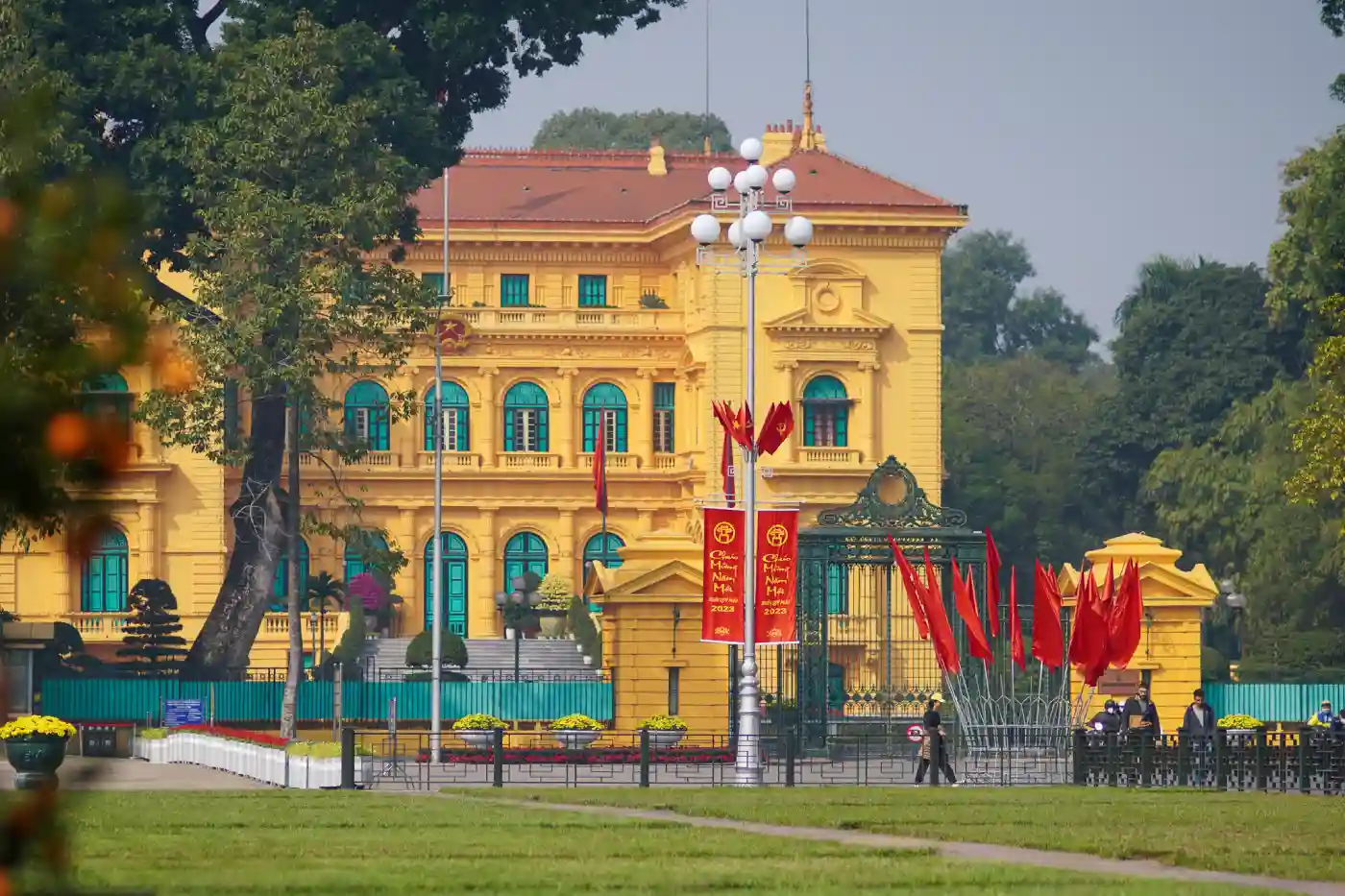
Introduction — answer first
Do you need to learn Vietnamese etiquette before visiting Hanoi? You need a short list of visible rules, not fluency. Vietnamese people forgive foreign mistakes when intent is respectful — loud argument, inappropriate temple dress, and careless sacred-site photos are the main avoidables.
Lin, our culture editor, frames it: "Vietnamese courtesy is about not causing others to lose face — yours or theirs. Lower volume, slower reaction, visible effort at temples, and you are already ahead of most visitors." Dinh adds logistics: etiquette varies by context — sidewalk phở stall differs from Temple of Literature; this guide separates them.
Will locals expect Western formality? No. Will they notice effort? Yes — a whispered "Cảm ơn" (thank you), shoes off at a pagoda gate, and patience in a queue register immediately.
Read alongside: Buddhism in Hanoi · Vietnamese Lunar New Year (Tet) · temple guides for site-specific rules.
Core principles — face, hierarchy, and calm
Three ideas explain most situations tourists mishandle.
Saving face (thể diện)
Public anger, loud criticism, or embarrassing someone — staff, driver, vendor — escalates fast. Stay level, solve privately, or walk away and re-approach. Humour deflects better than confrontation.
Hierarchy and age
Elders first — seat, serve, greet. Two hands when giving/receiving from older person or monk. Younger staff may call you "anh/chị" (brother/sister) — reciprocate warmth, not familiarity.
Calm over precision
Perfect ritual matters less than visible respect. If unsure at a temple, watch a local family for ten seconds, mirror quietly.
Temple and pagoda etiquette
Hanoi’s sacred layer spans Buddhist pagodas, Confucian temples, Catholic cathedrals, and ancestor halls. Buddhism dominates tourist routes — Tran Quoc Pagoda, One Pillar Pagoda, Ngoc Son Temple, Bach Ma Temple.
Dress code
| Acceptable | Avoid |
|---|---|
| T-shirt covering shoulders | Tank tops, spaghetti straps |
| Trousers or skirt below knee | Short shorts, mini skirts |
| Closed or sandal (easy remove) | Heavy boots if shoe removal required |
| Light scarf for shoulder cover | See-through tops |
Carry a sarong or light scarf — solves impromptu temple stops after Hoan Kiem Lake walk. Some sites lend wraps at entrance; do not rely on it.
Shoes, hats, and body position
- Remove shoes when platform rises, indoors, or when locals do — pile near door, socks fine
- Hats off indoors at active worship sites
- Do not point feet at altars or seated Buddha — sit knees aside or kneel if others kneel
- Do not turn back directly to Buddha statue for selfie — step sideways for photo
Behaviour inside
- Lower voice — conversation OK outside main hall
- No flash photography in dim halls; tripod often banned
- Incense: light if offered; three bows optional, not mandatory for foreigners
- Donations: small note in box fine; no coin throwing
- Monks: greet with palms together slight bow; women do not touch monks; photo only if invited
Deep context: Buddhism in Hanoi · Confucian influences at Temple of Literature.
Mausoleum and state solemn sites
Ho Chi Minh Mausoleum enforces stricter dress and behaviour — no shorts, no hats inside queue, silent file, no photos in chamber. Security confiscates phones per posted rules. Separate from casual pagoda visit — plan wardrobe accordingly.
Dining etiquette — street to sit-down
Vietnamese meals are communal, flexible, and loud at street level.
Shared table culture
- Dishes arrive for the table, not individual plates — offer others first with clean chopsticks or serving spoon
- Turn lazy Susan so elders reach first if present
- Try everything before seasoning heavily — host may take offence lightly but notice
Chopstick rules (visible taboos)
| Do | Don't |
|---|---|
| Rest chopsticks on holder or bowl rim | Stick upright in rice bowl — funeral symbol |
| Pass food with clean ends | Point chopsticks at people |
| Lay parallel when pausing | Spear food aggressively |
| Use spoon for soup | Lick chopsticks loudly in formal setting |
Street stalls forgive all — prudence matters at business lunch or family invite.
Slurping, bones, and napkins
- Slurping phở — acceptable, even appreciative
- Spit bones to side plate or tissue — discreetly, not on floor at nicer places
- Toilet paper on table often serves as napkin — normal
Food culture depth: Hanoi street food culture · Phở guide · Bún chả guide.
Invitations and paying
- Host pays tradition strong — fight lightly once, then accept if elder insists
- Split bill (going Dutch) growing among young Vietnamese; offer anyway
- Business meals — guest does not grab bill without cue
Photography — people, places, and permission
Hanoi is photogenic; not every moment is yours to capture.
People
- Ask before portrait — gesture and smile; children require parent consent
- Monks and worshippers — no candid close-ups during prayer
- Street vendors — gesture at camera; many agree; some refuse — honour refusal instantly
- Military and police — avoid unless public tourist event
Sacred sites
- Read signs — camera icons crossed out mean stop
- No drone without permit — illegal over many heritage zones
- Selfie sticks — OK outdoors; often banned indoors
Social media sensitivity
Posting prayer close-ups or funeral processions (rare tourist encounter) reads as intrusion. Geo-tagging hidden local spots (Train Street when restricted) harms communities — see Train Street guide.
Tipping — when, how much, and when not to
Vietnam is not a heavy tipping culture. Excessive tip can confuse or embarrass.
| Context | Tip? | Amount |
|---|---|---|
| Street food | No | Price on board is final |
| Casual café | No | Optional round-up |
| Sit-down local restaurant | Optional | 0–5% if service exceptional |
| Upscale / tourist restaurant | Optional | 5–10% if no service charge |
| Grab / taxi meter | Optional | Round up 10,000–20,000 VND |
| Free walking tour | Expected tip | 100,000–200,000 VND per person guideline |
| Paid tour guide | If policy allows | Check operator — sometimes included |
| Hotel porter | Optional | 20,000–50,000 VND per bag |
| Spa | Optional | 10% if happy |
Do not tip to fix a problem after confrontation — tip is gratitude, not bribe. Free tour ethics: Free vs paid walking tour guide.
Budget travellers: Explore Hanoi on a budget — no tip line required.
Greetings, titles, and small talk
Hello and thanks
| Vietnamese | Use |
|---|---|
| Xin chào | Hello (general) |
| Cảm ơn | Thank you |
| Không sao | It's okay / you're welcome response |
| Xin lỗi | Sorry / excuse me |
Anh (older man), chị (older woman), em (younger) — staff may use; mirror without over-familiarity.
Handshakes and hugs
- Handshake common in urban tourism — lighter grip, not prolonged
- Hug/kiss hello — rare first meeting; follow local lead
- Public affection couples — hold hands OK; passionate display discouraged
Topics to handle lightly
- Politics, war history debates — avoid argumentative depth with strangers
- Personal income, marriage pressure — deflect with smile
- Compliments — accept modestly; excessive self-praise odd
Dress and appearance beyond temples
Urban Hanoi daily
- Casual summer clothes fine — shorts OK citywide except mausoleum/temple
- Shoulders covered polite at government buildings if visiting formally
- Rain gear — practical respect for monsoon
Tet and festival periods
During Tet:
- Bright colours welcomed — black all-over less festive for visits to family homes (rare tourist context)
- Temples extraordinarily busy — extra patience, no rushing worshippers
- Many businesses close — plan meals; do not demand service on New Year morning
Other festivals (Mid-Autumn, temple anniversaries) — follow crowd behaviour, donate small if participating.
Comparison — etiquette context by setting
| Setting | Voice | Dress | Photo | Tip |
|---|---|---|---|---|
| Street phở stall | Normal/loud OK | Casual | Ask vendor | No |
| Buddhist pagoda | Quiet | Covered | Restricted indoors | Donation optional |
| Mausoleum queue | Silent | Strict modest | Banned in chamber | N/A |
| Old Quarter shop | Normal | Casual | Goods OK | Bargain, no tip |
| Upscale restaurant | Moderate | Smart casual | Discreet | 5–10% optional |
| Grab ride | Minimal | Any | Skip driver | Round-up optional |
| Homestay / invite meal | Warm | Neat casual | Ask family first | Gift better than tip |
Gender, solo travel, and LGBTQ+ visitors
Solo women report generally safe Hanoi with usual urban caution — Grab at night, firm polite no to over-attentive vendors. Dress does not cause harassment by default, but modest temple dress doubles as cultural ease.
LGBTQ+ travellers — urban Hanoi tolerant in tourism zones; public affection still low-key. Legal landscape evolves; discretion outside progressive venues remains prudent.
Unwanted attention — "Không, cảm ơn" + walk away; do not engage argument.
Stay planning: Where to stay in Hanoi · Planning your trip.
Bargaining and commerce manners
- Markets: polite counter-offer; smile throughout
- Fixed-price shops: no haggle
- Inspect goods before paying — return difficult
- Count change calmly — mistakes happen, not always scam
Shopping context: 10 best shopping places · Dong Xuan Market.
Business and formal settings — conferences, hotels, and tours
Most tourists encounter casual tourism contexts, but business dinners and upscale hotels raise the bar slightly.
Meetings and hotels
- Business card exchange — two hands, brief look at card before pocketing
- Hotel lobby volume — moderate; swimwear through lobby discouraged at international chains
- Spa and pool — follow posted rules; cover up walking to room
Tour group dynamics
- Listen to guide briefing at temples — do not wander into roped areas
- Group punctuality — face-loss for guide if whole bus waits; return on time
- Question tone — curious, not prosecutorial about war or politics
Tour ethics: Free vs paid walking tour guide · Hanoi city tours guide.
Invitations to local homes (rare but memorable)
- Remove shoes at door if hosts do
- Small gift — fruit, flowers, or souvenir from your country — not expensive
- Compliment meal simply — "Ngon!" (delicious)
- Finish modest portion — empty bowl signals satisfaction; leave a little if overstuffed to show abundance was served
Language mistakes that are forgiven — and those that aren't
| Mistake | Reaction |
|---|---|
| Mispronounced cảm ơn | Smile, appreciation |
| Wrong tone on xin chào | Still welcomed |
| Pointing with finger at person | Mild awkwardness — use open palm |
| Loud complaint about service | Face-loss, escalation |
| Mocking local accent | Deep offence |
| Public intoxication at temple | Serious disrespect |
Effort counts. A phrasebook attempt beats silent assumption everyone speaks English.
Emergency phrases at sacred sites
| Situation | Vietnamese |
|---|---|
| Excuse me / sorry | Xin lỗi |
| Where do shoes go? | Để giày ở đâu? |
| Is photo OK? | Chụp ảnh được không? |
| Thank you | Cảm ơn |
Mispronunciation never offence if tone is respectful.
Closing — what to read next
Good etiquette in Hanoi is visible effort — modest dress at sacred sites, calm voice, fair photography, and gratitude without performance tipping.
Continue with:
- Buddhism in Hanoi — belief layer behind pagoda rules
- Vietnamese Lunar New Year (Tet) in Hanoi — festival behaviour
- Temple of Literature Hanoi — Confucian site etiquette
- Tran Quoc Pagoda Hanoi — active worship visit
- Ngoc Son Temple Hanoi — lake temple dress
- Ho Chi Minh Mausoleum Hanoi — strict solemn rules
- Hanoi street food culture — dining confidence
- Complete guide to visiting Hanoi — trip integration
You travelled well if no one had to correct your temple dress, you asked once before a portrait, and you thanked in Vietnamese daily.
FAQ
Question: What should I wear to temples in Hanoi?
Answer: Shoulders covered, knees covered, remove shoes where indicated. Carry a light scarf for impromptu visits. Ho Chi Minh Mausoleum is stricter than pagodas — no shorts or sleeveless tops in queue.
Question: Do you tip in Vietnam?
Answer: Not obligatory. Street food and cafés — no tip. Upscale restaurants — 5–10% if no service charge. Grab — round up slightly. Free walking tours — 100,000–200,000 VND per person is common. Over-tipping can embarrass.
Question: Is it rude to take photos of locals in Hanoi?
Answer: Ask first for portraits, especially elders, monks, and children (parent consent). Sacred interiors often ban flash or all photography — read signs. Street scenes from distance generally fine; intrusive close-ups without consent are rude.
Question: Can I wear shorts in Hanoi?
Answer: Yes in city streets, parks, and most tourist areas. No at mausoleum and not ideal at active pagodas. Carry trousers or skirt change for temple-heavy days like Ba Dinh district.
Question: What chopstick mistakes should I avoid?
Answer: Never stick chopsticks upright in a rice bowl — funeral association. Do not point at people, spear food theatrically, or pass food chopstick-to-chopstick. Street stalls are forgiving; family or business meals less so.
Question: How do I greet people in Vietnam?
Answer: Smile, slight nod, "Xin chào." Handshake if offered — light grip. Use Cảm ơn (thank you) liberally. Two hands when giving/receiving from elders.
Question: Are public displays of affection OK in Hanoi?
Answer: Hold hands generally fine; passionate kissing or heavy petting discouraged in public. Temple and mausoleum zones — no affection displays.
Question: What etiquette applies during Tet in Hanoi?
Answer: Extra patience at temples, many businesses closed first days, festive bright clothing welcomed for social visits. Avoid demanding service on New Year morning. Full calendar: Tet in Hanoi guide.
Word count: 2,824
Local tips
- →Pack a light scarf for Vietnamese temple stops after Hoan Kiem walks — instant shoulder cover.
- →Watch the shoe pile at pagoda doors; mirror locals before entering active worship halls.
- →Learn Xin chào, Cảm ơn and Xin lỗi — Paul ranks effort above perfect tones for Vietnamese etiquette.
- →Tip free walking tours 100,000–200,000 VND; skip performance tipping at street phở stalls.
Good to know
- Ho Chi Minh Mausoleum dress rules are stricter than most Hanoi pagodas — no shorts in the queue.
- Vietnamese etiquette shifts by setting: loud OK at street stalls, quiet inside Buddhist halls.
- Women should not touch monks; photograph monks only if invited.
- Tet intensifies temple crowds and business closures — patience replaces demand for service.
Before you go
- Before you go: save Vietnamese Etiquette for Travelers offline and note your must-see versus nice-to-see list.
- Share meeting points with your group if Vietnamese Etiquette for Travelers involves a timed entrance.
- Screenshot offline maps for the blocks around Vietnamese Etiquette for Travelers before you enter dense Hanoi lanes.
Common mistakes
- ✕Wearing shorts into the Ho Chi Minh Mausoleum queue after studying Vietnamese etiquette for pagodas only.
- ✕Sticking chopsticks upright in a rice bowl at a shared Vietnamese table.
- ✕Using flash inside dim Buddha halls or shooting prayer close-ups without distance.
- ✕Leaving a 15% tip at a plastic-stool street stall and confusing the vendor.
Practical information
- How to get there
- Etiquette applies citywide — Old Quarter lanes, Ba Dinh solemn sites, West Lake pagodas and village temples on day trips from Hanoi.
- Best time to visit
- Temple etiquette matters most at dawn and lunar festival peaks; mausoleum mornings need stricter dress than café afternoons.
- Suggested itinerary
- Read temple dress rules → pack scarf → heritage walk for modelled behaviour → independent pagoda stops with quiet photos.
- Nearby attractions
- Temple of Literature
- Tran Quoc Pagoda
- Ngoc Son Temple
- Ho Chi Minh Mausoleum
Frequently asked questions
- What should I wear to temples in Hanoi?
- Shoulders covered, knees covered, remove shoes where indicated. Carry a light scarf for impromptu visits. Ho Chi Minh Mausoleum is stricter than pagodas — no shorts or sleeveless tops in queue.
- Do you tip in Vietnam?
- Not obligatory. Street food and cafés — no tip. Upscale restaurants — 5–10% if no service charge. Grab — round up slightly. Free walking tours — 100,000–200,000 VND per person is common. Over-tipping can embarrass.
- Is it rude to take photos of locals in Hanoi?
- Ask first for portraits, especially elders, monks, and children (parent consent). Sacred interiors often ban flash or all photography — read signs. Street scenes from distance generally fine; intrusive close-ups without consent are rude.
- Can I wear shorts in Hanoi?
- Yes in city streets, parks, and most tourist areas. No at mausoleum and not ideal at active pagodas. Carry trousers or skirt change for temple-heavy days like Ba Dinh district.
- What chopstick mistakes should I avoid?
- Never stick chopsticks upright in a rice bowl — funeral association. Do not point at people, spear food theatrically, or pass food chopstick-to-chopstick. Street stalls are forgiving; family or business meals less so.
- How do I greet people in Vietnam?
- Smile, slight nod, "Xin chào." Handshake if offered — light grip. Use Cảm ơn (thank you) liberally. Two hands when giving/receiving from elders.
- Are public displays of affection OK in Hanoi?
- Hold hands generally fine; passionate kissing or heavy petting discouraged in public. Temple and mausoleum zones — no affection displays.
- What etiquette applies during Tet in Hanoi?
- Extra patience at temples, many businesses closed first days, festive bright clothing welcomed for social visits. Avoid demanding service on New Year morning. Full calendar: Tet in Hanoi guide. --- Word count: 2,824
From the road
Related real moment
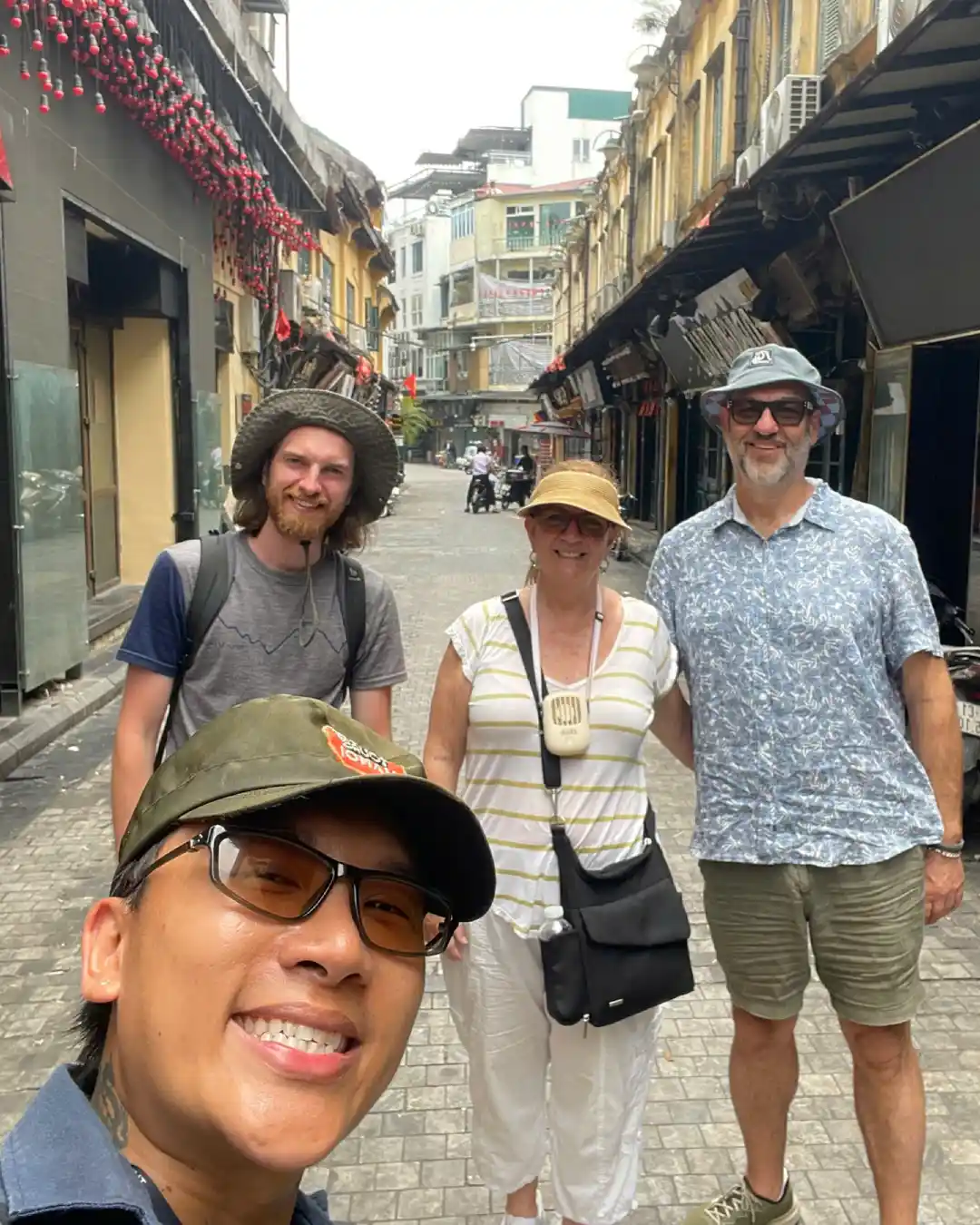
A photo journal from Hanoi — not a traveller review, and not proof that every detail in this guide happened on that walk.
Related content
Destination hub
Hanoi →Related stories
- Planning Your Trip to Hanoi: Step-by-Step ChecklistA sequenced planning checklist for Hanoi — dates, visa, hotel, skeleton itinerary, tour bookings and arrival day — without duplicating the complete city guide.
- Complete Guide to Visiting Hanoi (2026)The ultimate 2026 cornerstone guide to Hanoi — how many days, top sights, neighbourhoods, food, transport, itineraries, safety, budget and day trips from local experts.
- Responsible Tourism in Northern Vietnam: Ethics for Treks & CruisesTravel northern Vietnam responsibly — homestay etiquette, photo consent, market behaviour, wildlife caution and how to choose ethical trekking and cruise operators.
- Buddhism in Hanoi: Living Faith Across the CityUnderstand Buddhism as living practice in Hanoi — pagoda etiquette, lunar visit days, and how Tran Quoc, One Pillar, Ngoc Son and Bach Ma fit a respectful temple day.
- Tet in Hanoi: Lunar New Year Visitor GuidePlan Hanoi during Tet (Lunar New Year) — honest closure patterns, flower markets, transport spikes, etiquette and whether your dates should lean into festival atmosphere or avoid peak shutdown.
- Temple of Literature Hanoi: Vietnam's First UniversityVisit the Temple of Literature — courtyard sequence, tickets, dress code, photo etiquette and how Confucian heritage connects to a practical Ba Dinh half-day.