10 Best Shopping Places in Hanoi
Shop Hanoi with a ranked shortlist — Dong Xuan, night markets, book street, boutiques and craft stops — plus tourist-trap honesty and Old Quarter walking logic.
By Dinh17 min readHanoi, Vietnam

Introduction — answer first
Search intent here is commercial and practical: "Where should I shop in Hanoi?" The wrong answer is a generic list of malls. The right answer is a ranked map — what to buy where, what to skip, and how guild-street logic still shapes the Old Quarter even when the goods changed decades ago. See also our complete guide to visiting Hanoi.
Dinh, our Hanoi trip-planning editor, schedules shopping the way walking guides move — market dawn first, named streets second, village workshop third, evening market last. Operators see the same pattern: guests who shop Ta Hien at midnight on day one buy overpriced scarves; guests who walk Dong Xuan at 07:00 and Hang Gai at 10:00 leave with usable gifts and fewer regrets.
Hanoi shopping rewards time-of-day discipline and skepticism toward "authentic" labels. Polyester sold as silk, lacquerware made for export, and coffee cut with filler all exist — not everywhere, but often enough that inspection beats enthusiasm. This page does not replace district depth — it points to dedicated guides and ranks where your hours convert to quality.
What this guide is not: A price list (VND shifts seasonally), a legal customs manual (verify your home country), or a luxury-brand directory. For street-name history behind Hang Gai and neighbours, read Hanoi street names and their stories.
1. Dong Xuan Market
Dong Xuan Market ranks first because it is Hanoi's largest covered wholesale-and-retail hall — the place locals restock kitchens and shops, not a staged tourist bazaar. The main building spans multiple floors: ground-level bustle, upper levels heavy on fabric bolts and clothing bulk, periphery streets where porters eat pho before the heat wins.
Why it ranks #1: Maximum authentic commerce per square metre within walking distance of the lake. You see how Hanoi moves goods — hand trucks, negotiated wholesale, seasonal spikes before Tet. Sensory payoff is high even if your suitcase stays empty.
What to buy honestly:
- Packaged Vietnamese coffee — sealed bags from recognised roasters; check roast date
- Dried fruit and nuts — taste before bulk; mango and jackfruit travel well if declared
- Spices — star anise, cinnamon sticks for home cooking
- Fabric — if you tailor ao dai or sew; upper floors hold rolls
- Small housewares — practical if you live in Vietnam; skip for short-stay tourists
What to skip inside the hall:
- "Silk" scarves at tourist opening prices — better quality conversation on Hang Gai with time
- Counterfeit branded goods — legal and ethical risk
- Heavy ceramics — shipping cost exceeds savings; go to Bat Trang instead
- Unlabelled herbal powders — allergy and customs unknowns
Timing: 06:00–09:00 for wholesale rhythm; afternoon is hotter and thinner. Dong Xuan is not a night market — pair evening energy with Ta Hien Beer Street after dark, not a late pass through the hall.
Tourist-trap honesty: Vendors near the main tourist entrance sometimes open high on souvenir-priced goods. Walk two aisles deep or shop periphery stalls where porters buy. Bargain politely on small items; wholesale bulk is often fixed.
Pair with: North Old Quarter morning — Long Bien Bridge, O Quan Chuong Gate. Deep guide: Dong Xuan Market Hanoi.
2. Hanoi Old Quarter
The Hanoi Old Quarter ranks second because shopping here is navigation literacy — thirty-six guild streets in name and spirit, each Hang prefix hinting at historic specialisation. You do not "finish" the Old Quarter; you learn which lanes still match their names and which swapped trades generations ago.
Why it ranks #2: Widest walkable variety — silver on Hang Bac, paper offerings on Hang Ma, shoes on Hang Dau, mixed tourism on Hang Buom. Unexpected finds hide in tube-house shopfronts: lacquer repair, stamp shops, hardware that explains daily life.
How to shop the grid:
- Morning (08:00–11:00): Local retail rhythm; cooler walks; fewer tour groups on narrow lanes
- Midday: Heat and lunch rush — shift to covered shops or café breaks
- Evening: Energy rises toward Ta Hien; weekend night market spills onto pedestrian streets (see rank 7)
Guild streets worth targeting:
- Hang Bac / Hang Bo — silver and metalwork legacy; jewellery still clusters
- Hang Ma — paper offerings and festival decorations; photogenic before Tet
- Hang Luoc — comb and hair-accessory history; mixed modern retail
- Hang Dong — copper and metal; practical goods more than souvenirs
Read Hanoi street names and their stories before you assume every Hang street still sells what the name promises — commerce evolves; names linger.
Tourist-trap honesty: Any lane within one block of Ta Hien at peak hours prices for convenience. Step one parallel street away for calmer browsing. Touts offering "same as Hang Gai but cheaper" rarely deliver — geography is not the problem; product tier is.
What to buy: Small crafts when you watch production, lacquer if the workshop invites inspection, local snacks from high-turnover stalls. What to skip: Generic "Vietnam t-shirt" racks duplicated on every corner — same stock, different markup.
Pair with: Hoan Kiem dawn loop, Ngoc Son Temple. Walk help: Heritage Old Quarter tour.
3. Bat Trang Pottery Village
Bat Trang sits about 13 km south-east along the Red River — Hanoi's most famous ceramic village, with seven centuries of production behind the marketing. It ranks third because authentic handmade pottery at source beats airport gift-shop ceramics — but only if you budget half a day including transport.
Why it ranks #3: Workshop access — watch throwing, glazing, kiln logic. Buy bowls, plates, tea sets, vases, and contemporary design pieces where they are made. Quality spans tourist trinkets to gallery-grade; your job is to sort by hand and weight, not by storefront signage.
What to buy:
- Sturdy daily-use bowls and plates — uniform glaze, no hairline cracks
- Tea sets — test lid fit and pour
- Decorative pieces — if you accept shipping cost or hand-carry risk
- Contemporary studio work — smaller shops often sign pieces
What to skip:
- Paper-thin "ceramic" magnets — fine as jokes, not as heritage souvenirs
- Identical moulded figurines in ten shops — pick one price, not ten
- Bulk without padding plan — bubble wrap at shop or buy last travel day
Tourist-trap honesty: "Bat Trang" labels appear on goods city-wide; being in the village does not guarantee artisan work. Ask to see the wheel or kiln area. Fixed-price studio shops are often clearer than aggressive alley bargaining.
Logistics: Easiest via organised Bat Trang pottery village trip or Grab plus walking the ceramic street. Combine with traditional craft villages around Hanoi planning if you chase multiple workshops.
Deep guide: Bat Trang pottery village — 700 years of ceramic heritage.
4. Hang Gai Street (Silk Street)
Hang Gai — Silk Street — runs east-west south of Hoan Kiem, historically the textile guild lane. It ranks fourth for central silk, tailoring, scarves, and lacquerware conversations when you have time to touch fabric and compare shops.
Why it ranks #4: Concentrated textile retail within ten minutes of the lake — ao dai tailoring, scarf walls, embroidery, and lacquer showrooms that invite longer looks than market stalls allow.
How to buy silk without regret:
- Burn-test scepticism — real silk smells like burnt hair; synthetics melt plastic. Reputable shops expect questions
- Weight and drape — hold to light; cheap polyester hangs stiff
- Price transparency — tailoring quotes should separate fabric, labour, and urgency surcharge
- Receipt and care label — export-friendly packaging on request
Tailoring timeline: Same-day is possible for simple items; 48–72 hours is realistic for ao dai with fittings. Plan Hang Gai early in your trip if you want wear-while-here pieces.
Tourist-trap honesty: Ground-floor shops facing the main road pay premium rent — prices reflect it. Side alleys and upper floors sometimes offer equivalent fabric with less theatre. "Cash only discount" is normal; "today only" urgency is not.
What else appears on Hang Gai: Lacquerware, embroidery art, souvenir clothing. Lacquer deserves layer inspection — quality pieces feel substantial; thin export lacquer chips in luggage.
Pair with: Hanoi French Quarter guide afternoon — Hang Gai bridges Old Quarter density and colonial boulevards. Street context: Hanoi street names and their stories.
5. Van Phuc Silk Village
Van Phuc lies about 10 km south-west in Ha Dong district — a weaving village predating many city-centre shops. It ranks fifth for visitors who want village looms and traditional patterns more than storefront convenience.
Why it ranks #5: Seeing shuttle looms and village production explains Vietnamese silk better than any scarf wall. Prices can beat central Hanoi on fabric by the metre — if you know what you are buying.
What to buy:
- Fabric by the metre — for home sewers and serious tailors
- Traditional pattern textiles — village motifs vs generic prints
- Small woven accessories — when quality matches price
What to skip:
- Identical scarves also sold on Hang Gai unless price justifies the trip
- "Village tour" upsells with mandatory shop stops — choose independent entry
Tourist-trap honesty: Van Phuc is not secret — bus groups arrive. Weekday mornings beat weekend coach peaks. City shops sometimes label goods "Van Phuc silk" without village origin; being here helps verification, not automatic trust.
Logistics: Grab from central Hanoi 30–45 minutes depending on traffic — pair with a half-day, not a lake-loop detour. Less critical than Bat Trang for first-timers; prioritise Van Phuc on return visits or if textiles are your main interest.
6. Quang Ba Flower Market
Quang Ba is a wholesale flower market on Au Co Road near West Lake — open through the night, peaking 03:00–06:00 when retailers collect stock. It ranks sixth for spectacle and photography, not traditional souvenir shopping.
Why it ranks #6: Nowhere else in Hanoi shows Tet-scale colour and urgency in ordinary weeks — roses, chrysanthemums, orchids, seasonal imports stacked under fluorescent light. You understand why best time to visit Hanoi mentions pre-Tet chaos.
What to "buy":
- Bouquets for hotel room — if your stay allows and you accept short life
- Photographs — the honest main product for most tourists
What to skip:
- Expecting retail gift packaging — this is B2B bulk; stems sold by weight
- Mid-morning visits — stalls thin after dawn rush; atmosphere drops
Tourist-trap honesty: Grab drivers may confuse Quang Ba with smaller retail flower corners. Confirm Au Co wholesale market before 05:00 departure. Dress for wet floors and cold pre-dawn air November–February.
Pair with: West Lake Hanoi guide later same day for contrast — lakeside calm after market intensity.
7. Weekend Night Market
The Hanoi Weekend Night Market closes sections of the Old Quarter to traffic Friday through Sunday evenings, roughly 18:00–23:00, stretching from Hang Dao toward Hoan Kiem with stalls, snacks, clothing, and accessories. It ranks seventh for evening atmosphere, not for best-quality goods.
Why it ranks #7: Low-friction browsing after dinner — neon, crowds, street food, people-watching. Good for cheap accessories, printed tees, phone cases, and impulse snacks when you accept tourist-tier quality.
What to buy:
- Light souvenirs — magnets, keychains, if you bargain lightly
- Street snacks — same hygiene rules as all Hanoi street food: busy stall, hot served food
- Children's gifts — small toys; check safety labels
What to skip:
- "Silk" and "lacquer" at stall price — ranks 4 and 3 exist for a reason
- Brand-name claims — assume novelty, not authenticity
- Blocking pedestrian flow for photos — security and crowd flow matter
Tourist-trap honesty: The night market is entertainment retail. Prices start high; bargaining is part of the game but not worth aggressive conflict over 20,000 VND. Pick battles on items you actually want.
Evening pairing: Pre-drink or post-shop on Ta Hien Beer Street after dark — same neighbourhood, different mood. Ta Hien sells atmosphere; stalls sell stuff. Do both; confuse neither.
Timing note: Pedestrian street programmes around Hoan Kiem overlap weekends — expect maximum density Saturday 20:00–22:00. Weekday shoppers should prioritise ranks 1–4 instead.
8. Artisan Boutiques and Local Design Shops
Across the Old Quarter and French Quarter, independent boutiques sell contemporary Vietnamese design — fashion, homeware, jewellery, art objects, and gifts that reflect present-day creativity rather than guild-street tradition alone. Rank eight fills the gap when you want curated taste without village logistics.
Why it ranks #8: Hanoi’s design scene matured in the last decade — young labels blend ethnic textile motifs, minimalist ceramics, and urban tailoring. These shops suit gift buyers who distrust market stalls and travellers who already own generic scarves.
Where to look (areas, not exhaustive lists):
- French Quarter lanes — quieter storefronts, higher price tier, gallery adjacency
- Old Quarter upper floors — studio spaces above street-level souvenir density
- Tay Ho pockets — expat-facing design near West Lake cafés
What to buy:
- Signed small-batch ceramics — with maker card
- Contemporary jewellery — silver and stone from recognised studios
- Screen-printed art and textiles — limited runs
- Natural cosmetics and incense — check ingredient lists and flight rules
Tourist-trap honesty: "Design district" branding on a shop window means little — inspect maker story. Boutiques price fairly for labour; bargaining is uncommon. Compare to ranks 1–4: you pay for curation and fixed trust.
When to choose boutiques over markets: Last travel day gift run when you want one quality piece; rain afternoons when outdoor markets exhaust; gifts for people who notice craftsmanship.
9. Bookstores and Cultural Shops
Hanoi's book street clusters around Dinh Le and Trang Tien south of Hoan Kiem — small shops selling Vietnamese- and English-language books, maps, postcards, art reproductions, and cultural ephemera. Rank nine serves readers and lightweight cultural souvenirs that survive customs more easily than ceramics.
Why it ranks #9: Books and prints pack flat, weigh less than pottery, and carry genuine cultural depth — history, photography, cuisine, war-era memoirs (verify edition and sensitivity for gifts).
What to buy:
- Vietnamese coffee table photography — city and countryside collections
- Bilingual cookbooks — if recipient cooks
- Old maps and reproduction propaganda posters — decorative; know your audience
- Children's bilingual books — strong gift for families
What to skip:
- Pirated editions — support legitimate publishers when visible
- Heavy hardbacks if baggage weight is tight — paperback equivalents exist
Tourist-trap honesty: Some "antique" books are distressed reproductions — fine if priced as décor, not as rare manuscripts. Ask edition year; inspect binding.
Pair with: Trang Tien ice cream tradition, Hanoi Opera House exterior walk, French Quarter café stop. Cultural depth: history of Thang Long and modern Hanoi.
10. Local Food Products
Food shopping ranks tenth because consumables are the most-used souvenirs — and the easiest to get wrong if you buy from low-turnover stalls. Coffee, tea, dried fruit, nuts, and packaged snacks travel well when sealed, labelled, and declared.
Why it ranks #10: Everyone eats; gifts get consumed; weight beats ceramics. Hanoi excels at robusta and arabica blends, lotus tea, dried banana and mango, banh com, and regional sauces in factory-sealed jars.
Where to buy well:
- Rank 1 (Dong Xuan) — bulk spices and dried goods with tasting
- Supermarkets (Big C, WinMart) — consistent packaging for cautious stomachs
- Brand flagship stores — Trung Nguyen, Highlands, local roasters with dated bags
- Airport last resort — higher prices, predictable sealing
What to buy:
- Whole-bean or ground coffee — valve bags; roast date visible
- Green or jasmine tea — sealed tins
- Dried fruit — no moisture, no open bins for long flights
- Pho or bun bo Hue spice kits — labelled ingredients for customs
What to skip:
- Open-bin bulk coffee of unknown origin
- Meat jerky and fresh fruit — customs often prohibit
- Unlabelled chilli paste jars — leak and seizure risk
Tourist-trap honesty: "Weasel coffee" and exotic animal products raise ethical and legal questions — skip unless you verify sourcing to your own standards. Civet coffee marketing outruns traceability in tourist zones.
Food culture context: Hanoi street food culture — eating like a local · Hanoi coffee culture.
Shopping Tips
Practical rules Dinh repeats on every planning call:
Cash and payment: Smaller stalls prefer VND cash; carry 50,000–200,000 notes. Card acceptance grows in boutiques and malls; markets remain cash-first. Mobile pay exists locally — tourists rarely set it up for one trip.
Bargaining: Expected at markets and night stalls on small souvenirs — polite, unhurried, willing to walk away. Start counter-offers 10–20% below tourist opening prices; absurd anchors deserve exit, not combat. Fixed-price boutiques, food, and marked department stores — do not bargain.
Quality inspection checklist:
- Silk — touch, burn-test scepticism, compare shops
- Lacquer — weight, layer edges, smell
- Ceramics — rim uniformity, glaze bubbles, ping test lightly
- Coffee — roast date, valve bag, recognised brand
Shipping: Bat Trang and lacquer shops sometimes arrange international freight — get written quote, insurance, and breakage policy. Often hand-carry or skip is cheaper than DHL on one plate.
Customs and declarations: Dried spices, coffee, and factory-sealed tea usually travel; verify your destination. Meat, fresh produce, and wildlife products — assume no.
Timing summary:
| Window | Best shopping use |
|---|---|
| 06:00–09:00 | Dong Xuan, Quang Ba flowers, Old Quarter local retail |
| 10:00–14:00 | Hang Gai, boutiques, book street (AC breaks) |
| 15:00–17:00 | Second wind browsing; heat eases autumn–spring |
| 18:00–23:00 | Weekend night market, Ta Hien adjacency |
| Half-day block | Bat Trang, Van Phuc |
Safety: Watch bags in crowds; night market pickpockets target phones. Motorbike traffic still crosses some night-market edges — look both ways even on "pedestrian" streets.
Budget framing: Street-market T-shirt 80,000–150,000 VND; quality silk scarf 300,000–800,000+ VND; small Bat Trang bowl set 150,000–400,000 VND; boutique design piece 500,000–2,000,000+ VND. Prices illustrative — inspect before committing.
Local expert insights
Editorial notes from years of guest itineraries — the patterns that separate satisfied shoppers from suitcase regret.
First-time visitors with 48 hours: One Dong Xuan dawn, one Hang Gai slow walk, food products from a supermarket or rank 1 on departure eve. Skip Bat Trang unless ceramics matter deeply.
Four nights: Add Bat Trang half-day or night market + Ta Hien evening; book tailoring early if ao dai is planned.
Pre-Tet shopping: Dong Xuan and Hang Ma explode with colour — prices spike, crowds crush; photographic gold if you tolerate chaos. Read Vietnamese Lunar New Year Tet in Hanoi.
Guild streets still teach navigation: Even when shops changed trade, Hang names orient you. Our Hanoi street names and their stories guide pairs with rank 2 better than any mall map.
Old Quarter vs mall: Vincom and Trang Tien Plaza offer air-con and brands — valid for clothing sizes and electronics, not for "I shopped Hanoi." Do one mall run if heat wins; spend soul hours in ranks 1–4.
Evening logic: Shopping and drinking blur near Ta Hien — buy sober, bargain sober. Ta Hien Beer Street after dark is for after you decide what you want, not while vendors spin stories.
Village trips beat airport gifts: Rank 3 and 5 exist because source beats souvenir desk. If you skip villages, buy from reputable fixed-price shops on Hang Gai rather than stall theatre.
When shopping replaces sightseeing: On day four of a three-day trip — reprioritise. Shopping rewards unhurried mornings; it punishes checklist fatigue. See things to see in Hanoi — first-time visitor's guide for sight priority.
You shopped well if: You can name where you bought each item class; you avoided fake silk regret; your food gifts are sealed and declared; and you spent one morning watching Hanoi commerce without a tour bus window — porters, fabric bolts, flower wholesale, or a wheel turning clay in Bat Trang.
Related guides:
Common mistakes — avoid these
- Night-market silk on day one — Rank 7 sells atmosphere, not quality textiles; use Hang Gai or Bat Trang instead.
- Dong Xuan at 15:00 expecting wholesale drama — Dawn or skip; afternoons are heat and thin trade.
- Bargaining in fixed-price boutiques — Markets yes; design shops no — awkward and pointless.
- Buying lacquer without inspecting layers — Thin export lacquer chips in luggage; weight tells truth.
- Bat Trang as a one-hour add-on — Transport eats the trip; book half a day or defer.
- Ta Hien impulse purchases after beer — Ta Hien Beer Street after dark is for social energy, not sober gift decisions.
- Assuming every Hang street still matches its name — Read Hanoi street names and their stories before hunting "silver street" bargains that moved decades ago.
- Open-bin coffee for long-haul flights — Sealed valve bags from rank 1 or supermarkets only.
- Skipping customs rules until the airport — Declare spices and coffee; assume no on fresh produce and meat.
- Shopping instead of sleeping on a two-night trip — One Dong Xuan dawn beats five souvenir stalls.
Closing — what to read next
48-hour shopping arc: Dong Xuan Market dawn → Old Quarter guide guild walk → Hang Gai slow pass → sealed food gifts on departure eve. Add Bat Trang or night market only if nights allow.
Read next:
- Hanoi street names and their stories — decode Hang prefixes before you browse
- Dong Xuan Market Hanoi — rank 1 in depth
- Ta Hien Beer Street after dark — evening counterpoint, not substitute market
- Hanoi street food culture — eat between shopping blocks
- Planning your trip to Hanoi — where shopping sits in the checklist
Tours: Bat Trang pottery village · Heritage Old Quarter · City highlights walking tour
You shopped well if each gift has a place name attached — Dong Xuan coffee, Hang Gai scarf, Bat Trang bowl — not a generic "Hanoi bag" from the nearest stall.
FAQ — quick answers
What is the best market in Hanoi? Dong Xuan Market at 06:00–09:00 — largest covered hall, wholesale rhythm, practical consumables. Not a night market.
Where should I buy silk in Hanoi? Hang Gai for central tailoring and scarves; Van Phuc village if you want loom context and fabric by the metre. Burn-test scepticism and compare shops.
Is bargaining expected? Markets and night stalls — polite negotiation on small items. Boutiques, supermarkets, and marked prices — fixed. Walk away beats hostile haggling.
What souvenirs are worth buying? Sealed coffee and tea, small Bat Trang ceramics, inspected lacquer, books from Dinh Le, and design boutique pieces with maker cards. Skip fake branded goods.
Is the weekend night market worth it? Yes for evening atmosphere and cheap accessories — no for silk, lacquer, or quality ceramics. Pair with Ta Hien, not Dong Xuan.
Should I visit Bat Trang? Yes if you want authentic workshop ceramics and can spare half a day. No on a 48-hour trip unless pottery is the main interest — use Hang Gai or Dong Xuan instead.
What should I avoid? Counterfeit brands, unlabelled powders, "silk" without touch inspection, open-bin coffee for flights, and heavy pottery bought without a carry plan.
How does shopping fit the Old Quarter? Guild streets (Hang names) still orient browsing — start with Old Quarter guide and street names guide, then rank this list by morning vs evening windows.
Local tips
- →Dong Xuan Market Hanoi
- →Hanoi Old Quarter guide
- →Bat Trang pottery village guide
- →Traditional craft villages around Hanoi
Good to know
- 10 Best Shopping Places in Hanoi reflects on-the-ground patterns that change; confirm timed details locally.
- Tours help when transfers or language friction dominate the 10 Best Shopping Places in Hanoi logistics.
- Near 10 Best Shopping Places in Hanoi, Hanoi street vendors often need small cash even when hotels take cards.
- Tet and festival weeks change opening patterns for 10 Best Shopping Places in Hanoi — verify that week’s hours.
Before you go
- Before you go: save 10 Best Shopping Places in Hanoi offline and note your must-see versus nice-to-see list.
- Share meeting points with your group if 10 Best Shopping Places in Hanoi involves a timed entrance.
- Screenshot offline maps for the blocks around 10 Best Shopping Places in Hanoi before you enter dense Hanoi lanes.
Common mistakes
- ✕Treating 10 Best Shopping Places in Hanoi as a complete substitute for live confirmation on the day.
- ✕Over-scheduling the hours before and after 10 Best Shopping Places in Hanoi.
- ✕Cramming 10 Best Shopping Places in Hanoi into a multi-district sprint that ignores Hanoi traffic reality.
- ✕Relying only on hotel concierge timing for 10 Best Shopping Places in Hanoi without a backup route.
Practical information
- How to get there
- Most ranked stops are walkable from Hoan Kiem; Bat Trang needs a short trip east of the city.
- Best time to visit
- Markets mid-morning; night market Friday–Sunday evenings; boutiques daytime.
- Suggested itinerary
- Dong Xuan morning → Old Quarter boutiques → coffee → night market or Bat Trang half-day another day.
- Nearby attractions
- Dong Xuan Market
- Old Quarter
- Hoan Kiem Lake
- French Quarter
Frequently asked questions
- What is the best market in Hanoi?
- Dong Xuan Market is generally considered the city’s most important traditional market.
- Where can I buy authentic ceramics?
- Bat Trang Pottery Village is the best-known destination for traditional ceramics near Hanoi.
- Is bargaining expected?
- In some traditional markets bargaining may be common, but fixed prices are increasingly common in modern shops and boutiques.
- What souvenirs are popular in Hanoi?
- Ceramics, silk products, coffee, tea, artwork, handicrafts, and local food products are among the most popular purchases.
- What is the best area for shopping?
- The Old Quarter offers the widest variety of shopping opportunities within a walkable area.
From the road
Related real moment
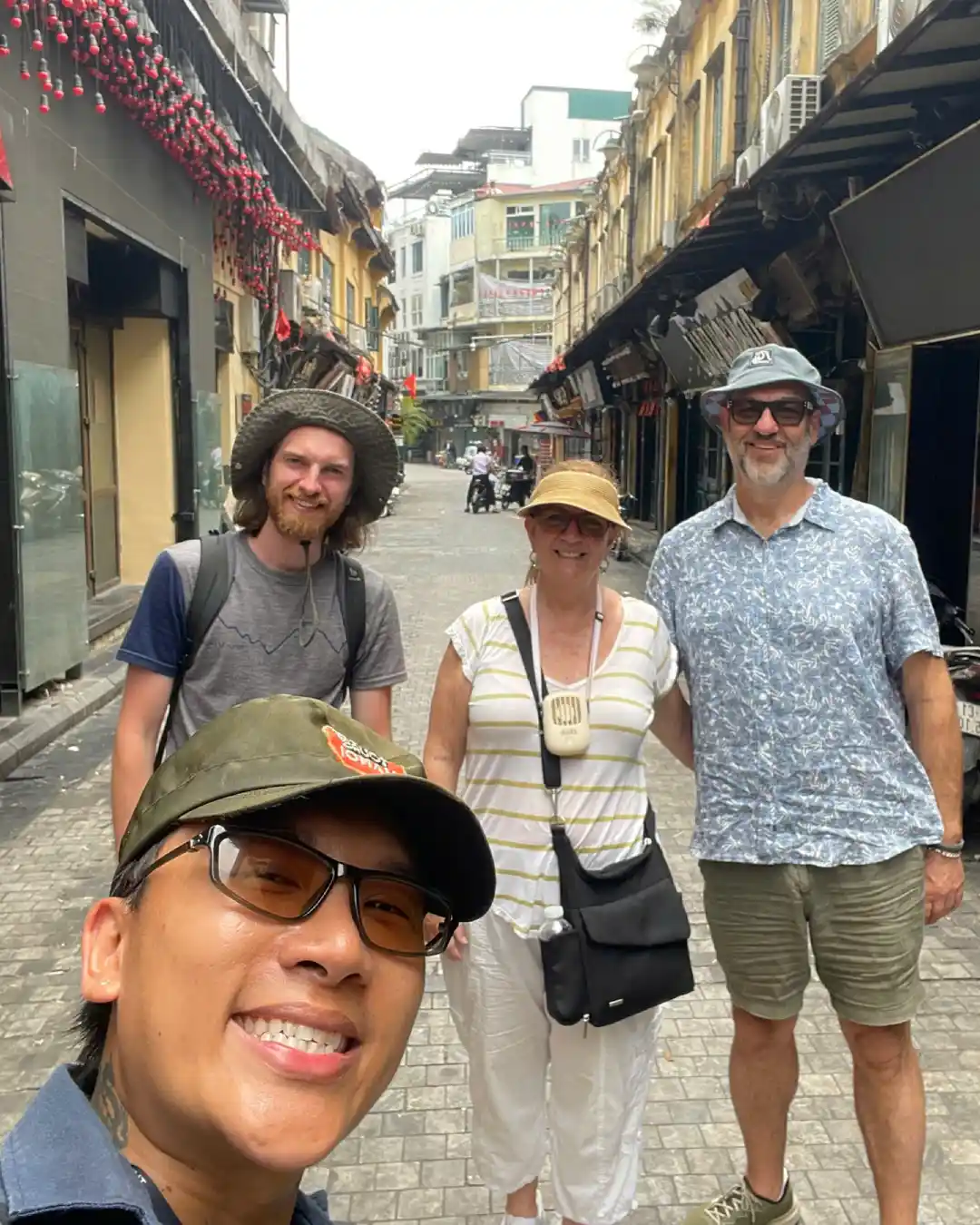
A photo journal from Hanoi — not a traveller review, and not proof that every detail in this guide happened on that walk.
Related content
Destination hub
Hanoi →Related stories
- Hanoi Old Quarter Guide: Streets, Food & Walking LogicNavigate Hanoi's Old Quarter with local walking logic — guild streets, markets, food timing, night energy and how to pair the lake without turning the district into a checklist sprint.
- Complete Guide to Visiting Hanoi (2026)The ultimate 2026 cornerstone guide to Hanoi — how many days, top sights, neighbourhoods, food, transport, itineraries, safety, budget and day trips from local experts.
- Dong Xuan Market Guide: Hanoi's Historic Trading HubNavigate Dong Xuan Market like a local — wholesale floors, honest bargaining, nearby food, weekend night market and how to pair it with Long Bien and Old Quarter walks.
- Bat Trang Pottery Village: 700 Years of Ceramic HeritagePlan Bat Trang from Hanoi — ceramic heritage, workshop visits, buying without tourist-trap regret, timing and how it pairs with craft-village and day-trip planning.
- Ta Hien Beer Street: Hanoi After DarkNavigate Ta Hien Beer Street after dark — energy, noise, safety, food pairings and quieter Old Quarter alternatives — so nightlife fits your trip instead of hijacking it.
- Traditional Craft Villages Around HanoiChoose the right craft village day from Hanoi — Bat Trang ceramics, Duong Lam ancient lanes and how to plan transfers, timing and buying without tourist-trap regret.