Tran Quoc Pagoda: Hanoi's Oldest Buddhist Temple
Visit Tran Quoc Pagoda on West Lake — Hanoi's oldest Buddhist temple, dress code, stupa photos, lunar-month crowds and how to pair it with a West Lake half-day.
By Paul15 min readThanh Nien Road, Tay Ho District, Hanoi
Introduction — answer first
Is Tran Quoc Pagoda worth visiting? Yes — especially on day three or four when Hoan Kiem and Ba Dinh feel familiar and you want slower lake-side Hanoi. The pagoda compresses centuries of Buddhist presence into one photogenic point; the real payoff is combining it with a West Lake walk or café afternoon, not a taxi dash for one Instagram frame. See also our complete guide to visiting Hanoi.
Paul cautions: "Guests who Grab to Tran Quoc, shoot the stupa, and leave miss 90% of West Lake life — residential calm, flower temples, expat cafés. Schedule half a day."
Is it really the oldest? Vietnamese records claim an initial foundation near the Red River with later moves to this peninsula; fires and wars rebuilt halls. "Oldest" means continuous institutional lineage, not unchanged timber from the sixth century. Honest guides say layers, not one original wall.
First-timers with two nights: optional. With four nights: strong yes, paired with Buddhism in Hanoi reading.
History — lineage, moves, and rebuilds
Tran Quoc began as Khai Quoc Pagoda during the Ly dynasty era, later renamed under Tran kings. Political capital shifts, river erosion, and urban growth moved the community to West Lake's edge — safer ground and imperial patronage.
French colonial bombing and twentieth-century wars damaged structures; 1950s restoration shaped much of what you photograph today, including the eleven-storey stupa (Bao Thap) added in 1998 — golden, hexagonal, unmistakable on skyline photos.
The bodhi tree in the courtyard — grafted from India's original tree tradition — symbolises enlightenment lineage. Treat it as living sacred object, not backdrop prop.
Context: Buddhism in Hanoi · History of Thang Long and modern Hanoi.
Architecture — what to notice
Main gate and courtyard
- Three-entrance gate (tam quan) — centre path often reserved for monks; visitors use sides
- Incense smoke — constant; accept light scent on clothes
- Stone stele and bells — read English placards where present
Prayer halls
- Red lacquer and gold gilt — typical northern pagoda palette
- Altars with Quan Am (Guanyin), Buddha triads, ancestral tablets
- Offerings — fruit, flowers; don't consume or rearrange
Bao Thap stupa
- Eleven levels symbolising Buddhist path stages — photograph from lake shore path for reflection shots
- Circumambulate clockwise if following local custom around stupa base when access open
Compare later same day with One Pillar Pagoda — iconic architecture vs lakeside monastery mood.
Etiquette and dress code — non-negotiables
| Rule | Why |
|---|---|
| Shoulders and knees covered | Active worship site |
| Remove shoes entering halls | Socks or bare feet on cool tile |
| Quiet voices | Meditation and prayer ongoing |
| No flash photography on altars | Disruptive and disrespectful |
| Women may visit during menstruation | Common question — generally allowed in Vietnamese pagodas; follow specific temple signs if posted |
| Donations optional | Small bills in box near altar — 20,000–50,000 VND fine |
| Point feet away from Buddha images | Sit or kneel feet tucked when seated |
Guards and lay volunteers will stop shorts and tank tops — carry sarong in day bag summer months.
Photo ethics: Monks may decline portraits — accept gracefully.
Visiting practically — tickets, timing, crowds
Entry: Small fee at gate — confirm current price locally (typically mid five-figures VND). Ticket sometimes combined in tour bundles; independent visit straightforward.
Hours: Generally morning to early evening; last entry before sunset cleaning. Holiday and Tet schedules change — read gate notice, not blog posts from 2019.
Crowd curve:
| Time | Experience |
|---|---|
| 07:00–08:30 | Quiet, monks chanting possible, soft light |
| 09:00–11:00 | Tour bus peak — narrow paths congested |
| 12:00–14:00 | Heat, fewer buses, still bright |
| 16:00–17:30 | Golden light, wedding photos outside gate |
| Full moon / Tet | Special offerings — beautiful but crowded |
Shaw shoots 08:00 Tuesday when weekend bus spillover fades — not a rule, a pattern.
West Lake half-day — pairing Tran Quoc properly
Don't isolate the pagoda. Sample Dinh's West Lake loop:
| Block | Activity |
|---|---|
| Morning | Tran Quoc 07:30–09:00 |
| Walk | Thanh Nien Road along lake — flower vendors, bench views |
| Coffee | Tay Ho café strip — see West Lake guide |
| Optional | Quan Thanh Temple or Truc Bach lake edge |
| Lunch | West Lake fish restaurants or return Old Quarter |
Grab from Hoan Kiem 15–25 minutes depending traffic; bicycle hire possible for confident riders — not recommended first jet-lagged day.
Alternate: Combine Ba Dinh morning (mausoleum, One Pillar) with Tran Quoc afternoon — both west-side but tiring; split across two days if pace matters. Route help: Ba Dinh district day guide.
Comparison — Tran Quoc vs other Hanoi pagodas
| Tran Quoc | One Pillar | Perfume Pagoda | |
|---|---|---|---|
| Setting | West Lake peninsula | Ba Dinh pond | Day trip cave complex |
| Visit time | 45–90 min | 20–30 min | Full day |
| Crowds | Bus groups AM | Constant stream | Seasonal pilgrimage |
| Photo icon | Golden stupa + lake | Single pillar lotus | Mountain river |
| First-trip priority | Day 3+ | Day 2 Ba Dinh | Optional extension |
| Entry cost | Small fee | Small fee | Boat + cable substantial |
Perfume Pagoda is different category — pilgrimage adventure, not city stop.
Seasonal and weather notes
| Season | Tran Quoc visit |
|---|---|
| Oct–Nov | Clear lake reflections — best photography |
| Mar–Apr | Warm; bodhi tree green vivid |
| Dec–Feb | Cool mist mood; grey lake still photogenic |
| May–Sep | Finish by 10:00 or start 16:00 — heat brutal on open peninsula |
| Rain | Umbrella ok; stupa shots dramatic; slippery steps |
What not to do — tourist failures
- Fly-by Grab at noon August — Heat, harsh light, bus crush trifecta
- Selfie stick in altar face — Guards will intervene
- Treat monks as photo props — Ask; often decline
- Ignore shoe removal — One step on sacred floor ruins visit tone
- Skip West Lake context — Pagoda alone underdelivers on time invested
Symbols decoded — read the pagoda with open eyes
Without primer, Tran Quoc becomes pretty gold tower. With ten minutes reading Buddhism in Hanoi, details activate:
Laughing Buddha (Budai) vs Historical Buddha (Siddhartha) — different figures, different meanings; don't conflate in captions.
Quan Am (Guanyin) — compassion bodhisattva; often female-presenting statue; wish ribbons nearby.
Guardian lions (singh) — pair at gate; male paw on ball, female paw on cub — touch protocol: don't climb.
Incense coils — burn hours; smoke density intentional offering, not ventilation failure.
Lotus motifs — purity rising from mud; appears on columns, altar cloths, stupa finials.
Bell and drum — struck at schedule hours; if you hear strike, pause conversation — moment of merit.
Paul runs symbol scavenger hunt for families: find three lotuses, one Quan Am, one lion — children engage without boredom.
Meditation and silence — optional five-minute practice
You need not be Buddhist to sit quietly in side hall:
- Remove shoes; choose rear bench
- Set phone airplane mode
- Five minutes watch breath; incense anchor
- Stand; bow slightly if moved — optional
- Exit without loud chat at door
Monks may meditate open-eyed nearby — do not photograph them in meditation. Merit accumulates for silence offered, not selfies taken.
West Lake dining — extend the half-day
Tran Quoc visits die early if you Grab back to pho alley immediately. Anna's lunch extensions:
| Style | Where logic | Budget (VND) |
|---|---|---|
| Lake fish | Restaurants facing Tay Ho — verify live tank | 150,000–350,000/person |
| Cha ca | Specialty elsewhere but West Lake has options | 120,000–250,000 |
| Banana flower salad | Seasonal side | 60,000–90,000 |
| Cafe lunch | Air-con + view if heat wins | 80,000–150,000 |
Reserve nothing for casual lunch; Friday evening fish busy — arrive 11:30 or 13:30 off-peak.
Full neighbourhood: West Lake Hanoi guide.
Transportation matrix — getting there without guesswork
| Mode | From Hoan Kiem | Notes |
|---|---|---|
| Grab car | 15–25 min; 60,000–100,000 VND | Easiest jet-lagged |
| Grab bike | 10–18 min; 35,000–55,000 VND | Helmet mandatory |
| Bus | Multiple routes stop Thanh Nien — confirm route number locally | Cheapest; Vietnamese signage |
| Bicycle | 25–40 min via quiet side streets | Confident riders only |
| Walk | 45–60 min one-way | Only cool months enthusiasts |
Return timing: Grab surge 17:00–19:00 weekday; pre-book or walk to main road pickup pin.
Combine with Ba Dinh district day guide only if one Grab west serves both — mausoleum morning + Tran Quoc afternoon efficient geographically, exhausting physically.
Photography beyond the stupa postcard
Shaw's non-obvious frames:
- Bodhi leaf silhouette against stupa gold — telephoto from courtyard bench
- Incense worker refilling coils — ask permission; early morning only
- Lake reflection from east shore path — walk five minutes from gate; stupa complete in water on calm October days
- Monk orange against grey sky — respectful distance; no pursuit shots
Avoid: Drone over pagoda without permit; flash on sleeping devotee; blocking offering queue for angle.
Second visit — what changes
Repeat visitors skip stupa hero shot; instead:
- Attend full moon offering bustle
- Walk entire Thanh Nien peninsula counter-clockwise
- Compare One Pillar Pagoda state icon narrative same day written notes
- Café cowork half-day Tay Ho — pagoda becomes neighbourhood church, not tourism peak
Full moon and Buddhist calendar — timing your visit
Full moon (ngay ram) and 1st lunar day draw extra lay devotees — incense volume peaks, parking chaos, merit atmosphere thick. Photogenic but crowded; arrive 07:00 not 09:30.
Vu Lan (ghost festival) mid-lunar seventh month — ancestor offerings visible; respectful observation.
Tet pagoda visits — locals queue Tran Quoc for new year merit; tourist entry may slow; confirm hours locally.
Calendar primer: Buddhism in Hanoi.
One Pillar + Tran Quoc same-day execution map
Geographically both west Hanoi, psychologically different — state icon vs community lake pagoda.
| Block | Site | Duration |
|---|---|---|
| 07:00–09:00 | Ba Dinh mausoleum area if open your dates | 90 min |
| 09:15–09:45 | One Pillar Pagoda | 30 min |
| 10:00–10:30 | Grab transit + rest | — |
| 10:30–12:00 | Tran Quoc + lake edge | 90 min |
| 12:00+ | West Lake lunch per West Lake guide | — |
Alternate split: Day A Ba Dinh cluster per Ba Dinh district day guide; Day B Tran Quoc slow — preferred if heat or jet lag high.
Tour bundle: Hanoi city tour negotiates sequence with AC recovery between sites.
Quiet corners within the pagoda grounds
Even bus days hide relative silence:
- Rear hall farthest from gate — fewer tour megaphones
- Bodhi tree bench — sit facing lake not stupa for crowd escape
- Incense preparation alcove — watch merit preparation without blocking
Five minutes in rear hall resets tour fatigue before West Lake walk — Paul schedules this before stupa hero photos for calm faces.
Grab home vs Old Quarter return — end-of-visit choice
After Tran Quoc, Grab to hotel tempts when legs tired — valid. But Old Quarter return via lake rim teaches city continuity:
- Grab to Hoan Kiem Lake drop → walk final 10 minutes hotel
- Cost similar; time +15 minutes; payoff orientation
West Lake hotel guests reverse logic — pagoda morning from home base, café afternoon local, skip cross-city Grab entirely. Base decision: where to stay in Hanoi.
Local expert insights
Paul: "I ask guests to sit five minutes in the side hall before photographing — noise drops, incense registers, tourism becomes pilgrimage-adjacent."
Dinh: "Schedule Tran Quoc after you have seen One Pillar — then compare state icon vs living lakeside community."
Anna: "West Lake lunch cha ca or lake fish is reward — don't Grab back to Old Quarter immediately."
Monk schedule: Morning chanting around dawn — visitors welcome if silent at rear; confirm locally which hall is open — renovation closes wings periodically.
Wedding photos: Couples shoot outside gate in ao dai — yield frame or shoot parallel lake path instead of blocking.
Closing — what to read next
Tran Quoc is the spiritual anchor of West Lake, not a standalone checkbox. Extend the day:
- West Lake Hanoi guide — cafés, walks, Quan Thanh
- Buddhism in Hanoi — symbols and calendar
- One Pillar Pagoda Hanoi — architectural contrast
- Ba Dinh district day guide — if combining west Hanoi
- Complete guide to visiting Hanoi — night-count placement
Tours: Hanoi city tour · Heritage Old Quarter tour
You visited well if you removed shoes once without reminder and if West Lake felt like residential Hanoi, not only a pagoda backdrop.
Evening West Lake — if you stay past sunset
Tran Quoc closes before full dark — but Thanh Nien Road remains walkable: couples on benches, badminton nets, lake breeze. Grab surge rises 18:00–20:00; walk toward Tay Ho café strip if energy remains per West Lake guide. Pagoda night photography from outside gate fence only — respect closed hours; no scaling walls for drone shots.
FAQ — quick answers
How much is Tran Quoc Pagoda entrance fee? Typically 15,000–25,000 VND for adults — confirm at the gate the day you visit. Minor price changes happen; tours may include entry in package price.
What are Tran Quoc Pagoda opening hours? Generally 07:30–18:00 daily with earlier quiet period; confirm locally for holidays, Tet, and renovation closures — do not rely on outdated third-party listings.
What should I wear to Tran Quoc Pagoda? Modest clothing covering shoulders and knees; remove shoes in prayer halls. Carry a light scarf in hot months. Hats off indoors.
How do I get to Tran Quoc Pagoda? Grab from Hoan Kiem 15–25 minutes; address Thanh Nien Road, Tay Ho. Cyclo or bicycle possible along lake roads for confident riders.
When is the best time to visit Tran Quoc Pagoda? 07:00–09:00 before tour buses; or 16:00–17:30 for golden light. Avoid midday heat May–September.
Is Tran Quoc Pagoda the oldest in Hanoi? Oldest continuous pagoda lineage is the claim — sixth-century origins with moves and rebuilds. Present buildings are mostly twentieth-century restorations including the 1998 stupa.
Can I visit Tran Quoc and One Pillar Pagoda same day? Yes — both west-side. Combine Ba Dinh sights morning, Tran Quoc afternoon, or split across two days to avoid fatigue. See Ba Dinh day guide.
Should I hire a guide? Optional. Site is compact; guide adds symbolism and history — worthwhile if Buddhism in Hanoi is new to you. City tour often includes Tran Quoc with commentary.
Are drones allowed at Tran Quoc Pagoda? Assume no over pagoda and West Lake without official Civil Aviation permission — enforcement and confiscation occur in central Hanoi. Ground photography from peninsula path suffices for reflection shots.
Can I wear shorts if I bring a scarf? Scarf over shorts often works at gate if knees covered convincingly; safer to wear long trousers or skirt. Staff discretion final — carry sarong in day bag May–September.
Does Tran Quoc Pagoda appear on Hanoi city tour itineraries? Often yes as West Lake stop — typically 30–45 minutes guided slot before café break. Independent visit allows longer lake pairing; tour bundles suit first-day orientation when complete guide context still forming.
Is there a dress code for children? Same modesty rules apply — shoulders and knees covered inside halls; comfortable shoes for shoe removal ritual.
Local tips
- →Arrive at Tran Quoc Pagoda at opening or late afternoon — Hanoi midday tour groups peak hard.
- →Pair Tran Quoc Pagoda with one nearby stop in the same district, not a city-wide scavenger hunt.
- →Group Tran Quoc Pagoda with nearby sights in the same Hanoi district to cut cross-town Grab time.
- →Walk to Tran Quoc Pagoda early; Hanoi heat and scooter density rise after 09:30.
Good to know
- Tran Quoc Pagoda ticket rules and camera policies can change — verify at the gate, not only in blogs.
- Shade and seating near Tran Quoc Pagoda are limited; carry water in warm Hanoi months.
- Near Tran Quoc Pagoda, Hanoi street vendors often need small cash even when hotels take cards.
- Tet and festival weeks change opening patterns for Tran Quoc Pagoda — verify that week’s hours.
Before you go
- Before you go: check whether Tran Quoc Pagoda closes for ceremonies or maintenance that week.
- Wear shoes you can remove quickly if Tran Quoc Pagoda requires it.
- Screenshot offline maps for the blocks around Tran Quoc Pagoda before you enter dense Hanoi lanes.
Common mistakes
- ✕Taxi there at 10:30 only — Bus peak and heat; poor trade.
- ✕Shorts at gate — Turned away; sarong sellers outside but better prepared.
- ✕One-hour total West Lake allocation — Lake deserves three hours minimum.
- ✕Believing every timber is sixth century — Appreciate lineage without fake antiquity claims.
- ✕Combining Perfume Pagoda fantasy same day — Geography impossible; separate trip.
- ✕Drone launch over lake — Restrictions common; fines real.
- ✕Feeding lake fish illegal offerings — Follow signage.
- ✕Skipping Buddhism in Hanoi primer — Symbols stay opaque.
- ✕Night visit expectation — Closes evening; no floodlit night entry like some Thai temples.
- ✕Ba Dinh + Tran Quoc + citadel marathon — Split west-side across two half-days.
Practical information
- How to get there
- Thanh Nien Road between West Lake and Truc Bach — about 10 minutes by Grab from Hoan Kiem.
- Best time to visit
- Weekday mornings; avoid 1st and 15th lunar days if you want quiet courtyards.
- Suggested itinerary
- Tran Quoc → West Lake shore walk → coffee in Tay Ho → return via Truc Bach.
- Nearby attractions
- West Lake
- Truc Bach Lake
- Quan Thanh Temple
- Tay Ho cafés
Frequently asked questions
- How old is Tran Quoc Pagoda?
- It was founded in the 6th century, making it generally recognised as the oldest Buddhist temple in Hanoi. It was relocated to its current island site in 1615.
- Is there an admission fee?
- No. Entry is free, although donations to support the temple are welcomed.
- Can I climb the stupa?
- No. The eleven-tier stupa is a devotional structure and is not open for ascent.
- What should I wear?
- Modest clothing covering shoulders and knees. Shoes are removed at the entrance to the main shrine.
From the road
Related real moment
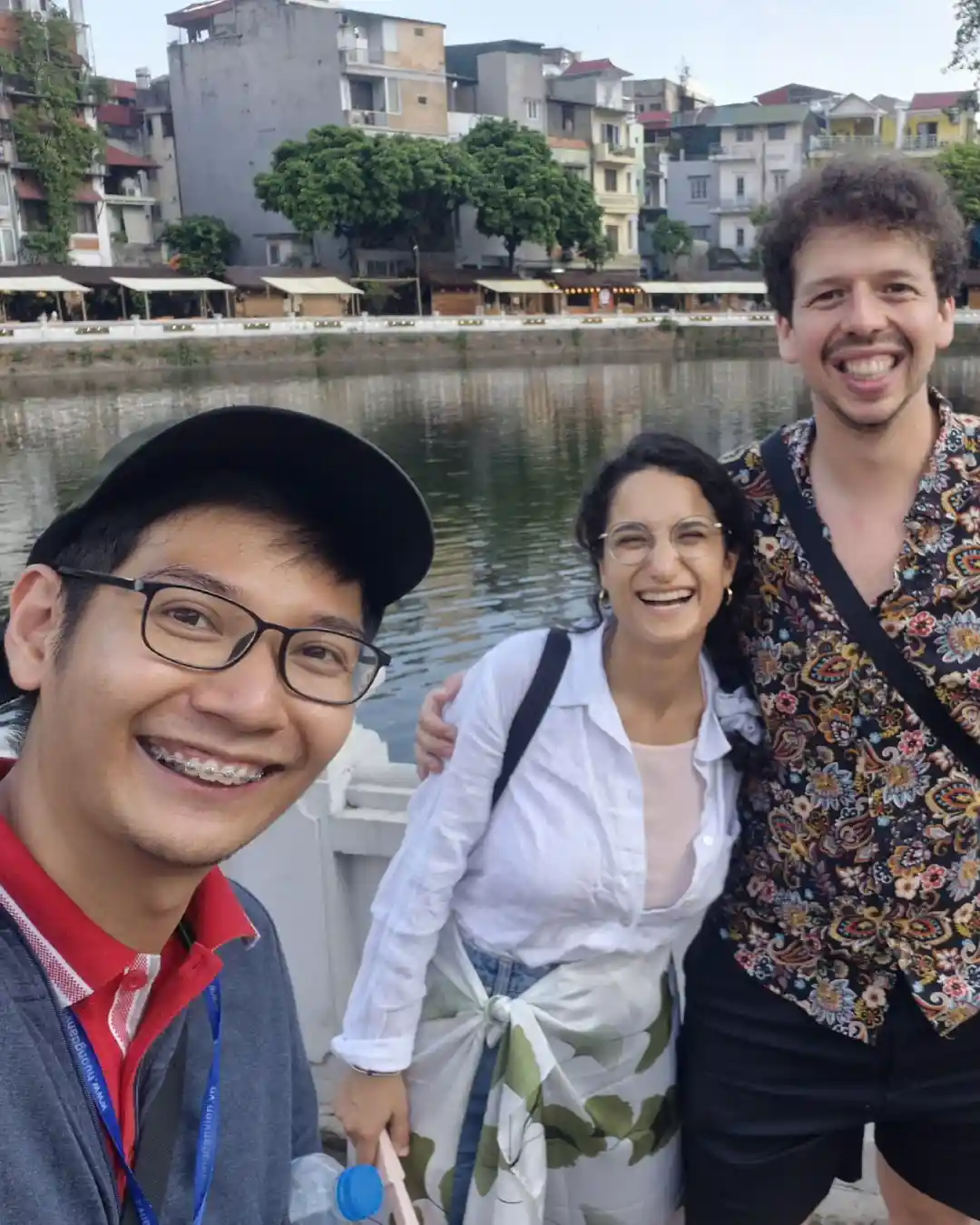
A photo journal from Hanoi — not a traveller review, and not proof that every detail in this guide happened on that walk.
Related content
Knowledge hub
Hanoi Landmarks →Historic landmarks, temples, markets and iconic places that define Hanoi.
Destination hub
Hanoi →Related stories
- One Pillar Pagoda Hanoi: Symbolism & Quick Visit GuideVisit One Pillar Pagoda the right way — short stop, lotus symbolism, photo etiquette and the essential pairing with Ho Chi Minh Mausoleum on a Ba Dinh morning.
- Ngoc Son Temple Hanoi: Island Temple on Hoan Kiem LakeVisit Ngoc Son Temple on Hoan Kiem's island — bridge approach, tickets, modest dress, what to expect inside and how to pair it with a lake loop without duplicating the full lake guide.
- Truc Bach Lake Hanoi: Walks, Cafés & Local RhythmExplore Truc Bach Lake south of West Lake — jogging loops, café strips, memorial context and how it differs from a full West Lake day.
- Quan Thanh Temple Hanoi: West Lake Taoist GateVisit Quan Thanh Temple on West Lake — Taoist guardian lore, bronze statue, etiquette and how it differs from Tran Quoc Pagoda.
- West Lake Hanoi Guide: Temples, Cafés & the Quiet ShoreExplore West Lake (Tay Ho) as Hanoi's quieter shore — Tran Quoc Pagoda, lakeside cafés, walking logic and an honest comparison with Hoan Kiem for first-time and return visitors.
- Buddhism in Hanoi: Living Faith Across the CityUnderstand Buddhism as living practice in Hanoi — pagoda etiquette, lunar visit days, and how Tran Quoc, One Pillar, Ngoc Son and Bach Ma fit a respectful temple day.