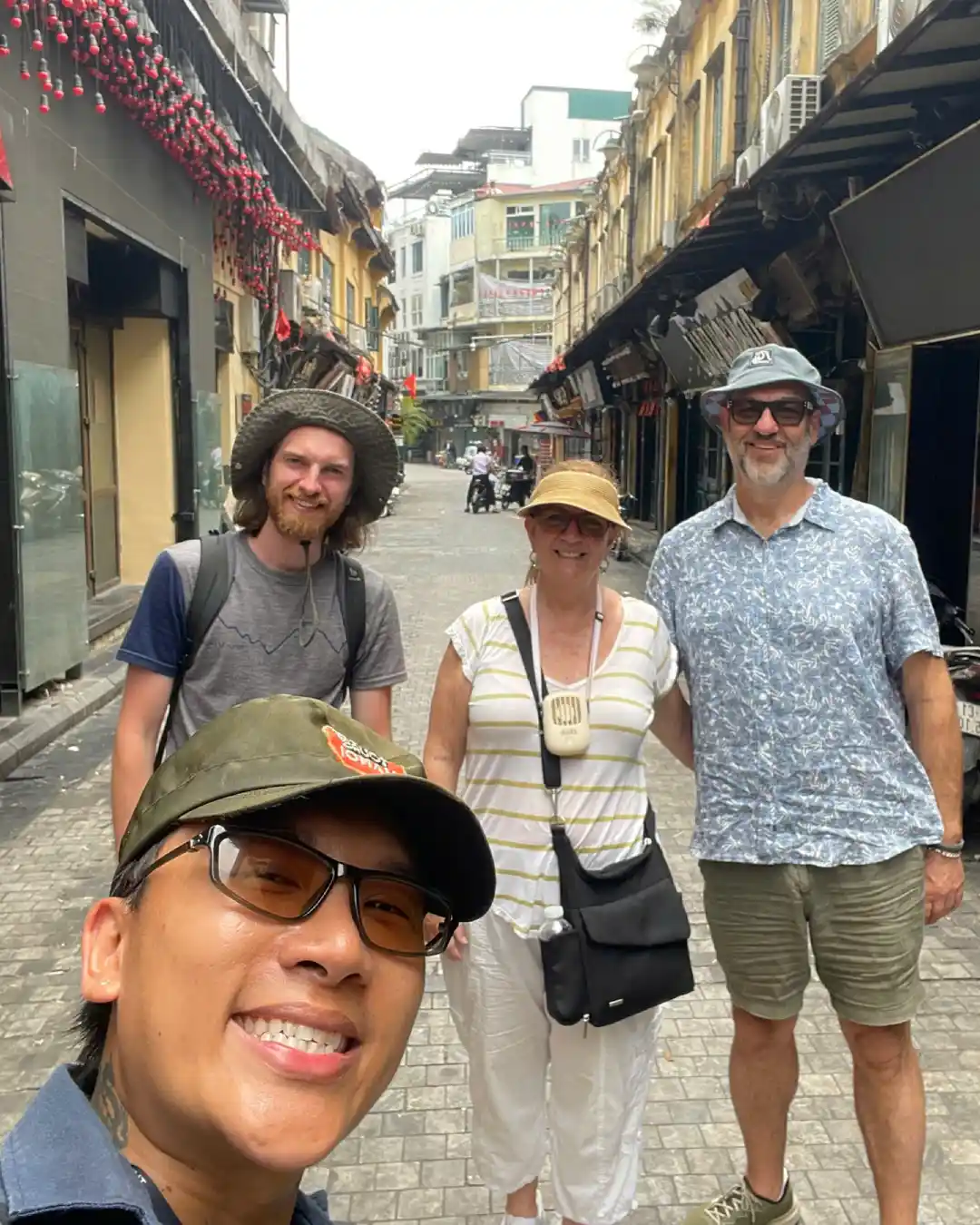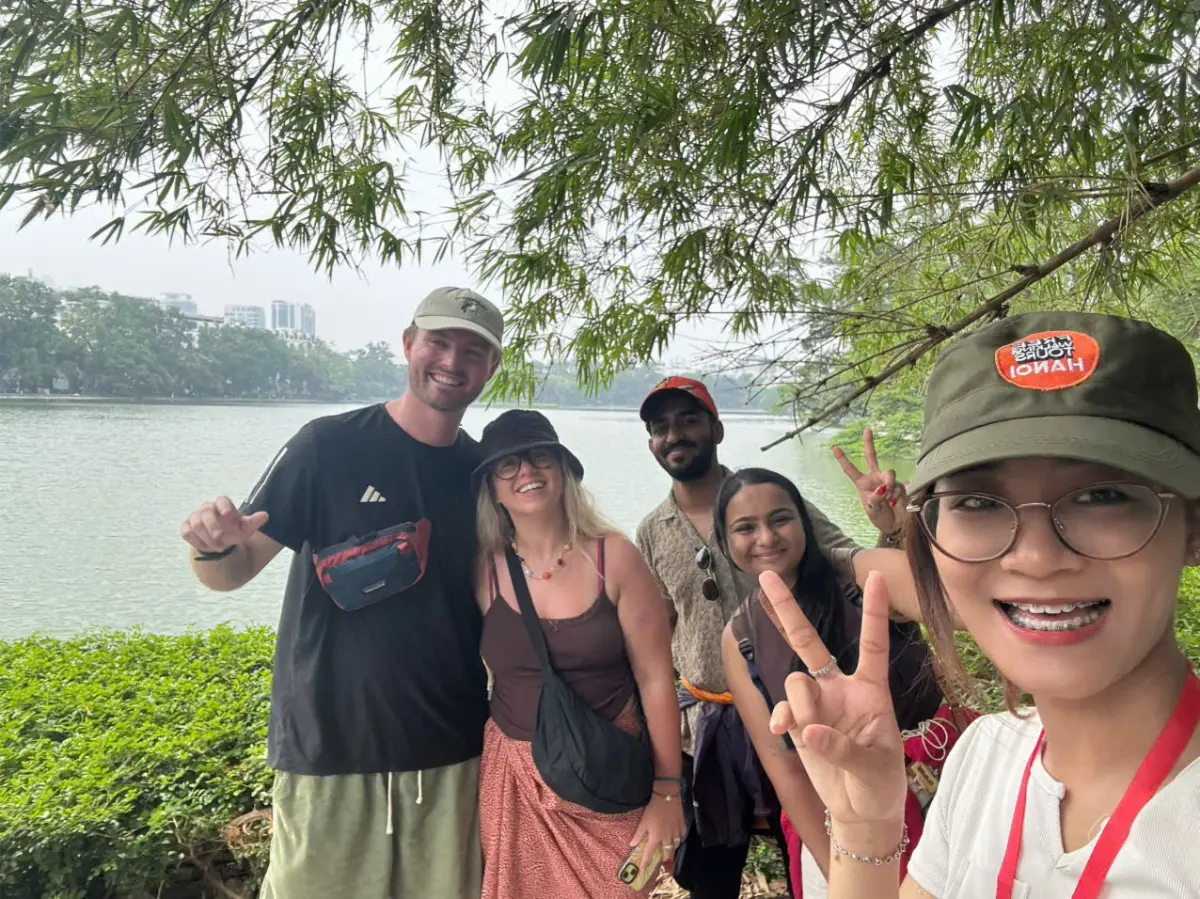
Meeting point under the willows at Hoan Kiem Lake — red lanyard name cards on, group photo before the two-hour walk into the Old Quarter begins.
Story · Hanoi, Vietnam
An Afternoon Walking Hanoi With Hannah
Four travellers, one local guide, and a slow loop through the parts of Hanoi that most maps don't bother labelling. The group met Hannah on the north side of Hoan Kiem Lake — laminated name cards on red lanyards, the universal sign that a Hanoi walking tour is about to begin.
From there the route opened into the Old Quarter's back lanes, crossed Long Bien Bridge at the slowest hour of the afternoon, and ended on the railway tracks above the Red River. No script, no rehearsed photo stops. This is what the walk actually looked like.
Into the Old Quarter's Back Lanes
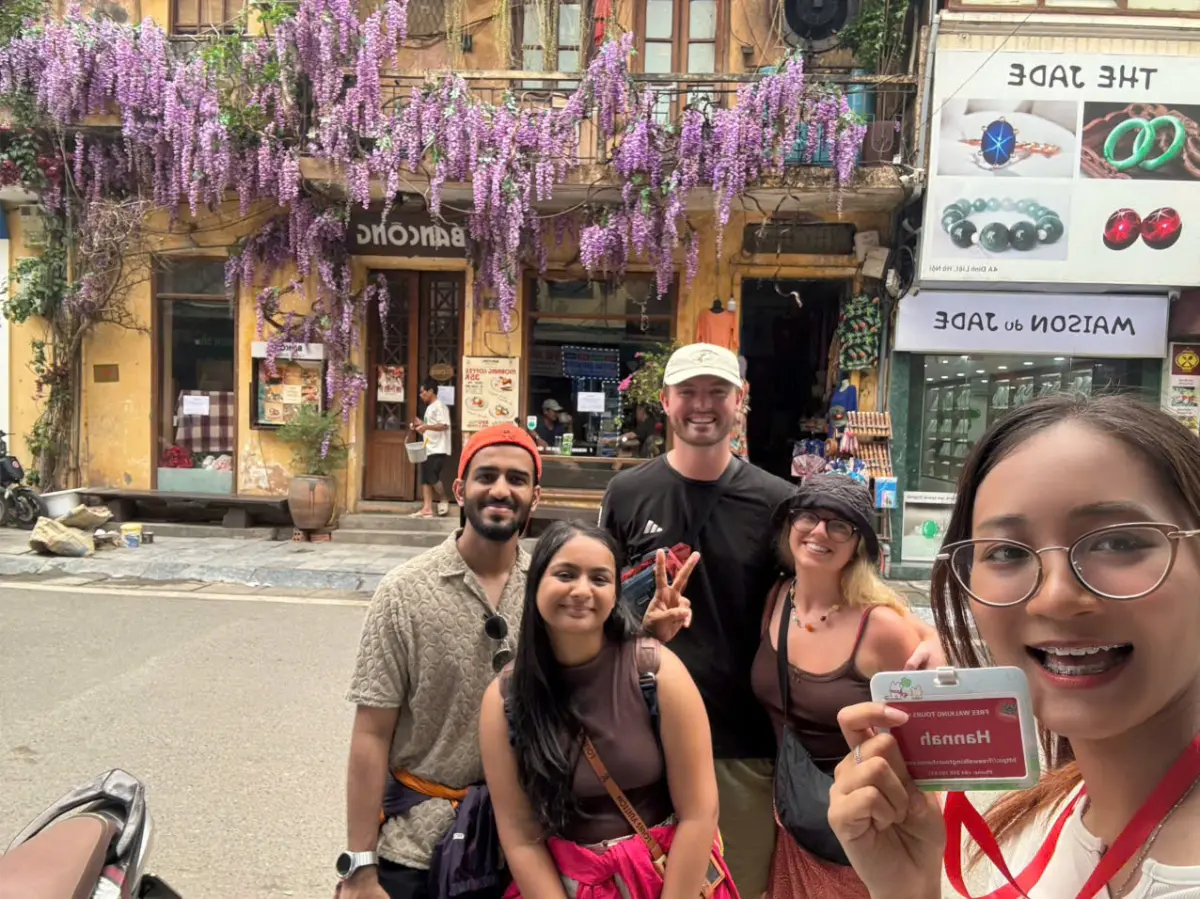
Rather than threading the obvious tourist streets, Hannah took the group through the back lanes that run parallel to Hang Gai and Hang Bac. Somewhere off Dinh Liet they stopped under a yellow colonial house wrapped in purple wisteria — the kind of building people walk past three times before noticing.
She pointed out which shop had been run by the same family for two generations, which doorway opened into a working tea kitchen, which lane the bun cha sellers occupy at lunchtime. The route adjusts as the group asks questions. That afternoon it drifted twice for photos that were not on any itinerary.
Crossing Long Bien Bridge
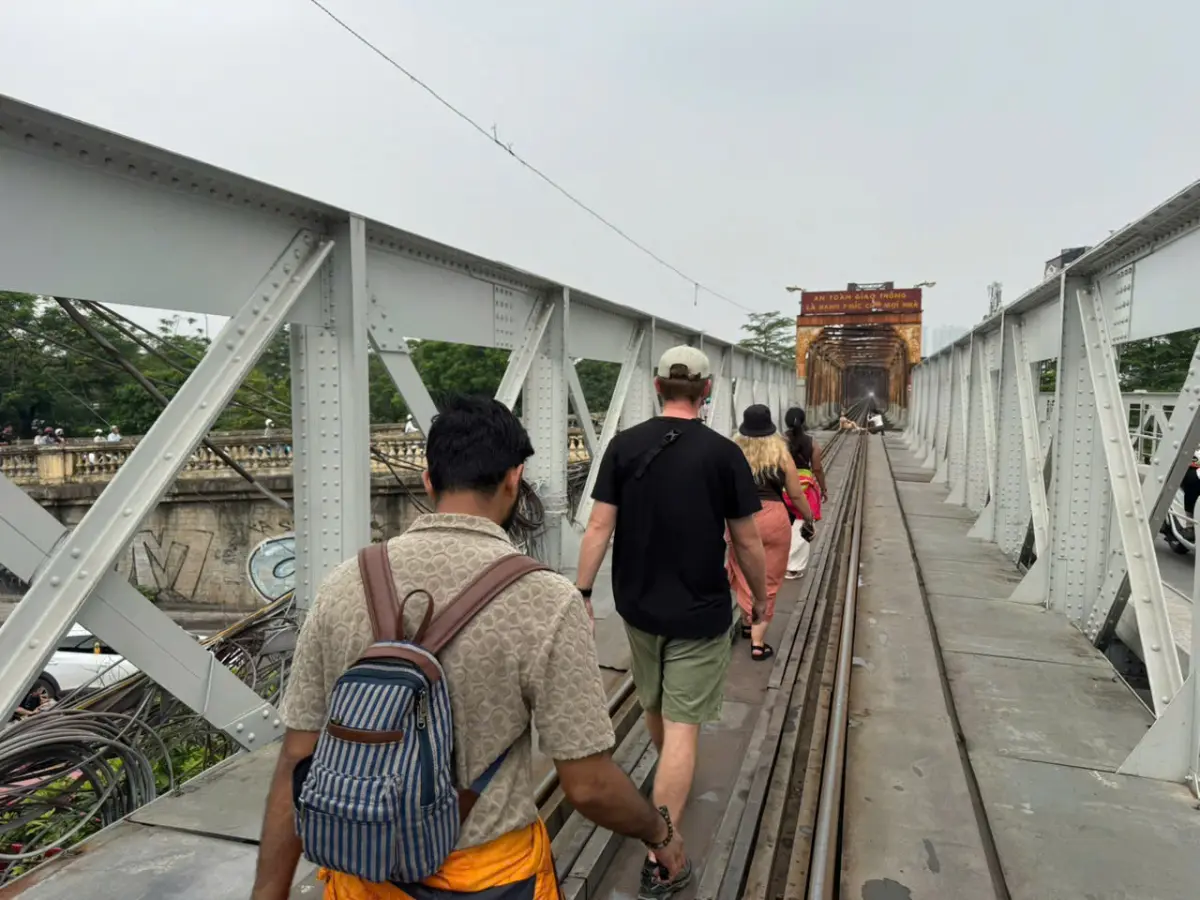
The last hour of the walk is always the bridge. The group moved single-file along the pedestrian strip, scooters humming past on one side, the railway tracks on the other. Rusted iron lattice overhead, patched timber underfoot, the Red River brown and wide below.
Hannah stopped halfway across to let the city open up — banana farms on the riverbank, newer bridges downstream, the towers of the modern districts soft in the haze. Nobody was in a hurry to keep walking.
The End-of-Tour Ritual on the Railway Tracks
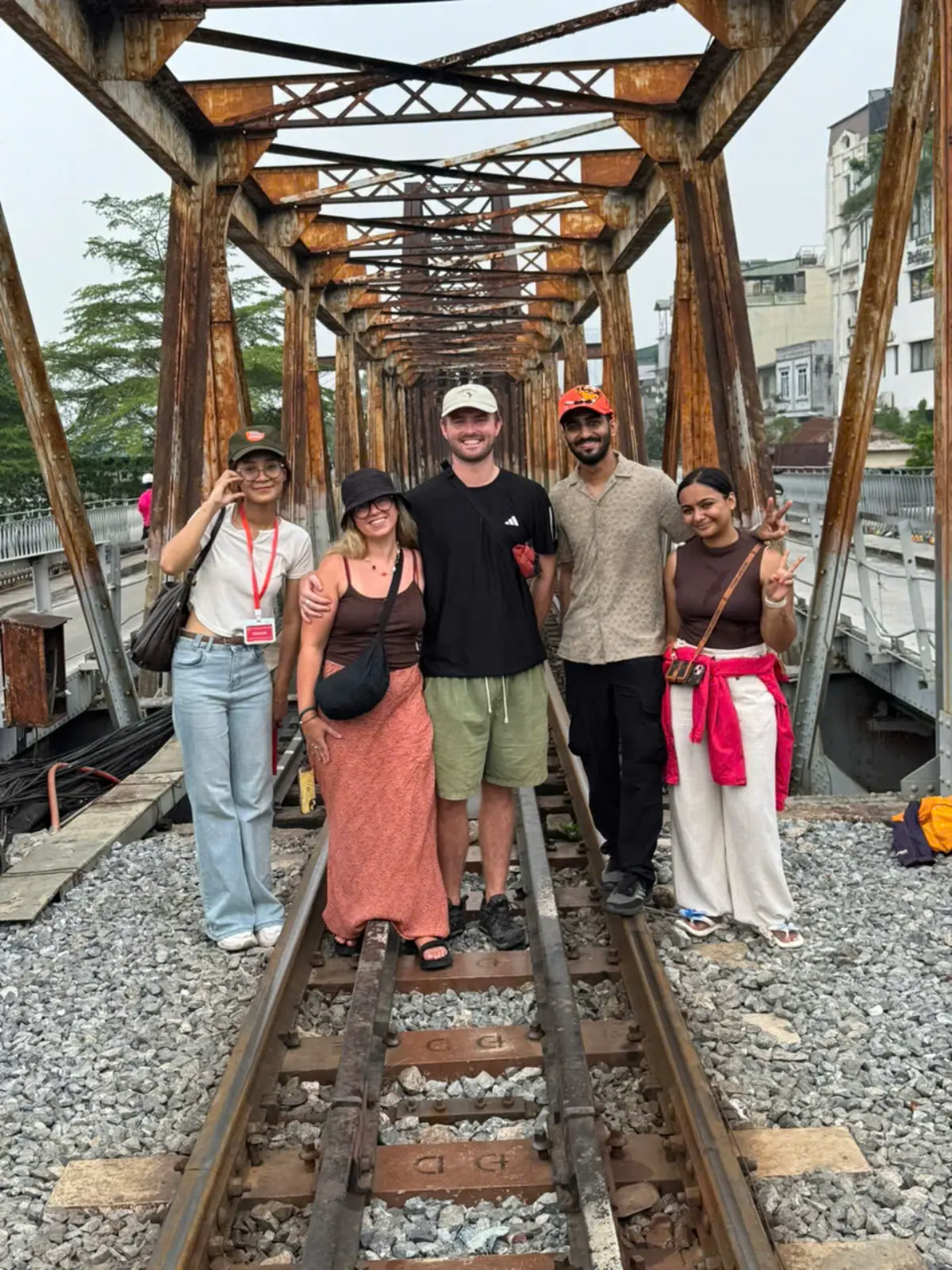
Every Hannah walk ends the same way: a group photo on the railway tracks, with the iron of Long Bien framing the shot. The light at that hour is forgiving, and after two hours of walking the group has stopped being strangers.
These four travellers had landed in Hanoi the night before. By the time the shutter clicked they had learned how to cross a Hanoi street, found a coffee they liked, and picked up the first Vietnamese words they would actually use on the rest of the trip.
Related