The History of Thang Long and Modern Hanoi: A Thousand Years of Change
Discover the history of Hanoi from the founding of Thang Long in 1010 to the modern capital of Vietnam, including dynasties, colonial heritage and cultural landmarks.
By Paul12 min readHanoi, Vietnam
Introduction
Few cities in Southeast Asia possess a history as long and complex as Hanoi. For more than a thousand years, the city has served as a political, cultural, educational, and economic center of Vietnam. See also our Long Bien Bridge guide.
Known historically as Thang Long, meaning “Ascending Dragon,” Hanoi has witnessed imperial dynasties, foreign invasions, colonial rule, wars, revolutions, and rapid modernization. Yet despite these transformations, the city continues to preserve visible traces of every era of its past.
Understanding the story of Thang Long helps visitors appreciate why Hanoi remains one of Asia’s most fascinating capitals.
The Founding of Thang Long
In 1010, Emperor Ly Thai To moved the capital of Dai Viet from Hoa Lu in Ninh Binh to the Red River plain.
According to legend, the emperor saw a dragon rising from the river and interpreted it as a favorable sign. The new capital was named Thang Long, meaning “Ascending Dragon.”
Its strategic location provided access to trade routes, fertile agricultural land, and military advantages that helped establish the city as the political heart of Vietnam.
The Imperial Capital
Under the Ly, Tran, Le, and later dynasties, Thang Long developed into one of the most important cities in Southeast Asia.
The Imperial Citadel served as the center of political power, while surrounding districts became home to scholars, merchants, craftsmen, and religious institutions.
The Temple of Literature, founded in 1070, symbolized the growing importance of education and Confucian scholarship.
During this period, the foundations of Hanoi’s cultural identity were established.
The Old Quarter and Commercial Growth
As the capital expanded, artisans and traders from surrounding villages settled outside the imperial walls.
These communities formed the famous guild streets that later became Hanoi’s Old Quarter. Many streets specialized in particular products and trades, creating the commercial district that remains active today.
The Old Quarter became a center of commerce connecting northern Vietnam with regional trade networks.
Colonial Hanoi
The late nineteenth century brought profound change when Hanoi became the capital of French Indochina.
French planners introduced broad boulevards, government buildings, railways, parks, and European-style architecture.
Landmarks such as the Hanoi Opera House, St Joseph Cathedral, Presidential Palace, and Long Bien Bridge emerged during this period.
The coexistence of traditional Vietnamese neighborhoods and colonial districts created the distinctive urban character that still defines Hanoi today.
Revolution and Independence
The twentieth century was marked by political upheaval and struggle for independence.
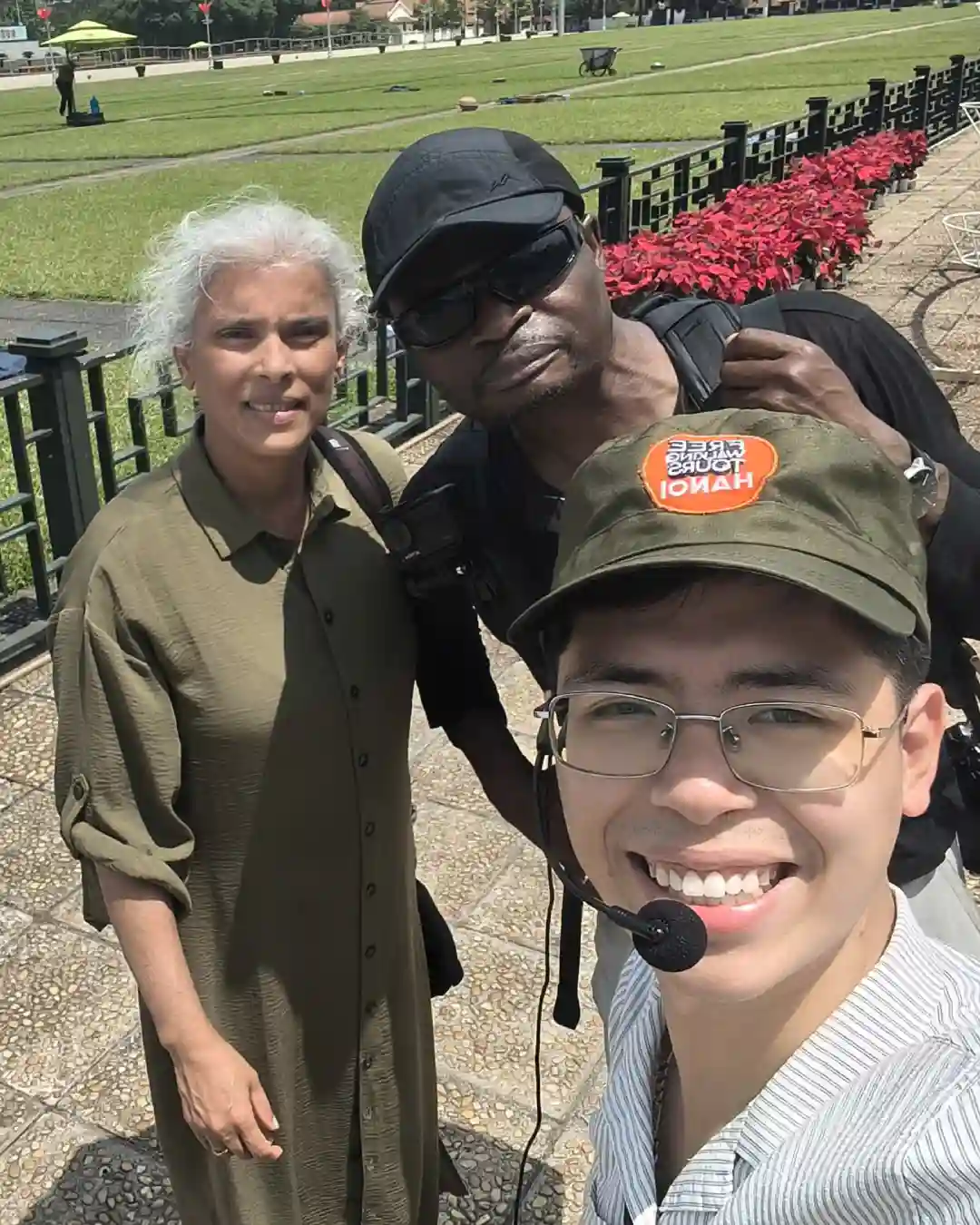
Hanoi became a center of revolutionary activity during the fight against French colonial rule. Following the August Revolution of 1945, Ho Chi Minh proclaimed the independence of Vietnam in Ba Dinh Square.
The city later played a central role during decades of conflict that shaped modern Vietnamese history.
Hanoi in the Modern Era
Following national reunification in 1975, Hanoi continued to grow as the capital of Vietnam.
Economic reforms introduced in the late twentieth century accelerated development, attracting investment, expanding infrastructure, and transforming the city’s skyline.
Today, modern office towers, universities, museums, and transportation systems exist alongside ancient temples, colonial buildings, and traditional neighborhoods.
Heritage and Identity
Despite rapid growth, Hanoi has preserved many elements of its historical identity.
Visitors can still explore:
- The Imperial Citadel of Thang Long
- The Old Quarter
- Temple of Literature
- Hoan Kiem Lake
- O Quan Chuong Gate
- Tran Quoc Pagoda
- Colonial-era landmarks
These sites collectively tell the story of a city that has evolved continuously for more than a millennium.
Where history meets the ground — Ba Dinh half-day
Three sites make the abstract timeline tangible in one morning: See also our Thang Long Imperial Citadel guide. See also our complete guide to visiting Hanoi.
- Thang Long Imperial Citadel — archaeological layers of dynastic power; UNESCO central sector. Our citadel guide covers Doan Mon Gate and the 18 Hoang Dieu excavations.
- Ho Chi Minh Mausoleum & Ba Dinh Square — independence proclaimed here in 1945; modern state symbolism. Pair with the One Pillar Pagoda in the same enclosure.
- Temple of Literature — founded 1070; imperial examinations and Confucian education. The doctor stelae connect directly to the Ly dynasty capital story above.
Our Ba Dinh district day guide orders these in a practical route with timing and dress-code notes.
What Visitors Experience Today
Modern Hanoi is often described as a city of layers.
Walking through the capital, visitors move between ancient temples, French colonial architecture, Soviet-era buildings, and contemporary urban development.
Few places illustrate Vietnam’s historical journey as clearly as Hanoi.
Understanding the history of Thang Long allows travelers to see the city not simply as a collection of attractions, but as a living record of more than one thousand years of Vietnamese history.
Local tips
- →Read history here; walk Ba Dinh sites for tangible layers.
- →Old Quarter guild streets show commercial growth outside walls.
- →French Quarter boulevards show colonial urban planning.
Good to know
- Thang Long means Ascending Dragon — legend of river dragon.
- Temple of Literature (1070) marks Confucian state education.
- Modern towers sit beside tube houses — city of layers.
Before you go
- Before you go: note which sites in The History of Thang Long and Modern Hanoi need covered shoulders or silence.
- Carry a small notebook if you like linking museum labels back to The History of Thang Long and Modern Hanoi.
- Screenshot offline maps for the blocks around The History of Thang Long and Modern Hanoi before you enter dense Hanoi lanes.
Common mistakes
- ✕Treating history as abstract — the citadel excavations are physical proof.
- ✕Skipping Ba Dinh because the Old Quarter filled day one.
- ✕Confusing culture article with practical district guides.
Practical information
- How to get there
- History is city-wide — start Ba Dinh for imperial/modern arc.
- Best time to visit
- Read before visiting; walk sites over two days.
- Suggested itinerary
- Day 1 lake loop → Day 2 Ba Dinh history walk.
- Nearby attractions
- Imperial Citadel
- Mausoleum
- Temple of Literature
- Old Quarter
Frequently asked questions
- What was Hanoi originally called?
- The city was known as Thang Long, meaning “Ascending Dragon,” after becoming the capital in 1010.
- Why is the year 1010 important?
- It marks the relocation of the capital by Emperor Ly Thai To and the founding of Thang Long.
- What does Thang Long mean?
- The name means “Ascending Dragon” and originates from a legendary vision witnessed by the emperor.
- Why is Hanoi historically important?
- For more than a thousand years, Hanoi has served as the political and cultural center of Vietnam.
- Can visitors still see evidence of different historical periods?
- Yes. Hanoi preserves landmarks from imperial, colonial, revolutionary, and modern eras throughout the city.
From the road
Related real moment
A photo journal from Hanoi — not a traveller review, and not proof that every detail in this guide happened on that walk.
Related content
Knowledge hub
Culture & History →Explore the history, traditions, religions and cultural influences that shaped Hanoi and Vietnam through the centuries.
Destination hub
Hanoi →Related stories
- French Colonial Heritage in Hanoi: Architecture, Food and Everyday LifeHow French Indochina shaped Hanoi's boulevards, baguettes and coffee culture — and where to see that legacy today without confusing history with a walking route.
- Hanoi Street Names and Their StoriesDecode Hanoi's Hang streets — silk, silver, bamboo and more — with walking lore that turns Old Quarter navigation into living history rather than a map of random names.
- National Museum of Vietnamese History HanoiPlan the National Museum of Vietnamese History on Trang Tien — dynasty highlights, French-era building, half-day slot and French Quarter pairing.
- Co Loa Ancient Citadel Guide: Spiral Fortress North of HanoiVisit Co Loa Citadel — spiral earthworks, Au Lac legend, temples and half-day logistics north of Hanoi distinct from Thang Long.
- Vietnam Museum of Revolution HanoiVisit the Vietnam Museum of Revolution — independence narrative galleries, Ba Dinh pairing and how it differs from Military History and Hoa Lo.
- Confucian Influences on Vietnamese CultureUnderstand Confucian influence in Vietnamese culture — education ideals, social values and why the Temple of Literature matters — then visit the entity page for practical courtyard guidance.