Bat Trang Pottery Village: 700 Years of Ceramic Heritage
Plan Bat Trang from Hanoi — ceramic heritage, workshop visits, buying without tourist-trap regret, timing and how it pairs with craft-village and day-trip planning.
By Anna15 min readBat Trang Village, Gia Lam District, Hanoi

Introduction — answer first
Travellers search "Bat Trang pottery village day trip from Hanoi" wanting distance honesty, whether workshops are tourist theatre, and how to buy ceramics without overpaying for factory glaze. Yes — Bat Trang is worth a half-day if you accept functional craft village, not alpine scenery. Go weekday morning, enter a working family workshop before the main market, and treat shopping as optional after understanding production. See also our complete guide to visiting Hanoi.
Anna and Dinh, our village-day editors, rank Bat Trang first craft exit from Hanoi for accessibility — closer and denser than Duong Lam ancient village, more hands-on than browsing Old Quarter souvenir shelves. This guide covers seven centuries of ceramic context, what production looks like today, half-day logistics from the capital, kiln and workshop visit patterns, buying tips with tourist-trap honesty, pairing with traditional craft villages around Hanoi and day trips from Hanoi guide, and tour options including Bat Trang Pottery Village tour and Hanoi City Tour combinations.
Seven hundred years — why Bat Trang matters
Ly dynasty origins and Red River clay
Artisan families settled along the Red River (Song Hong) where clay deposits and water transport met Thang Long capital demand. Ly dynasty patronage (eleventh century onward) linked village output to temple vessels, household ware, and trade downstream. Seven-century claim reflects continuous community identity, not one unchanged kiln — wars, industrialisation, and market shocks reset workshops but craft knowledge persisted.
Le and Nguyen era reputation
By early modern dynasties, Bat Trang ceramics supplied royal households, communal houses, export markets — blue-and-white traditions, celadon glazes, utilitarian bowls at scale. Pieces appear in museum collections globally — village name synonymous with Vietnamese ceramic export.
Twentieth century survival
French colonial trade, partition, war, and socialist collectivisation disrupted but did not erase family workshops. Post-Doi Moi economy reopened private enterprise — today thousands of households participate across hand-thrown, mould-cast, and industrial-scaled production.
UNESCO and intangible heritage framing
Bat Trang represents living craft heritage — skills transmitted parent-to-child, community guild structures, festival ties. Compare cluster context in traditional craft villages around Hanoi — Van Phuc silk, Quang Phu Cau incense, Duong Lam stone — each different half-day logic.
What you see today — village texture
Narrow lanes and kiln smoke
Enter village proper — motorbike ceramic loads, clay dust on tiles, kiln chimney smoke on firing days, cats on wall stacks. Not sanitised open-air museum; working neighbourhood where tourism secondary to production schedule.
Workshop typology
| Type | Visitor experience | Authenticity note |
|---|---|---|
| Family hand workshop | Watch throw, trim, glaze | Strongest craft education |
| DIY tourist studio | Pay to shape cup | Fun; not master artisan |
| Showroom factory | Scale production tour | Educational; less intimate |
| Market stall only | Buy without process | Weakest unless time tight |
Anna recommends one family workshop + market walk — not three identical DIY studios.
Bat Trang Ceramic Museum (if open)
Museum spaces contextualise history — good rainy-day supplement; verify current hours locally. Do not substitute museum for lane walking.
Half-day from Hanoi — logistics
Distance and duration
From Hoan Kiem Lake, expect 13–15 km and 30–50 minutes by car depending on Gia Lam bridge traffic. Half-day (3–4 hours on site) minimum; full day if combining Duong Lam — ambitious, not default.
Getting there independently
- Grab / taxi — Easiest; agree wait time for return pickup
- Motorbike taxi — Cheaper; helmet and bargain clarity
- Public bus — Possible budget route; slower; Dinh uses when guiding students
- Bicycle — Enthusiast only; traffic heavy on exit routes
Getting there guided
Bat Trang Pottery Village tour — Transport, workshop stops, timing coordinated; best for first craft exit without route anxiety.
Hanoi City Tour — City sights primary; some operators offer craft village add-on days — confirm craft time not drive-by photo stop.
Full comparison: day trips from Hanoi guide · craft villages hub.
Best timing table
| Slot | Experience |
|---|---|
| 08:00–11:00 weekday | Ideal — kilns, artisans, school-day calm |
| Saturday morning | Busier; DIY queues |
| Sunday afternoon | Tour bus peak; heat |
| Rainy weekday | Workshops indoors; market covered sections |
Avoid Tet shutdown windows — verify lunar calendar via Tet in Hanoi.
Workshop and kiln visit — what to expect
Watching production
Typical sequence visible at family shops:
- Clay prep — Wedging, filtering impurities
- Throwing — Wheel forming bowls, vases
- Drying — Sun racks in lane
- Trimming and carving — Pattern work
- Glazing — Dip or spray; chemical handling — do not touch wet glaze without staff ok
- Kiln loading and firing — High-temperature batch; firing days smell and heat — fascinating from safe distance
Not every step runs every hour — morning visits align with throwing; firing may be afternoon or separate day.
Hands-on DIY session
Pay fixed fee (verify on site, typically low USD equivalent) to shape small cup or bowl — staff fire and glaze later; pickup or ship extra cost. Suitable families and teens — not masterclass. Anna: One DIY per trip sufficient — duplicate studios add little.
Kiln etiquette
- Do not open kiln doors without explicit invitation
- Children supervised — hot surfaces real
- Dust masks optional for sensitive lungs in dry season
Shopping — buying tips and tourist-trap honesty
What Bat Trang makes well
- Daily bowls and plates — utilitarian, affordable
- Tea sets — Gift-weight reasonable
- Vases and decorative pieces — Wide price band
- Custom glazed tiles — If shipping planned
- Architectural ceramic elements — Niche buyer
Price bands — rough 2026 mental model
| Item | Local market range (VND) | Notes |
|---|---|---|
| Small bowl | 30,000–80,000 | Volume discount stacks |
| Tea cup set (6) | 150,000–400,000 | Glaze complexity varies |
| Medium vase | 200,000–800,000+ | Hand-thrown premium |
| DIY unfired piece | Workshop fee separate | Shipping extra |
Confirm at purchase — no fixed global price.
Quality signals
- Even glaze — No bubble craters, drip runs unless artistic
- Stable base — Sits flat on table
- Weight proportion — Thick enough for daily use if buying bowls
- Hand sign or workshop stamp — Some artisans mark work
Tourist-trap patterns — honest
Red flags:
- "Ancient dynasty" glaze story on mass mould piece — marketing exceeds object
- Same vase 500k at gate, 180k deeper in lane — Walk before large buy
- Shipping promise without contract — Fragile loss risk; get written tracking
- Factory seconds sold as premium — Inspect rim chips
- Guide commission shop only — Insist seeing second workshop if tour feels single-stop
Green flags:
- Artisan names workshop — Shows pride
- Willing to show kiln or wheel — Transparency
- Price consistent when you return walk — Not gate inflation only
Dinh: Buy when you will use it — not obligatory village tax. Craft villages hub repeats ethic cluster-wide.
Shipping and luggage
Airline baggage — Wrap tightly; declare if required. International courier from village services varies — get tracking number or carry-on choice for valuable piece. Small bowl stack in backpack survives if padded.
Bat Trang vs other craft day trips — comparison table
| Destination | Drive time | Focus | Best for |
|---|---|---|---|
| Bat Trang | 30–50 min | Pottery, kilns, market | First craft half-day |
| Van Phuc | ~30 min | Silk weaving | Textile buyers |
| Duong Lam | ~60 min | Ancient village architecture | History + rural mood |
| Quang Phu Cau | ~40 min | Incense making | Photo-sensitive visitors |
| Ninh Binh | 2+ hr | Landscape | Full day, not craft focus |
Deep Ninh Binh: day trips guide. Duong Lam: Duong Lam guide.
Sample half-day itinerary
07:30 — Leave Old Quarter (where to stay if central)
08:15 — Arrive Bat Trang; enter family workshop — watch throwing 45 min
09:15 — Optional DIY cup session
10:00 — Walk market street — compare prices before buying
10:45 — Purchase one meaningful piece or none
11:15 — Coffee at village edge; return Hanoi
12:30 — Bun cha lunch reward in city
Alternate: combine with afternoon city sights only if energy high — not with heavy Ba Dinh morning same day.
Tours — when guided beats solo
Bat Trang Pottery Village tour
Bat Trang Pottery Village tour suits:
- First-time visitors without Grab confidence
- Families wanting scheduled workshop + pickup
- Rainy season covered transport
Ask operator: How many workshop stops? Shopping time minutes? Commission shop?
Hanoi City Tour + craft extension
Hanoi City Tour primary for Ba Dinh and Old Quarter — separate day for Bat Trang unless operator sells combined craft day. Do not substitute city coach five-minute photo stop for half-day village.
Self-guided with craft hub reading
Read traditional craft villages around Hanoi first — cluster ethics and comparison — then Grab to Bat Trang independently. Cheapest; requires return taxi booking.
Pair with planning and complete guide
Planning your trip to Hanoi — slot craft half-day day 3 or 4, not landing day.
Complete guide to visiting Hanoi — balances food, temples, and craft.
Long Bien Bridge — geographic Red River context optional same week, not same morning rush.
Product deep dive — glazes and forms
Celadon — Green-grey glaze tradition; premium decorative.
Blue-and-white — Historical export pattern; verify hand-painted vs decal — price differs.
Crackle glaze — Intentional fracture aesthetic; fragile travel.
Terracotta unglazed — Planters, utilitarian; heavy luggage.
Tea ware sets — Gift practical if drinker; inspect handle attachment strength.
Religious figures — Buddha statues mass-produced; artisan signed pieces cost more — know which you want.
Factory decal print uniform; hand brush variation visible under rim light — legitimate quality signal when paying premium.
Village food — lunch options
Bat Trang is not famous food destination — basic com pho or bun at village edge cafés suffices between workshop and market. Do not expect bun cha excellence — eat serious lunch back in Hanoi post-return as sample itinerary shows.
Bring water walking lanes — heat and dust dehydrate.
Health and environment notes
Clay dust — Sensitive lungs consider mask dry season.
Lead glaze — Modern export ware should comply with standards; avoid suspicious ultra-cheap children's cups from unmarked stall — ask workshop if glaze food-safe for tableware intended daily.
Kiln heat — Maintain distance; children supervised.
Photography without disrupting craft
Ask artisan permission before close-up hands video — many agree; some decline mid-commission piece.
Flash off in dim workshops — motion blur better than glare on wet glaze.
Market wide shots fine; individual seller aggressive price negotiation on camera — put phone away during bargain.
Combining with Red River geography
Bat Trang sits Red River clay belt — optional same week visit Long Bien Bridge for river context — fertile island agriculture visible mid-bridge relates to delta craft economy. Not same half-day unless long cycling expedition — mental map link only.
Extended history footnote — trade routes
Medieval Bat Trang ware travelled water routes to Thang Long merchants and export — river proximity mattered more than today's motorbike road. Modern Gia Lam bridges connect faster; village identity still river-linked in oral history Dinh repeats on craft villages hub tours.
Post-war collective workshop era merged some families; post-1990 individual enterprise return explains duplicate shop names and cousin competition on same lane — not scam duplication, genealogical branching.
Four-night trip placement — Anna’s default
| Night | Craft / city |
|---|---|
| 1 | Arrival — no village |
| 2 | Core Old Quarter + food |
| 3 | Bat Trang AM + lake PM |
| 4 | Day trip Ninh Binh OR Duong Lam — not both |
Three-night trip: Bat Trang OR Duong Lam, not stack — complete guide prioritisation.
Negotiation without offending
Bulk bowl purchase ten identical — ask "giam gia duoc khong?" polite discount request — normal.
Single art piece signed — negotiation less aggressive; artisan time has value.
Walk away allowed — market sellers expect; return if still best price — not insult.
Compare craft villages hub ethics — same respect at Van Phuc silk later trip.
What not to buy — luggage reality
Full tea set twelve pieces — shipping exceeds flight carry unless relocated expat.
Glazed giant vase — hotel room display fantasy; suitcase reality no.
Unfired DIY piece — requires return trip or shipping weeks — confirm timeline before emotional child throwing session.
Return transport — avoid stranded market
Deep market purchase session without booked return leaves you hunting Grab at village edge with armload ceramics — book two-way taxi wait or agree Grab pickup time with driver before entering lanes. Cell signal patchy inside dense shop rows — screenshot driver contact.
Bat Trang Pottery Village tour eliminates logistics anxiety — worth premium for families with DIY pieces drying.
School group mornings — sharing the lane
Weekday 09:00–11:30 brings school excursion buses — workshops demo throwing for children; lanes crowd. Independent travellers 08:00 arrival beats bus convoy; or accept demo energy as cultural observation. Dinh routes school groups to second workshop off main market spine — same advice for self-guided: walk past first crowded gate.
Noise and clay splatter increase with groups — not wrong, different texture visit.
Local expert insights — Anna and Dinh
Weekday kiln smoke smells like work — Weekend market feels like mall — choose priority.
First workshop before market — Understanding glaze justifies price or prevents junk buy.
DIY cup survives airline if padded — Kids remember process more than purchased vase.
Duong Lam + Bat Trang same day — Only for four-night+ trips; otherwise rushed.
Guide single-shop tour — Ask for second family visit; legitimate operators agree.
Ceramic Museum first — Only if rain; sunny day walk lanes instead.
Bargain polite on stacks — Ten identical bowls — bulk discount normal; single heirloom piece — different negotiation.
Photograph artisans mid-throw after eye contact — Not surprise lens in face.
Return taxi wait — Book pickup before deep market walk — cell signal patchy in lanes.
Closing — what to read next
You visited well if you can describe one production step you watched and either bought one piece you will use daily or left without guilt shopping.
Read next:
- Traditional craft villages around Hanoi — cluster map
- Day trips from Hanoi guide — Bat Trang vs Ninh Binh vs Duong Lam
- Duong Lam ancient village — second craft-history day
- Complete guide to visiting Hanoi
- Planning your trip to Hanoi
Tours:
- Bat Trang Pottery Village tour
- Hanoi City Tour — city day; add craft separately
Return city food reward: Street food culture · Pho guide
FAQ — quick answers
Question: How far is Bat Trang from Hanoi Old Quarter?
Answer: Roughly 13–15 km southeast — 30–50 minutes by car depending on traffic; plan half-day on site.
Question: Is Bat Trang worth visiting?
Answer: Yes for craft interest — accessible 700-year ceramic village with workshops and market; skip if you hate shopping and only want mountain scenery.
Question: How long should I spend?
Answer: 3–4 hours typical — one workshop, market walk, optional DIY; full day if paired with Duong Lam.
Question: Can I make my own pottery?
Answer: Yes — many studios offer paid DIY sessions; fired piece pickup or shipping negotiable separately.
Question: When is the best time to visit?
Answer: Weekday morning — active throwing, fewer tour buses, cooler; avoid expecting full kiln drama every hour.
Question: Are prices tourist inflated?
Answer: Gate stalls can overcharge — compare deeper lanes; buy after watching production; see craft villages hub buying ethics.
Question: Should I book a tour?
Answer: Bat Trang Pottery Village tour helps transport and workshop routing; independent Grab fine if you read this guide and day trips guide.
Question: How does Bat Trang fit a Hanoi trip?
Answer: Day 3 or 4 half-day after core city sights — pair planning via complete guide to visiting Hanoi and traditional craft villages around Hanoi.
Local tips
- →Keep Bat Trang Pottery Village focused: one primary goal for the visit beats five partial ones in Hanoi.
- →Use shade and water breaks — outdoor time around Bat Trang Pottery Village adds up quickly.
- →Group Bat Trang Pottery Village with nearby sights in the same Hanoi district to cut cross-town Grab time.
- →Walk to Bat Trang Pottery Village early; Hanoi heat and scooter density rise after 09:30.
Good to know
- Bat Trang Pottery Village reflects on-the-ground patterns that change; confirm timed details locally.
- Tours help when transfers or language friction dominate the Bat Trang Pottery Village logistics.
- Near Bat Trang Pottery Village, Hanoi street vendors often need small cash even when hotels take cards.
- Tet and festival weeks change opening patterns for Bat Trang Pottery Village — verify that week’s hours.
Before you go
- Before you go: save Bat Trang Pottery Village offline and note your must-see versus nice-to-see list.
- Share meeting points with your group if Bat Trang Pottery Village involves a timed entrance.
- Screenshot offline maps for the blocks around Bat Trang Pottery Village before you enter dense Hanoi lanes.
Common mistakes
- ✕Sunday tour-bus afternoon only — Misses working rhythm.
- ✕Buying at first stall inside gate — Walk 200 metres; compare.
- ✕Half-hour total visit — Insufficient for craft understanding.
- ✕Expecting alpine scenery — Craft village, not landscape park.
- ✕Shipping without tracking — Lost vase grief preventable.
- ✕Three identical DIY studios — Diminishing returns.
- ✕Same day as Ninh Binh — Geography and fatigue clash.
- ✕White clothes on throwing demo — Clay splatter inevitable.
- ✕Ignoring craft villages hub — Misses cluster comparison.
- ✕City tour drive-by as "visited Bat Trang" — Not same experience.
Practical information
- How to get there
- About 30–60 minutes east of central Hanoi depending on traffic — tour transfer or Grab.
- Best time to visit
- Morning arrival for workshops and cooler browsing; avoid rushing it after a packed Ba Dinh morning.
- Suggested itinerary
- Morning Bat Trang workshops → lunch → return Hanoi afternoon → Old Quarter evening.
- Nearby attractions
- Red River east of Hanoi
- Craft shops
- Hanoi Old Quarter (return base)
Frequently asked questions
- How far is Bat Trang from Hanoi Old Quarter?
- Roughly 13–15 km southeast — 30–50 minutes by car depending on traffic; plan half-day on site.
- Is Bat Trang worth visiting?
- Yes for craft interest — accessible 700-year ceramic village with workshops and market; skip if you hate shopping and only want mountain scenery.
- How long should I spend?
- 3–4 hours typical — one workshop, market walk, optional DIY; full day if paired with Duong Lam.
- Can I make my own pottery?
- Yes — many studios offer paid DIY sessions; fired piece pickup or shipping negotiable separately.
- When is the best time to visit?
- Weekday morning — active throwing, fewer tour buses, cooler; avoid expecting full kiln drama every hour.
- Are prices tourist inflated?
- Gate stalls can overcharge — compare deeper lanes; buy after watching production; see craft villages hub buying ethics.
- Should I book a tour?
- Bat Trang Pottery Village tour helps transport and workshop routing; independent Grab fine if you read this guide and day trips guide.
- How does Bat Trang fit a Hanoi trip?
- Day 3 or 4 half-day after core city sights — pair planning via complete guide to visiting Hanoi and traditional craft villages around Hanoi.
From the road
Related real moment
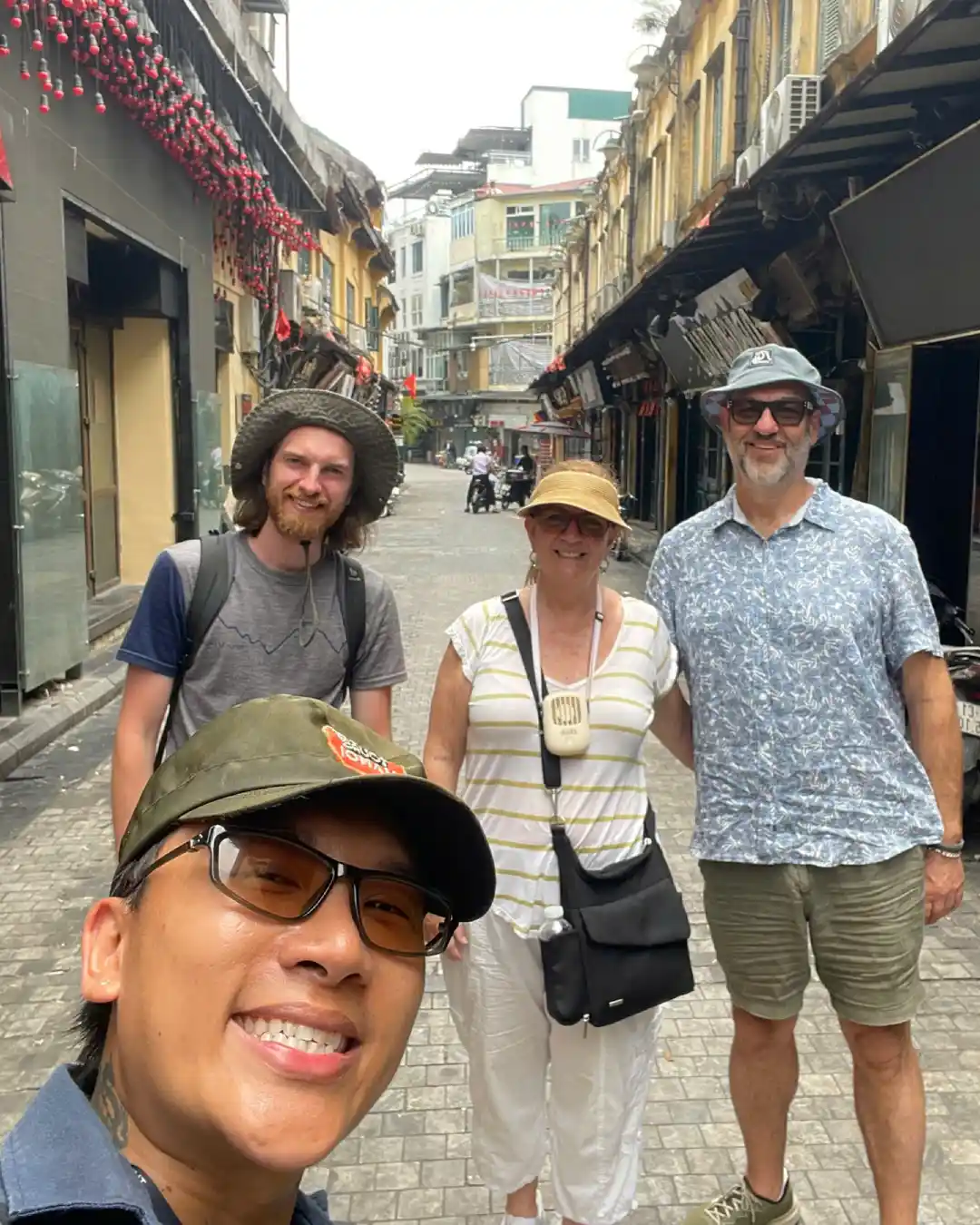
A photo journal from Hanoi — not a traveller review, and not proof that every detail in this guide happened on that walk.
Related content
Knowledge hub
Traditional Villages →Craft villages, rural heritage and traditional communities around Hanoi.
Destination hub
Hanoi →Related stories
- Traditional Craft Villages Around HanoiChoose the right craft village day from Hanoi — Bat Trang ceramics, Duong Lam ancient lanes and how to plan transfers, timing and buying without tourist-trap regret.
- Duong Lam Ancient Village: A Journey into Rural VietnamPlan Duong Lam from Hanoi — laterite houses, village lanes, food stops, respectful visiting and an honest comparison with Bat Trang for your craft or countryside day.
- Chuong Conical Hat Village Guide: Nón Lá WorkshopsVisit Chuong Village for living nón lá workshops — half-day logistics from Hanoi, buying etiquette, festival hats and how it pairs with Bat Trang.
- Van Phuc Silk Village Guide: Looms, Shopping & TailoringVisit Van Phuc silk village near Hanoi — loom workshops, fabric shopping, honest quality tips and how it pairs with Bat Trang or Duong Lam craft days.
- Day Trips from Hanoi: Complete Comparison GuideCompare every major day trip and overnight escape from Hanoi — Ninh Binh, Ha Long, Sapa, craft villages and more — with honest travel times, booking advice and tour picks.
- 10 Best Shopping Places in HanoiShop Hanoi with a ranked shortlist — Dong Xuan, night markets, book street, boutiques and craft stops — plus tourist-trap honesty and Old Quarter walking logic.