Sapa Homestay Guide: What to Expect, Etiquette & Booking
Book a Sapa homestay with clear expectations — bedding, bathrooms, meals, etiquette and how overnight trekking packages differ from town hotels.
By Anna15 min readSapa, Lao Cai, Vietnam
Introduction — answer first
Travellers ask: "What is a Sapa homestay actually like, and how do I book one that supports local families?" A Sapa homestay is overnight accommodation in a minority-family home — typically wooden stilt house in Muong Hoa Valley or side communes — included in guided multi-day treks with shared meals and basic sleeping mats, not a standalone hotel product. Choose trek-inclusive booking via Sapa trekking tour 2 days 1 night or 3 days 2 nights for first visits; understand this page covers homestay mechanics and guest behaviour — not ethnic identity survey (Sapa ethnic minorities guide) or frost calendars (Sapa weather).
Homestays succeed when you expect guesthood, not hotel service — and when your booking ensures revenue reaches the host family, not only middlemen.
What a Sapa homestay is — and is not
Real homestay characteristics
- Family home — children, grandparents, livestock sounds normal
- Wooden stilt construction — gaps in floorboards, creaking at night
- Shared sleeping space — private room sometimes, dorm-style mats common
- Shared bathroom — squat toilet, cold or bucket shower typical
- Communal meals — rice, vegetables, pork or chicken, rice wine optional
- Early morning activity — farm work continues regardless of your hangover
What homestay is NOT
- Not a boutique ecolodge with ensuite and minibar
- Not guaranteed "most authentic village" — popular trek routes rotate host families by operator agreement
- Not charity — you pay for lodging and food; host provides hospitality trade
- Not photo studio — host family are not staff; see Sapa ethnic minorities guide
Paul's realism: comfort level roughly camping-with-roof — pack sleep expectations accordingly.
Where homestays sit — geography
Muong Hoa Valley cluster
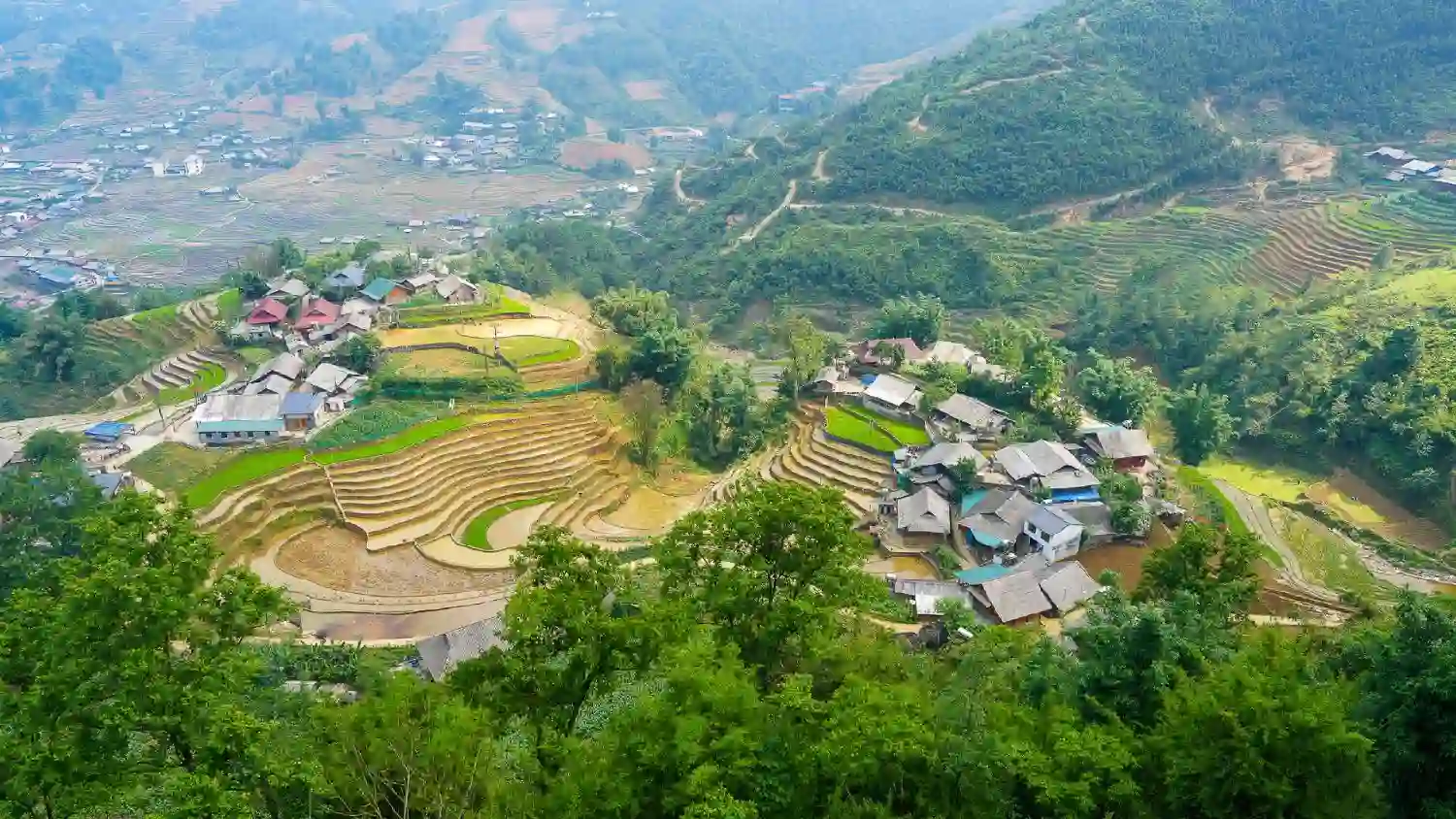
Lao Chai, Ta Van, Giang Ta Chai — most common overnight stops on standard 2-day treks. Valley-floor Tay and Hmong homes with terrace views. Walking distance between villages allows afternoon arrival, morning departure trek rhythm.
Side valley options
Ban Ho, Thanh Phu, Nam Cang — quieter, longer transfer from Sapa town, appear on Sapa trekking tour 3 days 2 nights. Fewer tourists, longer hiking distances.
Not homestay: Cat Cat tourist village
Cat Cat near Sapa town is day-visit tourism village — commercialised, short walk from town. Overnight homestays marketed as "Cat Cat homestay" often mean nearby commune, not traditional isolated hamlet — confirm location on booking.
Cross-read Sapa guide for town-to-valley transfer context.
Booking paths — trek-inclusive vs independent
Trek-inclusive homestay (editorial default)
Sapa trekking tour 2 days 1 night and 3 days 2 nights bundle:
- Local Hmong/Dao/Tay guide
- Homestay allocation en route
- Meals (usually dinner Day 1, breakfast Day 2; extended on 3-day)
- Permit/entry fees where applicable
Price range: 1,500,000–3,500,000 VND per person depending group size, route, and inclusions — confirm locally at booking.
Why default: Operator maintains host family rotation, meal quality baseline, and rescue logistics if weather turns.
Independent homestay booking
Possible via direct host contact, Facebook, or Sapa town agencies — experienced travellers only.
Risks:
- No guide translation for customs and trail navigation
- Unclear meal inclusion
- Host may be oversubscribed peak season
- Quality variance extreme
Dinh's rule: first Sapa visit → trek-inclusive; repeat visitors with Vietnamese language may independent book.
Red flags when booking
- Voucher says "homestay" but no village name
- Price far below market (under 800,000 VND all-inclusive 2-day — suspect corners cut)
- Promised private ensuite hot shower — rare; likely hotel mislabel
- Operator cannot name guide's ethnic community
Night-by-night expectations — 2-day vs 3-day treks
2-day / 1-night standard rhythm
| Day | Activity | Homestay note |
|---|---|---|
| Day 1 AM | Trek depart Sapa town | Pack light — porter optional (100,000–200,000 VND — confirm locally) |
| Day 1 PM | Arrive host village ~15:00–17:00 | Room assignment, shower window before dinner |
| Day 1 eve | Communal dinner, rice wine optional | Toasts — sip even if don't drink |
| Night | Sleep mats/blankets | Cold season — ask extra blanket |
| Day 2 AM | Breakfast, depart trek | Thank host before leaving |
| Day 2 PM | Return Sapa town | Hotel shower recommended |
3-day / 2-night extended rhythm
Second homestay often different village — deeper valley or Ban Ho direction on Sapa trekking tour 3 days 2 nights. Allows slower pacing, less daily kilometre crush, second family relationship.
Shaw prefers 3-day for unhurried evening conversation (via guide translation) — 2-day can feel rushed to arrival-only.
Facilities reality table
| Facility | Typical homestay | Sapa town hotel |
|---|---|---|
| Bed | Foam mat, mosquito net | Proper mattress |
| Bathroom | Shared squat, cold shower | Private ensuite |
| Electricity | Evening hours sometimes | 24h |
| WiFi | Rare or slow | Available |
| Heating | Blankets only — no central heat | AC/ heater |
| Meals | Included communal | Restaurant optional |
| Language | Hmong/Dao + Vietnamese | English at desk |
Manage expectations before booking — disappointment comes from hotel mental model applied to farm household.
Meals and dietary needs
Standard meal content
- Rice staple
- Stir-fried greens — seasonal mountain vegetables
- Pork or chicken — protein portion modest by Western standard
- Fish sauce — ubiquitous flavour
- Rice wine (rượu ngô) — corn wine toasts; decline politely if abstaining
Dietary restrictions
- Vegetarian: Inform operator 48 hours ahead — hosts can adjust but not spontaneous
- Vegan: Harder — fish sauce in most dishes; bring supplemental snacks
- Gluten-free: Rice-based meals mostly fine; soy sauce check
- Allergies: Written Vietnamese note essential — verbal lost in translation
Anna recommends gift-free policy for dietary items — communicate through operator, not random food gifts children cannot eat safely.
What to pack for homestay nights
Cross-read what to pack for northern Vietnam; homestay-specific additions:
| Item | Why |
|---|---|
| Sleep liner or thin sheet | Comfort on shared mats |
| Warm layer (Nov–Feb) | No heating; 5°C nights possible |
| Headlamp | Power cuts, bathroom path dark |
| Flip-flops | Shared wet bathroom |
| Toilet paper | Not always supplied |
| Earplugs | Livestock, creaking stilts, snoring dorm mates |
| Small cash for tips | Host appreciation — 50,000–200,000 VND range — confirm locally |
| Modest sleepwear | Shared space etiquette |
Paul adds: dry bag for electronics — mountain damp penetrates wooden walls.
Seasonal detail from Sapa weather and best time: December–January nights near freezing — wear thermal base layer to sleep.
Guest behaviour — household respect
Entering the home
- Remove shoes at threshold unless host indicates otherwise
- Greet elders first — slight nod, "xin chào" or guide-translated Hmong greeting
- Do not touch altar items — spiritual space; see Sapa ethnic minorities guide
Photography indoors
- Ask before photos of family members — especially elders and children
- No flash toward altar
- Bedroom photos for social media — ask host; privacy matters
Bathroom etiquette
- Short showers — water often gravity-fed, limited
- Do not flush toilet paper if bin provided — plumbing fragile
- Mornings staggered — trek group shares one bathroom; wake early or wait patiently
Alcohol toasts
Hosts may offer repeated rice wine toasts — sip small amounts; empty cup invites refill. Decline with smile and hand over cup if necessary — guide explains.
Cross-read Vietnamese etiquette for travelers for broader hierarchy and gift-giving norms.
Money — what is included and tipping
Usually included in trek price
- Homestay sleeping space
- Dinner and breakfast (lunch on full trek days)
- Guide fee component
Usually extra
- Porter — optional (100,000–200,000 VND/day — confirm locally)
- Soft drinks/beer at homestay — 10,000–30,000 VND — confirm locally
- Handicraft purchases — separate from lodging
- Tip to host family — optional but appreciated (50,000–200,000 VND per group — confirm locally)
- Tip to guide — optional (200,000–500,000 VND range — confirm locally)
Dinh advises: cash small notes — hosts may not change large denominations.
Homestay vs Sapa town hotel — when to choose each
| Scenario | Recommendation |
|---|---|
| First night after overnight train | Town hotel — shower, rest before trek |
| Trek night(s) | Homestay — included in tour |
| Final night before early train | Town hotel — luggage access, hot shower |
| Winter storm forecast | Town hotel buffer — homestay cold intensifies |
| Mobility limitations | Town hotel — stilt stairs and trail access hard |
Shaw's template: Hotel → trek homestay → hotel on 3-night Sapa minimum stay.
Seasonal homestay experience
From Sapa weather and best time:
September–November
Peak trekking season — dry trails, golden terraces, homestay dorm fills. Book treks 2–3 weeks ahead peak October.
December–February
Cold nights — extra blankets, wear thermals sleeping. Clear views reward. Homestay unheated — brutal for travellers expecting hotel warmth.
March–May
Green terraces, occasional rain — mud on trail; plastic bag for pack. Homestay dampness rises.
June–August
Rain and mist — leech possible on wet trails; homestay mosquito net essential. Fewer tourists — quieter villages.
Ethical homestay tourism — supporting families
Questions to ask operator before booking:
- Which village and host family name?
- Does payment reach host directly or via operator only?
- Group size maximum? (Prefer under 8)
- Guide from same community as homestay?
- Rotation policy — avoids single family burnout
Anna rejects operators promising "school visit" without formal partnership — disrupts classes.
Link cultural context: Sapa ethnic minorities guide — homestay is relationship tourism, not ethnographic collection.
Comparing homestay hosts — Tay vs Hmong household rhythm
Tay homestays (common Ta Van) — stilt house near river, fish pond, slightly closer motorbike access, often private room partition for guests. Hmong homestays (Lao Chai, Giang Ta Chai upper) — higher elevation approach, maize storage under floor, dorm mat more common. Neither "better" — different architecture and meal flavour. Sapa trekking tour 3 days 2 nights may rotate both — ask operator.
Dao homestays appear Ta Phin corridor products — herbal knowledge conversation possible via guide; red headscarf daily wear, not performance.
Paul's sleep note: Hmong houses smell of maize and wood smoke — sensory memory authentic; air freshener absent by design.
Health and safety at homestays
- Drinking water — bottled provided on quality treks; confirm before drinking tap
- Food safety — cooked hot food standard; wary of raw greens if sensitive stomach
- Altitude — homestays 800–1,200 m — mild shortness of breath rare; see Sapa guide
- Emergency evacuation — serious injury requires guide satellite phone or runner to town — travel insurance with evacuation essential
- Locks — minimal; carry valuables on person daypack
Closing — sleep where terraces fall dark
Sapa homestays succeed when you arrive expecting guesthood in a working household — early roosters, shared rice, creaking stilts, and conversation through your guide — not boutique service. Book trek-inclusive for first visits, pack for cold and damp, tip host families fairly, and read Sapa ethnic minorities guide so your overnight respect matches your daytime curiosity.
Read next: Sapa guide · Sapa ethnic minorities guide · Sapa weather and best time · Vietnamese etiquette for travelers · what to pack for northern Vietnam
Book: Sapa trekking tour 2 days 1 night · Sapa trekking tour 3 days 2 nights
FAQ — quick answers
Question: What is included in a Sapa homestay?
Answer: Typically sleeping mat/mosquito net, shared bathroom, dinner and breakfast within guided trek price. Lunch on trekking days usually included on multi-day tours — confirm at booking (1,500,000–3,500,000 VND per person range — confirm locally).
Question: Are Sapa homestays comfortable?
Answer: Basic, not hotel-level. Expect shared facilities, thin mattresses, no heating. Comfort comparable to camping with roof — pack liner and warm layer per what to pack for northern Vietnam.
Question: How do I book a reputable homestay?
Answer: Trek-inclusive booking via Sapa trekking tour 2 days 1 night or 3 days 2 nights. Ask operator for specific village and host family name before paying.
Question: Can I book homestay without trekking?
Answer: Possible but not editorial default — independent booking requires language and trail confidence. Most quality homestays serve trek guests, not drive-up tourists.
Question: Should I stay homestay or Sapa town hotel?
Answer: Both on same trip — town hotel arrival/departure nights, homestay during trek. Homestay-only without hotel buffer tired after overnight train.
Question: Is homestay food safe?
Answer: Generally yes on organised treks — hot cooked meals. Inform operator of dietary restrictions 48 hours ahead. Carry snacks if vegan or strict allergy.
Question: Do I tip homestay hosts?
Answer: Optional but appreciated — 50,000–200,000 VND per group range — confirm locally, handed directly with guide translation. Separate from guide tip.
Question: Which season is best for homestays?
Answer: September–November for dry trails and golden terraces. December–February cold at night — extra blankets essential. See Sapa weather and best time.
Local tips
- →Book trek-inclusive homestay first visit — Sapa trekking tour 2 days 1 night removes booking guesswork.
- →Town hotel night before trek — Shower and sleep after train; start trek fresh.
- →Pack sleep liner and warm layer — Homestay comfort differs sharply from hotel — see what to pack.
- →Ask operator for village name — Vague "homestay experience" vouchers warn Dinh.
Good to know
- Sapa Homestay Guide reflects on-the-ground patterns that change; confirm timed details locally.
- Tours help when transfers or language friction dominate the Sapa Homestay Guide logistics.
- Sapa weather flips in hours — pack a compact shell even in “dry” months for Sapa Homestay Guide.
- Cash still wins in Muong Hoa and Cat Cat stalls linked from Sapa Homestay Guide — ATMs cluster in town.
Before you go
- Before you go: save Sapa Homestay Guide offline and note your must-see versus nice-to-see list.
- Share meeting points with your group if Sapa Homestay Guide involves a timed entrance.
- Confirm trek grade and village overnight with your Sapa operator the day before Sapa Homestay Guide.
Common mistakes
- ✕Expecting hotel ensuite at homestay — Shared squat bathroom standard; disappointment preventable with this guide.
- ✕Independent homestay first visit — Trail navigation and customs without guide — Paul rejects.
- ✕Skipping town hotel buffer night — Trek same day as overnight train — exhaustion and injury risk.
- ✕Photographing family without consent — Privacy violation; damages next guest welcome.
Practical information
- How to get there
- See Getting there / planning sections in the article body.
- Best time to visit
- Follow seasonal and daily timing advice in the Quick Facts and body.
- Suggested itinerary
- Use the itinerary and pairing sections in the article, then book related tours if logistics are heavy.
- Nearby attractions
- Related destination hubs
- Hanoi planning Stories
- Northern Vietnam itinerary
Frequently asked questions
- What is included in a Sapa homestay?
- Typically sleeping mat/mosquito net, shared bathroom, dinner and breakfast within guided trek price. Lunch on trekking days usually included on multi-day tours — confirm at booking (1,500,000–3,500,000 VND per person range — confirm locally).
- Are Sapa homestays comfortable?
- Basic, not hotel-level. Expect shared facilities, thin mattresses, no heating. Comfort comparable to camping with roof — pack liner and warm layer per what to pack for northern Vietnam.
- How do I book a reputable homestay?
- Trek-inclusive booking via Sapa trekking tour 2 days 1 night or 3 days 2 nights. Ask operator for specific village and host family name before paying.
- Can I book homestay without trekking?
- Possible but not editorial default — independent booking requires language and trail confidence. Most quality homestays serve trek guests, not drive-up tourists.
- Should I stay homestay or Sapa town hotel?
- Both on same trip — town hotel arrival/departure nights, homestay during trek. Homestay-only without hotel buffer tired after overnight train.
- Is homestay food safe?
- Generally yes on organised treks — hot cooked meals. Inform operator of dietary restrictions 48 hours ahead. Carry snacks if vegan or strict allergy.
- Do I tip homestay hosts?
- Optional but appreciated — 50,000–200,000 VND per group range — confirm locally, handed directly with guide translation. Separate from guide tip.
- Which season is best for homestays?
- September–November for dry trails and golden terraces. December–February cold at night — extra blankets essential. See Sapa weather and best time.
Related content
Destination hub
Sapa →Related stories
- Sapa Day Trek vs Overnight: Which Trek to BookChoose between a Sapa day trek and an overnight homestay trek — calendar fit, knees, Muong Hoa depth and when fog rewards the extra night.
- Sapa Guide: Trekking, Homestays & Mountain WeatherPlan Sapa from Hanoi — trek grades, cable car trade-offs, homestay etiquette, foggy-weather honesty and how many nights you need before comparing Sapa with Ha Giang.
- Sapa Weather and Best Time to Visit for TrekkingChoose when to trek Sapa — month-by-month weather, rice terrace colours, fog risk and which tour length fits each season from Hanoi.
- Muong Hoa Valley Guide: Sapa's Classic Trekking CorridorTrek Muong Hoa Valley near Sapa — Lao Chai, Ta Van and Giang Ta Chai pacing, terrace views, day versus overnight options and how the valley fits northern itineraries.
- Overnight Train Hanoi to Sapa: Lao Cai Sleeper GuideBook the Hanoi–Lao Cai overnight train for Sapa — soft sleeper tips, station logistics, van transfer and when a sleeper bus is the better call.
- Fansipan Mountain Guide: Cable Car, Weather & TimingPlan Fansipan from Sapa — cable car logistics, summit weather, fitness honesty and when a valley trek is the better day.