Sapa Weather and Best Time to Visit for Trekking
Choose when to trek Sapa — month-by-month weather, rice terrace colours, fog risk and which tour length fits each season from Hanoi.
By Anna15 min readSapa, Lao Cai, Vietnam
Introduction — answer first
Travellers ask: "When is the best weather for Sapa trekking, and how do rice terrace seasons change the experience?" September through November offers the best balance of trail stability, harvest photography, and tolerable cold — but Sapa rewards any month if your trek length, footwear, and expectations match reality. March through May is the strong second window for green terraces and fewer crowds than autumn peak.
Anna, our mountain itineraries editor, sequences Sapa bookings by what travellers want to walk on as much as temperature charts. This page delivers month-by-month climate tables, rice phenology tied to terrace colour, fog and mud honesty, tour duration matched to weather risk, and packing cross-links — without repeating the full Sapa guide village and route survey. Capital month bands live in best time to visit Hanoi; Sapa adds 5–10°C cooler nights and independent rain.
Why Sapa climate differs from Hanoi forecasts
Elevation and microclimate
Sapa town sits roughly 1,600 m in Lao Cai province; trekking valleys range 800–1,800 m. Hanoi lowland forecasts do not transfer.
| Factor | Hanoi lowland | Sapa highland |
|---|---|---|
| Winter nights | 10–15°C typical | 3–8°C common; near freezing possible |
| Summer days | 32–38°C humid | 22–28°C — pleasant walking if dry |
| Fog | Occasional | Daily possibility year-round |
| Rain | Afternoon bursts | Multi-day drizzle common Mar–May, Jun–Aug |
Always check Lao Cai / Sapa specific forecast night before trek — confirm locally with guide.
Valley vs town temperature split
Many treks drop into Muong Hoa Valley — warmer daytime, colder damp evenings at homestays. Homestay blankets vary quality — pack warm layer even when Sapa town afternoon feels mild.
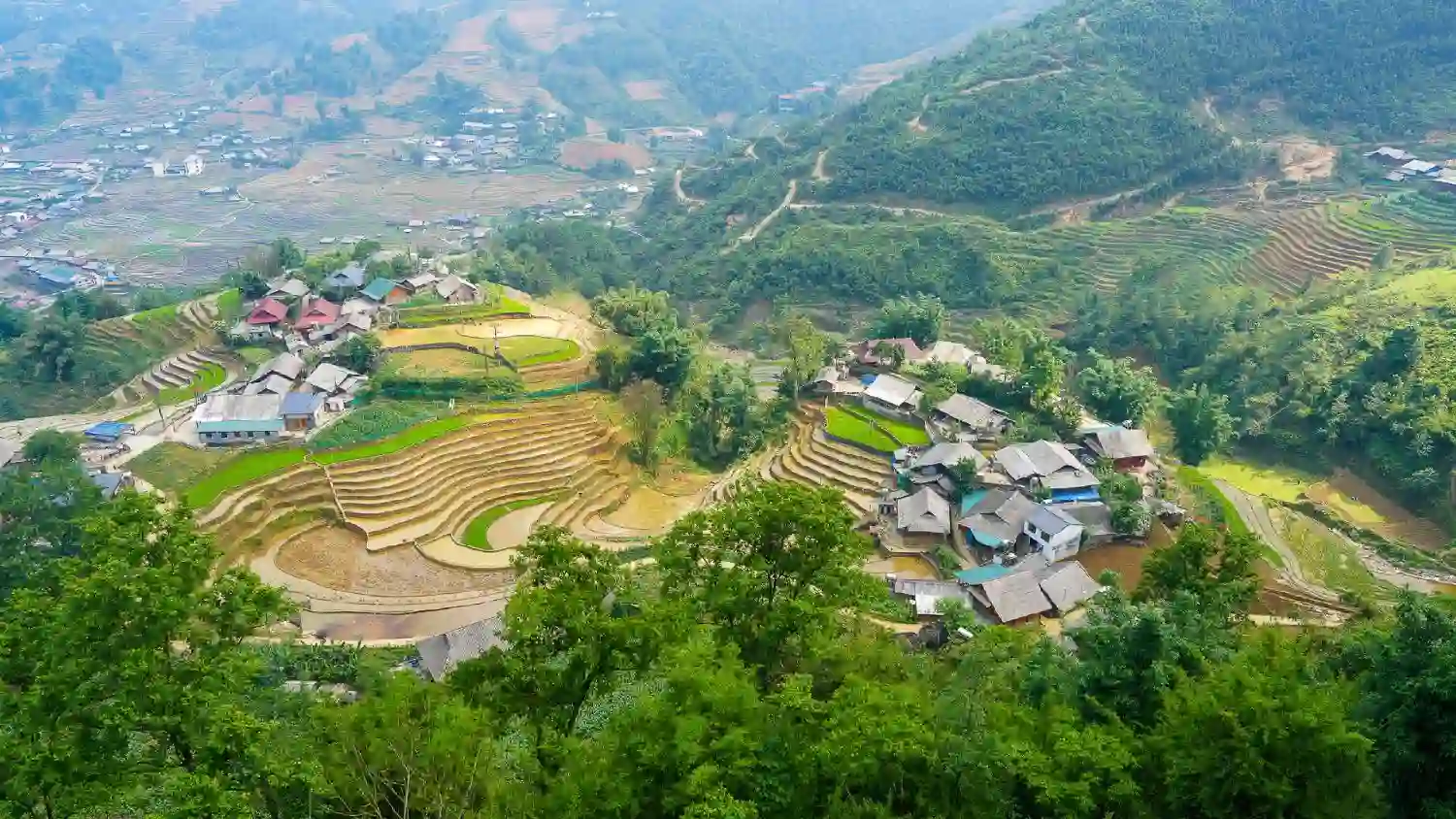
Rice terrace seasons — what colour means when
Terraces are working farms — colour signals agricultural stage, not decoration schedule.
December–February — bare and muddy
Terrace look: Brown mud, water-filled plots some weeks, minimal green.
Trekking feel: Cold rain, fog, slick stone steps. Fewest international trekkers except Tet window when domestic travel spikes.
Photography: Minimalist lines in fog — stunning when mist lifts; bleak when it does not.
Anna's note: Choose shorter treks or hotel-base — Sapa day trekking tour with warm lodge return beats cold homestay if unprepared.
March–April — water and early green
Terrace look: Mirror pools before transplant; light green shoots emerging late April.
Trekking feel: Moderate mud, drizzle stretches, warming afternoons.
Photography: Reflective terraces at dawn if fog cooperates — classic spring Sapa.
Crowds: Lower than autumn; some Easter/European holiday bump.
May–June — green peak transplant
Terrace look: Vivid green uniform carpet — iconic "Sapa green season."
Trekking feel: Warm days, humid, rain increasing toward June.
Photography: Green intensity highest; contrast with Hmong indigo clothing.
Booking: Good value window before summer storms — Sapa trekking 2 days 1 night recommended.
July–August — green but wet
Terrace look: Deep green; occasional cloud drama.
Trekking feel: Heaviest rain and mud — leeches possible on overgrown sections.
Photography: Moody if rain breaks; frustrating if continuous whiteout.
Risk: Landslides on access roads — confirm operator road status.
September–October — golden harvest
Terrace look: Gold and amber ripening rice — peak postcard season.
Trekking feel: Best trail stability of wet season exit; crisp mornings.
Photography: Highest demand — start treks early to beat midday harsh light on gold.
Booking urgency: Book 4–6 weeks ahead — Sapa trekking 3 days 2 nights for depth.
November — harvest tail and clarity
Terrace look: Some fields cut, others golden late — patchwork.
Trekking feel: Cool dry days, cold nights, excellent visibility odds.
Photography: Mix harvest action and bare patches — authentic agricultural calendar.
| Month | Terrace colour | Mud index | Crowd level | Trek recommendation |
|---|---|---|---|---|
| Jan–Feb | Bare / water | High | Low–moderate | Short treks, warm lodge |
| Mar–Apr | Mirror / light green | Moderate | Low | 2D1N flexible |
| May–Jun | Green peak | Moderate–high | Moderate | 2D1N or 3D2N |
| Jul–Aug | Green | Very high | Low int'l | Experienced only |
| Sep–Oct | Golden | Low–moderate | High | Book early — 2D1N min |
| Nov | Mixed harvest | Low | Moderate–high | Excellent overall |
Month-by-month climate tables
Temperatures are typical ranges — confirm locally with forecast; microclimates vary by valley.
January
- Daytime: 8–14°C · Night: 3–7°C
- Rain: Drizzle and fog common
- Trekking: Cold homestay nights — request extra blankets; trail mud persistent
- Gear: Fleece, rain shell, warm hat — see what to pack for northern Vietnam
February
- Daytime: 10–16°C · Night: 5–9°C
- Rain: Similar to January; Tet domestic travel some years
- Trekking: Viable with layers; avoid homestay if cold-sensitive
- Note: Tet closures affect guides and transport — confirm operator
March
- Daytime: 14–20°C · Night: 8–12°C
- Rain: Increasing drizzle frequency
- Trekking: Shoulder opening — green shoots, reflective water
- Verdict: Strong second-window start
April
- Daytime: 18–24°C · Night: 10–14°C
- Rain: Moderate — pack rain pants for mud
- Trekking: Comfortable walking temperatures; fog still daily possibility
- Verdict: Excellent for Sapa day trekking tour testers
May
- Daytime: 20–26°C · Night: 12–16°C
- Rain: Building toward summer
- Trekking: Green season peak — photographers' favourite after autumn
- Verdict: Book before summer discounts mean summer weather
June
- Daytime: 22–28°C · Night: 14–18°C
- Rain: Afternoon storms frequent
- Trekking: Hot humid intervals between downpours; mud serious
- Verdict: Accept rain or wait
July
- Daytime: 22–28°C · Night: 15–18°C
- Rain: Peak wet — multi-day rain possible
- Trekking: Trail maintenance variable; leeches on some routes
- Verdict: Lowest recommendation for first Sapa visit
August
- Daytime: 22–28°C · Night: 15–18°C
- Rain: Still heavy; landslide road risk on Hanoi access
- Trekking: Same as July — operators may reroute
- Verdict: Only with flexible schedule
September
- Daytime: 20–26°C · Night: 13–17°C
- Rain: Declining; harvest begins lower valleys first
- Trekking: Season transition — gold appears mid-month some years
- Verdict: Late September rivals October
October
- Daytime: 18–24°C · Night: 11–15°C
- Rain: Lower; clearest skies common
- Trekking: Peak season — harvest gold, stable trails
- Verdict: Default "best time" answer
November
- Daytime: 16–22°C · Night: 9–13°C
- Rain: Low; cool evenings
- Trekking: Harvest activity visible; excellent clarity
- Verdict: Anna's personal favourite — slightly fewer crowds than Oct
December
- Daytime: 12–18°C · Night: 6–10°C
- Rain: Fog and drizzle return
- Trekking: Atmospheric but inconsistent views
- Verdict: Christmas travellers pack warmth seriously
Fog behaviour — the variable that ruins certainty
Sapa fog is not a season — it appears in every month.
Typical fog pattern
- Overnight accumulation in valley
- Morning whiteout until 09:00–11:00 some days
- Midday lift revealing terraces — golden hour for photographers
- Afternoon cloud rebuild possible
Trekking implications
- Morning starts still correct — guides know valley micro-timing
- Homestay mornings often clearer than town — reason for 2D1N
- One-day treks gamble on single morning lift — acceptable Sep–Nov, risky Dec–Feb
When fog persists all day
Happens 5–15% of days even in peak season — no refund universe exists. Multi-day treks (3D2N) add second morning attempt.
Matching trek duration to weather risk
Sapa day trekking tour
Best months: April–June, September–November
Weather logic: Single-day exposure — if fogged, no retry. Acceptable when Sapa is preview not pilgrimage.
Avoid: December–February unless accepting town-only culture day.
Sapa trekking 2 days 1 night
Best months: Year-round with packing adjustment — sweet spot March–November
Weather logic: Two mornings for fog lift; homestay experience regardless of view lottery.
Default recommendation for first Sapa trekkers.
Sapa trekking 3 days 2 nights
Best months: May–June green, September–November gold
Weather logic: Three mornings, deeper valleys, weather slack for mud delays.
Best for: Photographers, rice season priority, slow travellers.
See full route context in Sapa guide.
Crowd patterns by season
| Period | Crowd character | Booking note |
|---|---|---|
| Oct–Nov weekends | Heavy domestic + international | Reserve guides early |
| Tet (Jan–Feb variable) | Domestic surge | Confirm homestay availability |
| Summer rain months | Low international | Discounts possible — weather cost |
| Mar–Apr weekdays | Moderate | Good balance |
Crowds concentrate on Cat Cat, Fansipan cable car, and town market — multi-day valley treks escape worst density per Sapa guide.
Getting to Sapa — seasonal access notes
From Hanoi: overnight train (~8 hr) or bus (~5–6 hr) — see day trips from Hanoi for why Sapa fails as day trip.
| Season | Access risk |
|---|---|
| Sep–Nov | Minimal — default |
| Dec–Feb | Fog delays rare; cold manageable |
| Jun–Aug | Landslides on AH14 possible — build buffer day |
October harvest photography — exposure notes
Golden terraces reflect harsh midday light — blown highlights on phone cameras common. Anna advises 07:00–09:00 valley position before sun climbs east ridge. Polarising filter helps reduce glare on wet stalks after morning dew. Overcast October days produce even, editorial saturation — do not cancel treks for grey sky; colour often richer without direct sun.
Train vs bus arrival — seasonal comfort
Overnight train from Hanoi remains Anna's preferred Sapa access in stable months (Sep–Nov, Mar–May) — sleep en route, Lao Cai arrival dawn, Sapa town by breakfast. Winter train can feel cold in sleeper without extra layer; summer train fine but bus road landslide risk still applies final hour to Sapa.
Day bus from Hanoi (250,000–350,000 VND — confirm locally) exposes you to full 5–6 hour mountain road weather — motion sickness worse in rain season. If booking Sapa day trekking tour only, bus unavoidable; for 2D1N, train northbound + bus return is acceptable compromise some operators offer.
Weather planning includes transfer mode, not just trail — exhausted and nauseated arrival wastes golden morning fog lift.
Packing by Sapa season
Cross-reference full lists in what to pack for northern Vietnam. Sapa-specific non-negotiables:
Autumn trek (Sep–Nov)
- Trail shoes with grip
- Light fleece + rain shell
- Quick-dry trousers
- Daypack rain cover
Green season (Mar–Jun)
- Rain pants
- Anti-leech socks (Jun+) optional
- Breathable layers
Winter trek (Dec–Feb)
- Warm mid-layer + hat
- Waterproof boots essential
- Hand warmers optional luxury
Fansipan, cable car, and town weather — separate decisions
Many travellers conflate Sapa town weather, valley trek conditions, and Fansipan summit exposure — three related but distinct forecasts.
Fansipan cable car and summit
The Fansipan cable car rises above Sapa town to 3,143 m summit — 10–15°C colder than town same hour, wind exposure extreme, cloud immersion common even when town feels clear.
| Town condition | Summit likely |
|---|---|
| Clear morning Oct–Nov | Best summit odds — still pack warm layer |
| Town fog | Summit likely zero visibility — ticket wasted for views |
| Rain in town | Summit closed or dangerous — check operator |
Anna's guidance: Book cable car only with 2+ Sapa nights and flexible morning — not arrival day after overnight train. Summit tickets 600,000–900,000 VND range — confirm locally; view lottery expensive in fog.
Cable car does not substitute trekking weather research — different activity, same fog seasonality.
Sapa town market nights vs trek mornings
Sapa town evening runs 2–4°C warmer than homestay valley night — market street comfortable in fleece while homestay needs extra blanket. Pack one warmer layer than town dinner suggests if sleeping valley.
Muong Hoa Valley microclimate
Treks drop into Muong Hoa Valley — morning fog pools here longest. Guides often know which valley segment clears first by season; trust their route adjustments September through November harvest when path mud and view timing both matter.
Closing — match month to terrace story you want
Sapa weather and timing succeed when you choose month by terrace colour and mud tolerance, not by when Hanoi feels pleasant. September through November remains the default for golden harvest and stable trails; March through May rewards green-season seekers with fewer autumn crowds. Winter delivers atmosphere at comfort cost; summer delivers solitude at rain cost. Two trekking days minimum gives fog a second chance — the weather flexibility that single-day products cannot offer.
Read next: Sapa guide · best time to visit Hanoi · what to pack for northern Vietnam · northern Vietnam itinerary 7 days
Book: Sapa trekking tour 2 days 1 night · Sapa trekking tour 3 days 2 nights · Sapa day trekking tour
FAQ — quick answers
Question: What is the best month for Sapa trekking?
Answer: October for golden harvest terraces and stable trails; November close second with slightly fewer crowds. Late September excellent as harvest begins. See month tables above.
Question: When are Sapa rice terraces golden?
Answer: Mid-September through October typically — exact timing varies by valley elevation and harvest schedule each year. Confirm locally with guide week before trek.
Question: Is Sapa too cold in winter?
Answer: Trekking viable December–February with proper layers and realistic fog expectations. Nights 3–8°C common — homestay warmth varies. Short treks or hotel-base if cold-averse.
Question: Is summer a bad time for Sapa?
Answer: June–August is wettest — heavy mud, leeches possible, landslide road risk. Lowest recommendation for first visit. Accept rain or choose autumn/spring.
Question: How is Sapa weather different from Hanoi?
Answer: 5–10°C cooler nights, independent fog and rain, elevation-driven microclimate. Hanoi forecast does not predict Sapa trail conditions — check Sapa specifically.
Question: Should I book a day trek or overnight for weather?
Answer: Overnight 2D1N minimum — two mornings for fog lift and harvest light. Day treks gamble single window — OK Sep–Nov, risky winter.
Question: When is Sapa least crowded?
Answer: Summer rain months (lowest international) and late winter weekdays — trade crowds for weather challenge. October weekends busiest.
Question: Can I combine Sapa weather planning with a 7-day north itinerary?
Answer: Yes — Pattern B in northern Vietnam itinerary 7 days: Hanoi 3N + Sapa 2D1N. Choose September–November for best Sapa month inside that week.
Local tips
- →Book 2D1N minimum for first visit — two mornings beat one lottery ticket on fog.
- →Check Sapa-specific forecast night before — not Hanoi app default.
- →Harvest timing shifts yearly — ask guide which valleys golden this week in Sep–Oct.
- →Start trek early — fog lift window is finite.
Good to know
- Sapa Weather and Best Time to Visit for Trekking assumes typical 2026 transfer times — festivals and storms add buffer needs.
- Sapa Weather and Best Time to Visit for Trekking: Family, solo and accessible variants of Sapa travel change the same skeleton plan.
- Sapa weather flips in hours — pack a compact shell even in “dry” months for Sapa Weather and Best Time to Visit for Trekking.
- Cash still wins in Muong Hoa and Cat Cat stalls linked from Sapa Weather and Best Time to Visit for Trekking — ATMs cluster in town.
Before you go
- Before you go: save offline copies of Sapa Weather and Best Time to Visit for Trekking and key vouchers.
- Tell travelling companions the “must keep” days from Sapa Weather and Best Time to Visit for Trekking versus optional swaps.
- Confirm trek grade and village overnight with your Sapa operator the day before Sapa Weather and Best Time to Visit for Trekking.
Common mistakes
- ✕Using Hanoi weather app for Sapa packing — underdressing nights kills comfort.
- ✕Expecting gold terraces in March — wrong agricultural calendar; see tables above.
- ✕One-day trek in January fog — no retry, no refund for clouds.
- ✕Sandals as primary trek footwear — mud and stone steps destroy feet.
Practical information
- How to get there
- See Getting there / planning sections in the article body.
- Best time to visit
- Follow seasonal and daily timing advice in the Quick Facts and body.
- Suggested itinerary
- Use the itinerary and pairing sections in the article, then book related tours if logistics are heavy.
- Nearby attractions
- Related destination hubs
- Hanoi planning Stories
- Northern Vietnam itinerary
Frequently asked questions
- What is the best month for Sapa trekking?
- October for golden harvest terraces and stable trails; November close second with slightly fewer crowds. Late September excellent as harvest begins. See month tables above.
- When are Sapa rice terraces golden?
- Mid-September through October typically — exact timing varies by valley elevation and harvest schedule each year. Confirm locally with guide week before trek.
- Is Sapa too cold in winter?
- Trekking viable December–February with proper layers and realistic fog expectations. Nights 3–8°C common — homestay warmth varies. Short treks or hotel-base if cold-averse.
- Is summer a bad time for Sapa?
- June–August is wettest — heavy mud, leeches possible, landslide road risk. Lowest recommendation for first visit. Accept rain or choose autumn/spring.
- How is Sapa weather different from Hanoi?
- 5–10°C cooler nights, independent fog and rain, elevation-driven microclimate. Hanoi forecast does not predict Sapa trail conditions — check Sapa specifically.
- Should I book a day trek or overnight for weather?
- Overnight 2D1N minimum — two mornings for fog lift and harvest light. Day treks gamble single window — OK Sep–Nov, risky winter.
- When is Sapa least crowded?
- Summer rain months (lowest international) and late winter weekdays — trade crowds for weather challenge. October weekends busiest.
- Can I combine Sapa weather planning with a 7-day north itinerary?
- Yes — Pattern B in northern Vietnam itinerary 7 days: Hanoi 3N + Sapa 2D1N. Choose September–November for best Sapa month inside that week.
Related content
Destination hub
Sapa →Related stories
- Sapa Day Trek vs Overnight: Which Trek to BookChoose between a Sapa day trek and an overnight homestay trek — calendar fit, knees, Muong Hoa depth and when fog rewards the extra night.
- Sapa Guide: Trekking, Homestays & Mountain WeatherPlan Sapa from Hanoi — trek grades, cable car trade-offs, homestay etiquette, foggy-weather honesty and how many nights you need before comparing Sapa with Ha Giang.
- Overnight Train Hanoi to Sapa: Lao Cai Sleeper GuideBook the Hanoi–Lao Cai overnight train for Sapa — soft sleeper tips, station logistics, van transfer and when a sleeper bus is the better call.
- Fansipan Mountain Guide: Cable Car, Weather & TimingPlan Fansipan from Sapa — cable car logistics, summit weather, fitness honesty and when a valley trek is the better day.
- Best Time to Visit Hanoi: Complete Seasonal GuideWhen to visit Hanoi — month-by-month weather, rainy season, festivals, walking tours, food seasons and packing advice from local tour operators who work the city year-round.
- What to Pack for Northern Vietnam: Seasons, Temples & TreksPack for Hanoi, Ninh Binh, Ha Long, Sapa and Ha Giang — seasonal layers, temple modesty, rain gear and trek footwear without overpacking for a short trip.