Muong Hoa Valley Guide: Sapa's Classic Trekking Corridor
Trek Muong Hoa Valley near Sapa — Lao Chai, Ta Van and Giang Ta Chai pacing, terrace views, day versus overnight options and how the valley fits northern itineraries.
By Anna15 min readMuong Hoa Valley, Sapa, Vietnam
Introduction — answer first
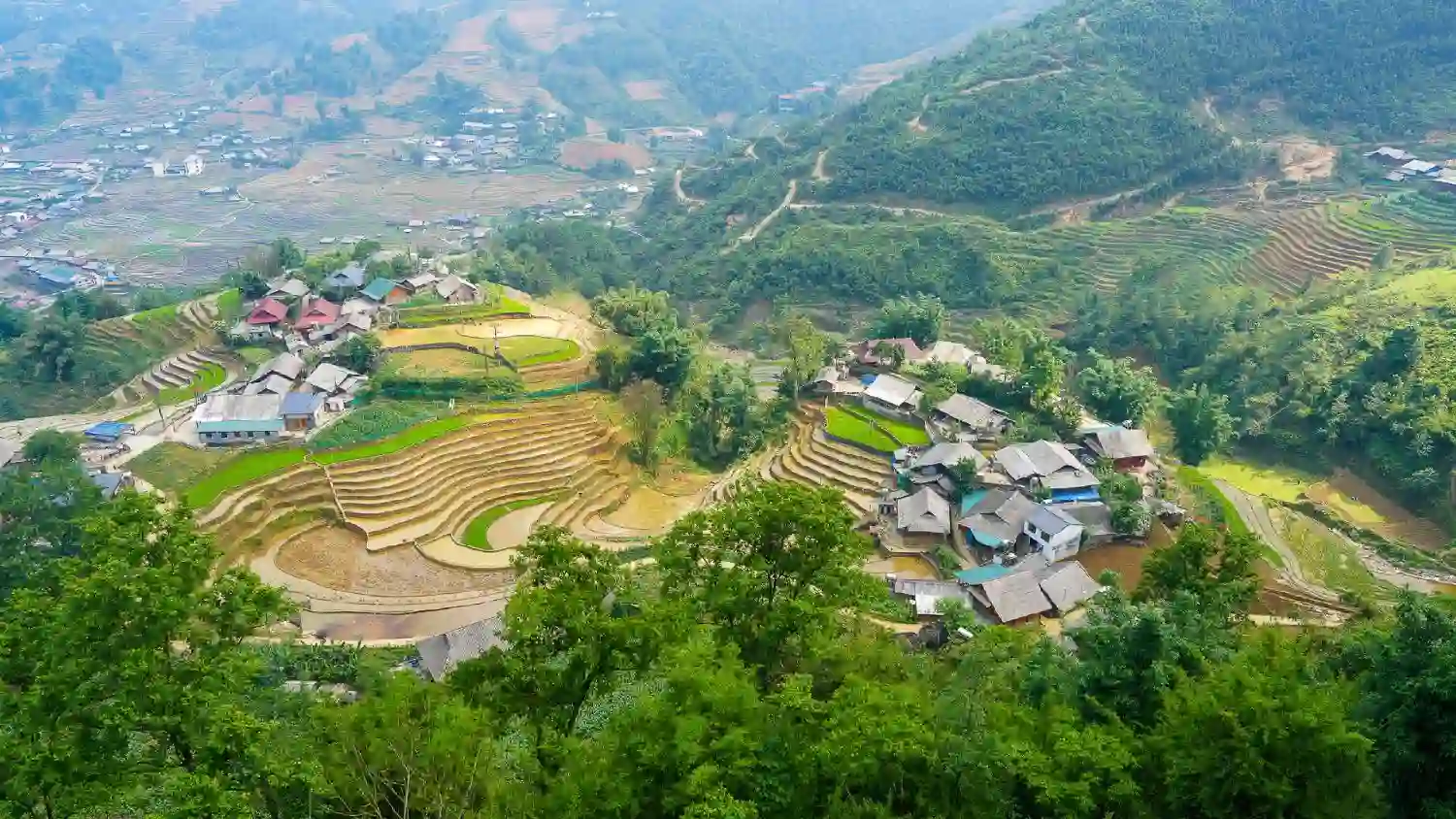
Travellers ask: "What is Muong Hoa Valley, and how should I trek it?" Muong Hoa is the wide river valley south-east of Sapa town where terraced rice hillsides, Hmong and Tay villages, and ancient stone carvings concentrate — the default trekking geography for day walks and multi-day homestay routes. Plan moderate fitness, 6–8 hours for day traverse, or 2 days 1 night for unhurried pacing with overnight in Ta Van area — not a rushed Cat Cat substitute.
This page maps valley entity depth — routes, villages, elevation, seasonal terrace colour — while cross-reading Sapa guide for train access, Sapa ethnic minorities guide for cultural respect, and Sapa homestay guide for overnight expectations.
Geography — what Muong Hoa Valley is
Valley structure
The Muong Hoa River drains south-east from Sapa plateau toward Lao Cai lowlands. Valley floor 800–950 m; surrounding terraces climb to 1,200–1,400 m on ridge paths. Limestone outcrops punctuate paddies — not Ha Giang vertical, but continuous moderate gradient on village steps.
Width: Several kilometres — wide enough for multiple village strands parallel to river, not single-path canyon.
Visibility: Mist common Mar–Aug; clear panoramic Sep–Feb mornings.
Relationship to Sapa town
Sapa town sits above valley north rim — treks typically descend from town or motor transfer to trailhead (Lao Chai road end). Return often uphill — knee strain underestimated. Sapa day trekking tour products manage pacing; independent walkers misjudge return climb.
Ancient Rock Field (Hải cổ sơn)
Scattered stone carvings between Hau Thao and Ta Van — origin debated (Funan-era theories, local oral history). Not a fenced museum — field stones beside trail. Brief respectful stop; no rubbings or chalk outlines.
Standard village sequence — Lao Chai to Giang Ta Chai
Lao Chai
Black Hmong village cluster, terrace photography classic — first major stop descending from Sapa. Commerce heavy on main path — sellers know trekker rhythm. Real village life on side lanes away from main tourist corridor.
Elevation note: Lower than Sapa town — descent continues toward river.
Ta Van
Tay and Hmong mixed — primary homestay hub on Sapa trekking tour 2 days 1 night. Wooden stilt houses near river. Bridge crossings and riverside paths. Evening fireflies possible summer — bonus, not guaranteed.
Overnight default: Most 2-day treks sleep Ta Van area — see Sapa homestay guide.
Giang Ta Chai
Red Dao presence stronger — waterfall side trail optional (entry fee 70,000–100,000 VND range — confirm locally). Quieter upper terraces. Day treks may turn back before Giang Ta Chai; multi-day continues deeper.
Paul's pacing: Lao Chai–Ta Van sufficient for moderate day trek — Giang Ta Chai extension adds 2–3 hours.
Route templates — day vs multi-day
Day trek template (6–8 hours)
| Time | Segment | Notes |
|---|---|---|
| 08:00–08:30 | Depart Sapa or motor to Lao Chai | Sapa day trekking tour pickup |
| 08:30–11:00 | Lao Chai terraces | Photography, commerce paths |
| 11:00–12:30 | Ta Van approach | Lunch stop village or packed |
| 12:30–15:00 | Ta Van → Giang Ta Chai or turn point | Optional waterfall |
| 15:00–17:00 | Return uphill Sapa | Knee-intensive — poles help |
Distance: Roughly 12–18 km depending turn point — confirm with guide.
Price range: Day treks 600,000–1,200,000 VND per person — confirm locally.
2-day / 1-night template (editorial default)
| Day | Segment | Notes |
|---|---|---|
| Day 1 | Sapa → Lao Chai → Ta Van homestay | Slower pacing, sunset terraces |
| Day 2 | Ta Van → Giang Ta Chai → Sapa return | Morning light, optional waterfall |
Sapa trekking tour 2 days 1 night standard — homestay detail in Sapa homestay guide.
Countryside walking variant
Sapa countryside walking tour — gentler valley-floor emphasis, less ridge climbing — suitable mobility-limited travellers on custom pacing.
Elevation and fitness — honest assessment
Gradient profile
- Initial descent from Sapa: 200–400 m over 2–3 km — easy on knees going down
- Valley floor: Flat riverside sections — recovery
- Village steps: Short sharp climbs between terrace levels — cumulative fatigue
- Return to Sapa: Sustained uphill 2–3 hours — hardest segment
Fitness rating: Moderate — regular walkers manage; sedentary travellers struggle return climb.
Trail surface
- Dusty compact dirt dry season
- Mud and slick clay wet season — trekking poles recommended (rent in Sapa 50,000–100,000 VND — confirm locally)
- Stone steps uneven — ankle support footwear
Altitude
Valley floor 800–950 m — mild breathlessness rare. Not high-altitude sickness territory unlike Fansipan summit attempts from Sapa guide.
Seasonal valley character
Cross-read Sapa weather and best time for month detail:
| Season | Terrace look | Trek conditions | Crowd |
|---|---|---|---|
| Sep–Oct | Golden harvest | Dry, clear | Peak |
| Nov–Dec | Post-harvest brown/green | Cool, clear mornings | High |
| Jan–Feb | Bare or early plant | Cold, occasional frost photos | Moderate |
| Mar–May | Green water-filled | Rain mud, mist | Moderate |
| Jun–Aug | Green lush | Rain, leech possible | Lower |
Anna's photography note: September golden hour transforms Lao Chai — also peak crowd; start 07:30 beat groups.
Commerce on the trail — valley-specific
Muong Hoa main paths carry Hmong sellers — embroidered goods, hemp items. Economic reality per Sapa ethnic minorities guide:
- Decline politely without guilt
- Buy fair if quality genuine
- No child purchase editorial policy
Do not block trail for haggling — step aside.
Photography — terrace ethics
- Stay on path edges — do not walk into planted terraces for Instagram
- Farmers working — ask before including prominently
- Drone — village privacy concerns; assume restricted unless operator confirms commune permission
- Golden hour — morning from east-facing ridges; afternoon from west return path
Shaw's one-frame goal: single terrace curve with figure scale — farmer or guide silhouette, not staged jump shot.
Muong Hoa in itinerary logic
Minimum Sapa allocation
2 nights town + 1 trek day absolute minimum — rushed. 2 nights + 2-day trek editorial default per northern Vietnam itinerary 7 days.
Day trip from Hanoi?
Not realistic — overnight train both directions consumes window; valley deserves dawn-to-dusk. See Sapa guide for train timing.
Combining Cat Cat and Muong Hoa same day
Cat Cat near town is short commercial visit — not substitute for Muong Hoa depth. Same-day both possible but Cat Cat morning + half Muong Hoa exhausts without homestay reward — Dinh rejects for first-timers.
Water and hydration on valley paths
Bottle purchase available Lao Chai lower village and Ta Van shops — 10,000–20,000 VND — confirm locally. Upper Giang Ta Chai segment limited stock — carry 2L from Sapa departure. Stream water not safe untreated — iodine or filter if emergency only; bottled default.
Heat rare but Jun–Aug afternoon sun on exposed ridge between villages dehydrates — start early, electrolyte sachet optional in daypack per what to pack for northern Vietnam.
Sapa Ancient Rock Field — visitor etiquette
Carved spirals and geometric patterns on field boulders between Hau Thao and Ta Van — archaeological significance debated, local spiritual significance ongoing. Do not chalk outlines, rub wax impressions, or stack stones on carvings for photo composition — damage accumulates from tourist "harmless" touching.
Guide stop 10–15 minutes typical — enough context without museum half-day. Independent walkers sometimes miss stones entirely without guide pointing — another first-visit guided argument.
Alternative valley entry points — motor transfer options
Some Sapa day trekking tour products motor shuttle to Lao Chai road end — skips initial Sapa descent knee strain, saves 45–60 minutes for deeper Giang Ta Chai time. Trade-off: miss upper panoramic descent photos. Dinh recommends motor skip for mobility-limited travellers retaining valley floor walk.
Reverse direction treks uphill first from Lao Chai to Sapa — rare, exhausting; most operators descend first by design.
Valley wildlife and livestock — sharing the path
Water buffalo occupy trail centre — wide berth mandatory; mothers with calf unpredictable. Goats on ridge shortcuts scatter underfoot — slow descent. Dogs guard village entrances — do not run; stand still until owner calls dog off or guide intervenes.
Birdlife kingfishers, swallows, occasional eagle — dawn quiet best; not safari destination but Shaw notes swallow flock over Ta Van river reliable summer evening. No feeding wildlife — rice scraps attract rats harming stored grain.
Rest stops and lunch pacing on standard day trek
| Stop | Typical time | Purpose |
|---|---|---|
| Lao Chai viewpoint | 30–45 min | Photos, water refill |
| Mid-valley bench | 15 min | Shade, snack |
| Ta Van lunch | 45–60 min | Restaurant or homestay preview |
| Giang Ta Chai turn | 30 min optional | Waterfall fee decision |
| Pre-climb rest | 15 min before Sapa ascent | Energy conservation critical |
Skipping lunch to "finish faster" causes return climb bonk — Paul sees weekly. Eat rice even if appetite low after descent.
Muong Hoa vs Fansipan — different mountains
Some travellers confuse valley trekking with Fansipan summit — Vietnam's highest peak accessed by cable car or multi-day climb from Sapa guide. Muong Hoa Valley does not require summit permit or alpine gear — moderate valley fitness only. Combining Fansipan cable car day plus Muong Hoa trek next day feasible with hotel buffer; same day rejected — leg exhaustion and weather exposure stack dangerously.
Mist visibility and abort decisions
March–August mist eliminates terrace depth perception — photography flat, ridge shortcuts dangerous. Guides on Sapa day trekking tour may shorten to Lao Chai–Ta Van only when cloud ceiling below 800 m. Accept abort without refund argument — safety and visibility trump voucher checklist. Clear September morning repays patience — do not treat mist day as "failed Sapa" if homestay night follows with dawn clarity.
Carry bright rain cover or pack cover — mist wetness penetrates slowly; hypothermia risk Jun mornings at 900 m when combined with wind. Paul packs thin glove liner even summer dawn starts — fingers stiff on return climb brake grip.
Independent vs guided valley trekking
Guided (default)
Local Hmong/Dao guides on organised tours — navigation, cultural mediation, homestay allocation, weather abort decisions.
Independent
Feasible on marked valley paths for experienced hikers with offline maps — risks:
- Wrong fork on ridge return
- Cultural misstep in villages
- No rescue contact if injured
- Homestay unavailable without booking
Paul: independent OK repeat visitors only with Vietnamese phone and taxi rescue budget.
Safety and weather abort
- Fog — disorienting on ridge shortcuts; follow guide
- Rain — mud slides on clay steps; turn back acceptable
- Lightning — exposed ridges dangerous; shelters rare
- Heat — rare at elevation but Jun–Aug afternoon sun strong; water 2L minimum
- Leeches — wet season Jun–Sep; socks tucked, salt pouch optional
Emergency: serious injury requires carry-out or motorbike rescue to Sapa hospital — travel insurance with evacuation essential.
Packing for Muong Hoa treks
Cross-read what to pack for northern Vietnam:
| Item | Valley-specific reason |
|---|---|
| Trekking shoes with grip | Mud steps dominate wet season |
| Rain shell | Open valley — no cave shelter |
| Trekking poles | Return uphill knee relief |
| 2L water capacity | Limited purchase upper paths |
| Sun hat | Terrace exposure continuous |
| Small cash | Trail purchase, waterfall fee |
| Daypack rain cover | Sudden squalls Mar–May |
Overnight additions: see Sapa homestay guide sleep kit.
Closing — the valley when mist lifts
Muong Hoa succeeds when you remember one terrace curve — golden or green, river glint below, village smoke rising — earned after hours of steps, not after a 45-minute Cat Cat stroll. Choose day trek for taste or 2-day homestay for depth, start early, respect farmers on the path, and save legs for the return climb Sapa demands.
Read next: Sapa guide · Sapa ethnic minorities guide · Sapa homestay guide · Sapa weather and best time · northern Vietnam itinerary 7 days
Book: Sapa day trekking tour · Sapa countryside walking tour · Sapa trekking tour 2 days 1 night
FAQ — quick answers
Question: Where is Muong Hoa Valley?
Answer: South-east of Sapa town, river basin containing Lao Chai, Ta Van, and Giang Ta Chai villages with terraced hillsides — Sapa's primary trekking geography.
Question: How long does a Muong Hoa day trek take?
Answer: Typically 6–8 hours covering Lao Chai to Ta Van and optional Giang Ta Chai, including uphill return to Sapa. Distance roughly 12–18 km — confirm with guide.
Question: Do I need a guide for Muong Hoa?
Answer: Editorial default yes for first visit — navigation, cultural respect, and return route knowledge. Independent feasible for experienced repeat visitors only.
Question: What fitness level for Muong Hoa trekking?
Answer: Moderate — valley floor manageable; return climb to Sapa challenges sedentary travellers. Trekking poles recommended.
Question: Best season for Muong Hoa terraces?
Answer: September–November golden harvest photography. March–May green water-filled terraces. See Sapa weather and best time.
Question: Can I stay overnight in the valley?
Answer: Yes — homestays in Ta Van area on Sapa trekking tour 2 days 1 night. Details in Sapa homestay guide.
Question: Is Muong Hoa the same as Cat Cat?
Answer: No. Cat Cat is commercialised village near Sapa town. Muong Hoa is wide valley system requiring full day or multi-day — different scale entirely.
Question: What does a day trek cost?
Answer: Roughly 600,000–1,200,000 VND per person with guide — confirm locally. Multi-day treks 1,500,000–3,500,000 VND range with homestay meals included.
Local tips
- →Book 2-day trek for valley depth — Sapa trekking tour 2 days 1 night beats rushed day return climb.
- →Start early — 07:30–08:00 beat midday terrace crowds Sep–Nov.
- →Save energy for uphill return — Descent easy lures overexertion before Sapa climb.
- →Use trekking poles — Return knee saver; rent locally (confirm locally).
Good to know
- Muong Hoa Valley Guide conditions are seasonal — rice colour, water levels and fog rewrite the same trail.
- Muong Hoa Valley Guide: National park and boat tickets for Sapa are often cash at the gate.
- Sapa weather flips in hours — pack a compact shell even in “dry” months for Muong Hoa Valley Guide.
- Cash still wins in Muong Hoa and Cat Cat stalls linked from Muong Hoa Valley Guide — ATMs cluster in town.
Before you go
- Before you go: check rain and wind forecasts that affect Muong Hoa Valley Guide boat or pass days.
- Muong Hoa Valley Guide: Tell your host or driver your turnaround time so Sapa pickup stays reliable.
- Confirm trek grade and village overnight with your Sapa operator the day before Muong Hoa Valley Guide.
Common mistakes
- ✕One-day Sapa total with Muong Hoa expectation — Train schedule eliminates valley quality.
- ✕Underestimating return uphill — 2–3 hour Sapa climb after valley floor — fitness misjudgment.
- ✕Walking into planted terraces — Crop damage; use path margins only.
- ✕Skipping guide first visit — Trail forks and cultural errors common independent.
Practical information
- How to get there
- See Getting there / planning sections in the article body.
- Best time to visit
- Follow seasonal and daily timing advice in the Quick Facts and body.
- Suggested itinerary
- Use the itinerary and pairing sections in the article, then book related tours if logistics are heavy.
- Nearby attractions
- Related destination hubs
- Hanoi planning Stories
- Northern Vietnam itinerary
Frequently asked questions
- Where is Muong Hoa Valley?
- South-east of Sapa town, river basin containing Lao Chai, Ta Van, and Giang Ta Chai villages with terraced hillsides — Sapa's primary trekking geography.
- How long does a Muong Hoa day trek take?
- Typically 6–8 hours covering Lao Chai to Ta Van and optional Giang Ta Chai, including uphill return to Sapa. Distance roughly 12–18 km — confirm with guide.
- Do I need a guide for Muong Hoa?
- Editorial default yes for first visit — navigation, cultural respect, and return route knowledge. Independent feasible for experienced repeat visitors only.
- What fitness level for Muong Hoa trekking?
- Moderate — valley floor manageable; return climb to Sapa challenges sedentary travellers. Trekking poles recommended.
- Best season for Muong Hoa terraces?
- September–November golden harvest photography. March–May green water-filled terraces. See Sapa weather and best time.
- Can I stay overnight in the valley?
- Yes — homestays in Ta Van area on Sapa trekking tour 2 days 1 night. Details in Sapa homestay guide.
- Is Muong Hoa the same as Cat Cat?
- No. Cat Cat is commercialised village near Sapa town. Muong Hoa is wide valley system requiring full day or multi-day — different scale entirely.
- What does a day trek cost?
- Roughly 600,000–1,200,000 VND per person with guide — confirm locally. Multi-day treks 1,500,000–3,500,000 VND range with homestay meals included.
Related content
Destination hub
Sapa →Related stories
- Sapa Day Trek vs Overnight: Which Trek to BookChoose between a Sapa day trek and an overnight homestay trek — calendar fit, knees, Muong Hoa depth and when fog rewards the extra night.
- Sapa Guide: Trekking, Homestays & Mountain WeatherPlan Sapa from Hanoi — trek grades, cable car trade-offs, homestay etiquette, foggy-weather honesty and how many nights you need before comparing Sapa with Ha Giang.
- Sapa Homestay Guide: What to Expect, Etiquette & BookingBook a Sapa homestay with clear expectations — bedding, bathrooms, meals, etiquette and how overnight trekking packages differ from town hotels.
- Sapa Weather and Best Time to Visit for TrekkingChoose when to trek Sapa — month-by-month weather, rice terrace colours, fog risk and which tour length fits each season from Hanoi.
- Fansipan Mountain Guide: Cable Car, Weather & TimingPlan Fansipan from Sapa — cable car logistics, summit weather, fitness honesty and when a valley trek is the better day.
- Cat Cat Village Sapa Guide: Half-Day Walk LogisticsVisit Cat Cat village near Sapa town — waterfall path, ticket logistics, crowd timing and why it is not a Muong Hoa substitute.