Sapa Guide: Trekking, Homestays & Mountain Weather
Plan Sapa from Hanoi — trek grades, cable car trade-offs, homestay etiquette, foggy-weather honesty and how many nights you need before comparing Sapa with Ha Giang.
By Anna16 min readSapa, Northern Vietnam
Introduction — answer first
Travellers ask: "How many days do I need in Sapa and which trek should I book?" Plan Sapa as its own chapter, not as a long day from Hanoi. The town sits roughly 350 km northwest in Lao Cai province at elevation — cool air, steep paths, rapid cloud changes. A "day trip" means waking at 04:00, arriving midday, photographing one terrace viewpoint, returning on a bus before midnight. That is not Sapa; that is transit cosplay. See also our complete guide to visiting Hanoi.
Anna, our mountain itineraries editor, sequences Sapa after three or more Hanoi capital days, usually linked by overnight train (recommended for atmosphere and sleep) or daytime bus (cheaper, rougher). Choose trek length by honest fitness and weather tolerance — not by longest route name on a booking site. This guide compares half-day, full-day and multi-day trekking options; explains seasonal packing; and covers village visits without treating communities as backdrop.
Why Sapa is not a day trip from Hanoi
Transit math
| Mode | One-way time | Notes |
|---|---|---|
| Sleeper train | ~8 hours overnight | Hanoi → Lao Cai; then 1 hour to Sapa town |
| Day bus | 5–6 hours | Windy mountain roads; motion sickness common |
| Private car | 5–6 hours | Faster off-peak; still not "short" |
Round-trip day attempt: 10–12 hours in vehicles for 2–3 hours on trail if you rush. Exhausting, expensive in opportunity cost, unfair to village hosts who prefer slower guests.
What you sacrifice on a day trip
- Morning mist lifting off terraces
- Homestay meals and evening calm
- Adjusting trek when weather shifts
- Any meaningful village conversation beyond souvenir stalls near parking lots
If you have only one spare day from Hanoi: choose Ninh Binh, not Sapa — per day trips guide.
Understanding Sapa's landscape and communities
Terraced agriculture
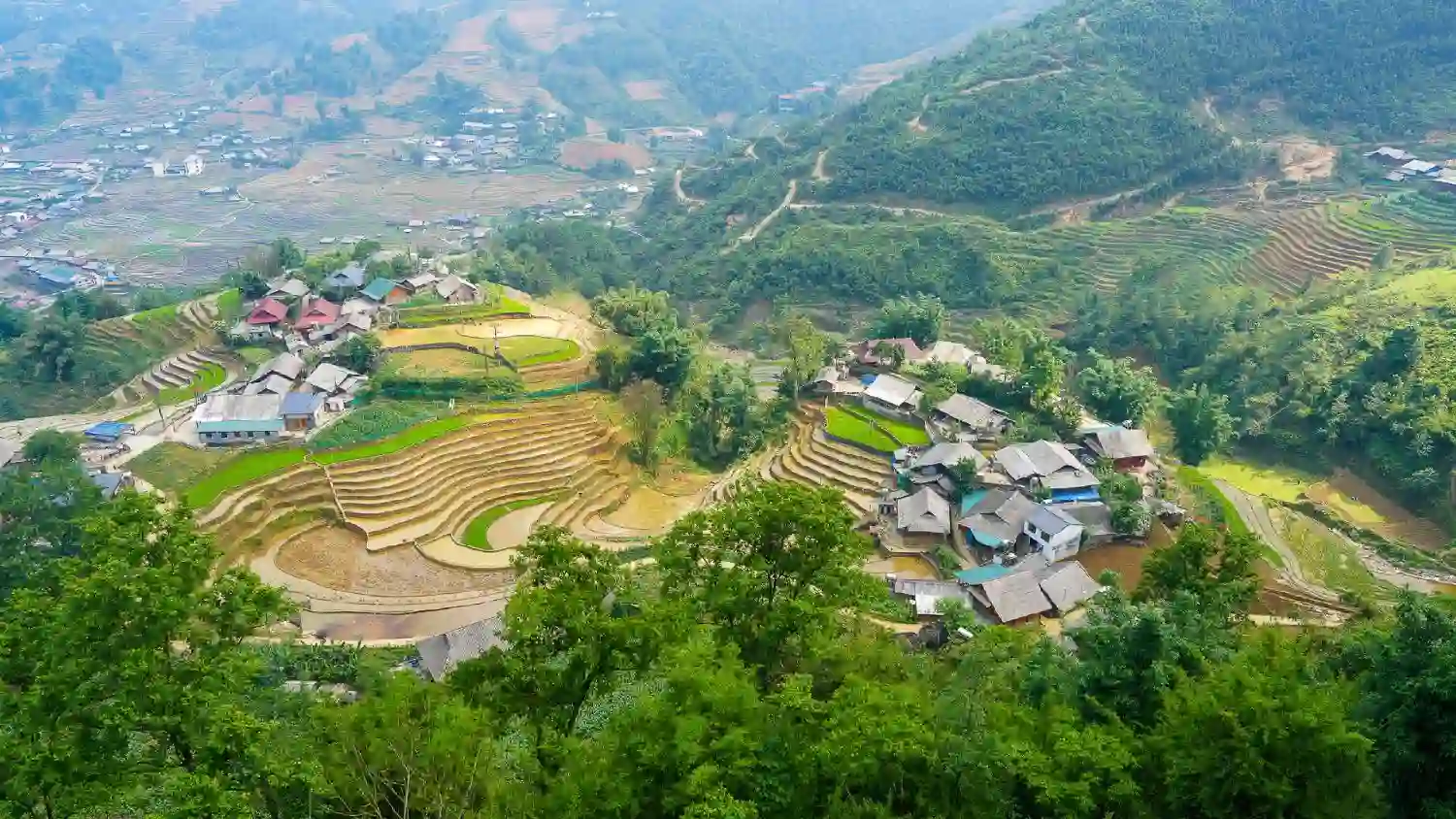
Rice terraces sculpt Muong Hoa Valley and surrounding slopes — engineering and aesthetics combined. Colours shift by season: green transplant and growth periods, golden harvest (often September–October), bare mud winter. Terraces are working farms, not permanent postcard props — walk on paths, not through planted fields unless guided on established routes.
Ethnic minority villages
Hmong, Red Dao, Tay and other groups live in valleys around Sapa town. Tourism intersects daily life — crafts, homestays, guided walks — but homes, fields and schools are not attractions. Respectful visits follow guide advice, ask before photographing faces, buy crafts only when genuinely desired.
Sapa town vs valley
Sapa town offers hotels, restaurants, ATM, Fansipang cable car access, market night. Valleys offer quieter nights, homestay food, trailhead proximity. Trek type determines where you sleep — not all routes require homestay, but multi-day treks usually include one valley night.
Choosing trek length — half-day to three days
Half-day or gentle full-day (intro level)
Duration: 3–5 hours walking · Elevation: Moderate · Overnight: Sapa town hotel
Best for: First mountain day, families with teens, travellers testing altitude and mud tolerance, post-train recovery day.
Typical routes: Cat Cat village approaches (crowded but accessible), shorter Muong Hoa segments, Red Dao community paths with limited ascent.
Unlocks: Valley orientation, terrace photography, basic village etiquette practice.
Limitation: Crowds near town; less "deep Sapa" than overnight valley routes.
Editorial tour pick: Sapa countryside walking tour — introductory pacing with guide support.
Full-day trek (hotel base)
Duration: 6–8 hours walking · Elevation: Moderate to strenuous · Overnight: Sapa town hotel
Best for: Fit travellers with one full trail day, clear weather window, preference for comfortable bed over homestay.
Typical routes: Extended Muong Hoa valley paths, multiple village passes, higher viewpoint ascents.
Unlocks: Deeper valley than half-day, more terrace variety, stronger fitness test before committing to multi-day.
Two days / one night (2D1N)
Duration: Day 1 trek + homestay · Day 2 trek return · Overnight: Valley homestay
Best for: Default depth recommendation for first Sapa visit with adequate time — balances immersion and trip length.
Typical routes: Muong Hoa valley traverse, Ta Van / Giang Ta Chai corridor variants depending on operator.
Unlocks: Homestay meal, evening village quiet, morning mist before day-trippers from town arrive, social time with guide and hosts.
Editorial tour pick: Sapa trekking tour 2 days 1 night.
Three days / two nights (3D2N)
Duration: Extended valley circuits · Overnight: Multiple homestays or mixed hotel/homestay
Best for: Photographers, repeat Vietnam visitors, strong fitness, desire for less-trodden path segments.
Typical routes: Longer loops linking several villages, higher cumulative ascent, optional off-main-corridor variants.
Unlocks: Rhythm slow enough for weather adjustment, redundant viewpoints when cloud clears on day three, deeper cultural pacing if guide quality high.
Editorial tour pick: Sapa trekking tour 3 days 2 nights.
Comparison table
| Trek type | Nights in Sapa area | Fitness | Crowd exposure | First-timer fit |
|---|---|---|---|---|
| Half-day / intro walk | 2+ town | Low–moderate | Higher near town | Testing mountains |
| Full-day | 2+ town | Moderate–high | Moderate | One strong trail day |
| 2D1N trek | 2–3 total trip | Moderate | Lower in valley | Best default depth |
| 3D2N trek | 3–4 total trip | High | Lowest on remote segments | Enthusiasts |
Rule: Longer is not automatically better. A muddy 3D2N with wrong shoes beats an dry half-day emotionally — choose fit and season first.
Getting to Sapa from Hanoi — train vs bus
Overnight train (recommended first approach)
Experience: Soft sleeper berth · evening departure · Lao Cai arrival early morning · transfer minibus up mountain switchbacks to Sapa town.
Pros: Sleep en route, romantic travel memory, avoids daytime road hours.
Cons: Berth quality varies by carriage class; noise; booking ahead for peak weekends.
Tip: Book SP/TM tourist carriages or verified soft sleeper through reputable agents — hard seat overnight punishes tomorrow's trek.
Day bus
Pros: Lower cost, daytime scenery, flexible same-day start if already near station.
Cons: 5–6 hours winding road, motion sickness, arrives tired for afternoon trek only if scheduling aggressively.
Private transfer
Fastest door-to-door flexibility; cost highest. Suits groups splitting van, not solo budget travellers.
Arrival day pacing
Do not book strenuous full-day trek on train arrival morning without sleep. Light town walk, market, early sleep — save legs for tomorrow.
Link: planning your trip to Hanoi for where Sapa sits in booking sequence (usually after Ha Long or Ninh Binh, not before capital walking).
Weather and season — mountain logic
Sapa weather diverges sharply from Hanoi — check both when packing.
Best trekking windows
| Period | Conditions | Notes |
|---|---|---|
| September–November | Clearer views, harvest gold, cool days | Peak demand — book trains and guides early |
| March–May | Green terraces, warming, some rain | Good second choice |
| December–February | Cold, fog, occasional frost | Atmospheric; views unreliable; pack warm layers |
| June–August | Rain, mud, leeches on some paths | Treks still run with adjustments; photography harder |
Daily weather behaviour
Cloud can erase a ridge in minutes, then reopen. Guides adjust routes — flexibility is feature, not failure. Rain makes stone steps slippery; mud demands gaiters or old shoes.
Pack list (trekking serious)
| Item | Why |
|---|---|
| Waterproof jacket | Non-negotiable year-round |
| Layers (fleece / light down) | Town café hot, ridge cold |
| Trekking shoes with grip | Not fashion sneakers on mud |
| Gaiters (rain season) | Leech and mud management |
| Sun protection | UV strong at elevation |
| Small day pack | Water, snacks, rain layer |
| Plastic bag for wet clothes | Homestay floors appreciate |
| Cash (VND) | Valley vendors, tips, crafts |
| Personal meds + blister kit | Pharmacies limited on trail |
See also best time to visit Hanoi for capital alignment — do not assume same forecast.
Village visits — respect as default
Photography
Ask before photographing people, especially children and interior altar spaces. A guide can request permission in local language — do not treat silence as consent.
Commerce
Handicraft purchases support households when fair-priced and wanted — not when guilt-driven. Bargaining etiquette varies; follow guide cues.
Homestays
Sleeping in village homes means quiet evenings, shared meals, basic facilities. Toilets may be separate structure; hot water not guaranteed. That is the contract — not hotel disappointment.
Cultural performance
Some tours include dance demonstrations — know what is community-led versus tourism product. Ask operator sourcing if authenticity matters to you.
Path discipline
Stay on established trails; avoid trampling crops; keep voice low near schools and homes.
Fansipang cable car vs valley trekking — different products
The cable car to Fansipang summit is not a substitute for village trekking — it solves a different problem. Trekking puts you on stone paths between rice terraces, through hamlets where laundry dries on porch rails and dogs nap in midday heat. The cable car lifts you to Indochina's highest peak in minutes, with engineered viewpoints and souvenir tiers at the top.
| Factor | Valley trek | Fansipang cable car |
|---|---|---|
| Duration | Half-day to 3 days | Half-day including queues |
| Fitness | Walking legs required | Minimal — escalators and paths at top |
| Culture | Village contact possible | Tourism infrastructure |
| Weather lottery | Cloud on terraces | Cloud on summit — same fog, different angle |
| Best for | Default Sapa experience | Rest day, bad knees, summit checkbox |
Anna's rule: Trek at least one full day before considering the cable car. Travellers who ride up Fansipang on arrival morning and skip the valley leave with summit selfies and no Sapa memory worth keeping. If knees need mercy after a 2D1N trek, the cable car on day three is reasonable recovery.
Sapa town essentials — between trek days
What town provides
ATMs, pharmacies, cafés with western breakfast, gear rental shops, night market, transport booking. Recovery base between harder trail days.
Fansipang note
Cable car to Indochina summit peak — separate product from village trekking. Viable rest-day activity if knees need break; not substitute for valley cultural walk.
Food
Hot pot and grilled mountain pork common; vegetarian options exist but limited in homestays — notify operator ahead.
Fitness and health — honest self-assessment
Who succeeds on 2D1N
Travellers comfortable walking 4–6 hours daily on uneven stone and mud with breaks, carrying small daypack, sleeping one non-luxury night.
Who should shorten
Recent injury, significant knee issues, untrained with no time to train pre-trip, very young children — choose countryside walking tour or half-day.
Altitude
Sapa town ~1,500 m — most healthy adults fine; breathlessness on steep stairs normal. Not high-altitude sickness territory like Peru, but respect exertion.
Local expert insights — what guides wish you knew
Train night is part of the trek. Skip sleeper quality and day-one legs suffer — false economy.
Mud is not guide incompetence. Rain season trails get muddy despite maintenance; gaiters beat complaints.
Cloud cancel is not refund automatic. Views are weather-lottery; cultural and trail experience still valid.
Cat Cat alone is not "Sapa done." Accessible and crowded — fine as add-on, misleading as sole valley sample.
Homestay wifi and hot water vary. Set expectations with operator before booking 3D2N if amenities non-negotiable.
Market night is commerce, not anthropology. Enjoy food; do not confuse souvenir stalls with village visit depth.
Guide language quality varies. Pay for established trekking operators with verified English guide reviews — cheapest Lao Cai street booking risk.
Departure day needs light schedule. Post-trek legs and switchback transfer to train deserve buffer — no sprint from valley to hard seat.
Sample itineraries — Sapa as dedicated chapter
Minimum meaningful (3 Hanoi + 3 Sapa nights)
| Day | Activity |
|---|---|
| 1–3 | Hanoi — complete guide core |
| 4 eve | Train to Lao Cai |
| 5 | Arrive Sapa · light town · overnight town |
| 6–7 | 2D1N trek |
| 8 | Return train · Hanoi recovery or fly south |
Comfortable depth (4 Sapa nights)
| Day | Activity |
|---|---|
| 1 | Train · arrive · rest |
| 2 | Countryside walking intro |
| 3–5 | 3D2N trek |
| 6 | Town market · train south |
Combined north loop (10+ nights)
Hanoi 3 → Ninh Binh day → Ha Long 2D1N → Hanoi buffer → Sapa 3–4 → fly south OR continue Ha Giang by separate transfer (logistics heavy — plan deliberately).
What to ask your operator before booking
Generic route names hide different realities. Confirm these in writing:
- Exact villages on route — Cat Cat only vs deeper Muong Hoa traverse
- Homestay standard — shared room, mosquito net, toilet location
- English guide included — or driver-only (insufficient for village context)
- Baggage handling — what you carry vs what vehicle transports on 2D1N
- Rain plan — shortened route, alternate village, or reschedule policy
- Group size cap — six feels different from eighteen on narrow paths
- Meals included — homestay dinner usually yes; lunch on day two clarify
- Return timing — train connection buffer after valley descent
Cheap Lao Cai station offers often omit items quality operators include — compare line by line, not headline price.
Train classes and booking practicalities
Soft sleeper four-berth is default comfort recommendation for couples and friends. Hard sleeper saves money but sleep quality drops — acceptable for hardy backpackers, punishing before 2D1N trek.
Book Hanoi–Lao Cai 3–7 days ahead in September–October peak; longer for holiday weekends. Upper berths less convenient for tall travellers; lower berths cost slightly more on some agents.
Station is Hanoi Railway Station (Ga Hanoi) — not confused with Gia Lam bus station. Arrive 30 minutes before departure; passport required.
Return booking: many trek packages include Lao Cai–Hanoi ticket — verify soft sleeper vs hard before paying supplement.
Sapa vs Ha Giang — do not conflate
Both are mountains; different products. Sapa: terraced valleys, village treks, train access, 2–4 night sweet spot. Ha Giang: motor loop, Ma Pi Leng roads, 3–4 loop days minimum, remote. Choose one if time tight; linking both needs 10+ nights and strong travel stamina.
After the trek — recovery and onward travel
Post-trek legs feel heavy for 24 hours — schedule light activity on return to Sapa town or Hanoi. Massage shops in Sapa town vary in quality; hot shower in proper hotel often enough.
Laundry: Homestays may not dry clothes overnight in rain — pack quick-dry layers or accept damp pack one day.
Onward to Ha Giang or Ha Long requires Hanoi buffer in most itineraries — do not chain long-distance bus immediately after 3D2N without sleep night in capital. See planning your trip to Hanoi for sequencing.
Souvenirs: Textile quality varies — buy from makers you met on trail when possible; market stalls near town cater to impulse, not relationship.
Insurance check: Confirm trekking and mountain evacuation coverage — state hospitals in Lao Cai expect payment upfront; helicopter rescue rare and expensive without policy. Keep policy PDF offline on phone for checkpoint access.
Silver Waterfall (Thác Bạc) — roadside stop, not a separate Story
Silver Waterfall sits on the Fansipan / Sa Pa access corridor as a short roadside cascade stop — useful for a photo pause, not an independent itinerary. Absorb it here rather than inventing a thin waterfall URL.
- Time: 20–40 minutes including stairs and ticket desk (confirm locally)
- Pair with: Fansipan cable-car day or return from town — not a substitute for Muong Hoa or Cat Cat village
- Honest take: Pretty in wet season; skip if legs are reserved for a full valley trek
Closing — slow mountains, right trek, respectful villages
Sapa rewards travellers who slow down, pack for rain and cold, match trek length to legs honestly, and treat villages as shared space — not photo backdrops. Skip the Hanoi day-trip fantasy; ride the train; sleep in the valley at least once; choose 2D1N trekking as default depth unless time or fitness dictates shorter.
You succeeded if you remember one human moment — homestay meal steam, mist opening a terrace, guide translating a joke in a hillside kitchen — not if you counted viewpoint selfies from a parking lot.
Read next: day trips from Hanoi · planning your trip to Hanoi · best time to visit Hanoi · Ha Giang guide
Book: Sapa trekking 2 days 1 night · Sapa trekking 3 days 2 nights · Sapa countryside walking tour
FAQ — quick answers
Question: Can I visit Sapa as a day trip from Hanoi?
Answer: Technically possible, practically foolish. Ten to twelve hours in vehicles for two to three hours on trail. Choose Ninh Binh for a genuine Hanoi day trip instead. Sapa needs 2–3 nights minimum in the area plus travel time.
Question: How many days do I need in Sapa?
Answer: Two nights minimum (three calendar days including travel). Three to four nights comfortable for a 2D1N trek or 3D2N trek plus town recovery. Do not book a strenuous trek on train arrival morning.
Question: Which trek length should I book?
Answer: 2D1N valley trek is the default depth for first-timers with adequate time. Half-day or countryside walking tour if fitness or calendar is limited. 3D2N for strong walkers wanting quieter path segments. Match fitness honestly — mud beats ego.
Question: Train or bus from Hanoi to Sapa?
Answer: Overnight sleeper train to Lao Cai recommended for atmosphere and sleep — then one hour minibus to Sapa town. Day bus is cheaper but adds five to six hours of winding road fatigue. Book soft sleeper ahead in peak season (September–November).
Question: Sapa or Ha Giang — which northern mountain?
Answer: Sapa for terraced valley trekking and train access. Ha Giang for motorbike loop roads and Ma Pi Leng passes. Different fitness profiles, different minimum days. See Ha Giang guide if roads call louder than trails.
Question: What is the best weather window for trekking?
Answer: September–November for harvest gold and clearer ridges; March–May as second choice. Winter is cold and foggy; summer is rain, mud and leeches on some paths. Sapa weather diverges from Hanoi — pack mountain layers regardless of capital forecast.
Question: Is a homestay worth it?
Answer: Yes for multi-day treks — the evening meal and morning mist before day-trippers arrive are core Sapa experiences. Expect basic facilities: shared rooms, cold nights, outdoor toilets possible. Notify dietary needs ahead. Homestay is contract, not hotel disappointment.
Question: Should I do the Fansipang cable car?
Answer: After trekking, not instead of it. Cable car suits rest days, limited mobility or summit interest. Valley walking remains the defining Sapa experience for most first-time visitors.
Local tips
- →Read Sapa Guide as your sequencing spine — lock nights first, then add day trips from Sapa.
- →Sapa Guide: Keep one recovery evening in Sapa after any long northern transfer.
- →For Sapa Guide, start treks after mist lifts — Sapa viewpoints often clear mid-morning, not at hotel breakfast.
- →Sapa Guide: Layer for Sapa: valley floors can be warm while Fansipan approaches stay cold and wet.
Good to know
- Sapa Guide is planning architecture, not a minute-by-minute tour script.
- Sapa Guide: Tour products under Sapa change seasonally — treat sample days as templates.
- Sapa weather flips in hours — pack a compact shell even in “dry” months for Sapa Guide.
- Cash still wins in Muong Hoa and Cat Cat stalls linked from Sapa Guide — ATMs cluster in town.
Before you go
- Before you go: confirm passport validity and e-visa timing against your Sapa Guide start date.
- Share your Sapa Guide outline with any private driver so pickup windows stay honest.
- Confirm trek grade and village overnight with your Sapa operator the day before Sapa Guide.
Common mistakes
- ✕Sapa as Hanoi day trip — Brutal transit ratio; choose Ninh Binh instead.
- ✕Strenuous trek on arrival morning — Rest first; trek day two.
- ✕Fashion footwear on 2D1N — Injury risk; ruins group pacing.
- ✕Booking longest trek without fitness check — Shorter respectful walk beats abandoned day three.
- ✕Photographing villagers without asking — Damages trust for everyone after you.
- ✕Single night total in north Vietnam — Cannot include Sapa meaningfully; extend trip or skip.
- ✕Ignoring cold layer — Hypothermia risk on wet ridge in "tropical Vietnam" mind-set.
- ✕Expecting Hanoi weather forecast — Pack for mountains separately.
Practical information
- How to get there
- Overnight train/bus or private transfer from Hanoi — build arrival and departure buffers around trek days.
- Best time to visit
- Clearer trekking windows often Sep–Nov and Mar–May; winter cold and mist are real — pack layers.
- Suggested itinerary
- Arrive Sapa morning → short acclimatisation walk → full trek day → return next day or extend.
- Nearby attractions
- Muong Hoa Valley
- Cat Cat
- Fansipan cable area
- Hanoi (departure)
Frequently asked questions
- Can I visit Sapa as a day trip from Hanoi?
- Technically possible, practically foolish. Ten to twelve hours in vehicles for two to three hours on trail. Choose Ninh Binh for a genuine Hanoi day trip instead. Sapa needs 2–3 nights minimum in the area plus travel time.
- How many days do I need in Sapa?
- Two nights minimum (three calendar days including travel). Three to four nights comfortable for a 2D1N trek or 3D2N trek plus town recovery. Do not book a strenuous trek on train arrival morning.
- Which trek length should I book?
- 2D1N valley trek is the default depth for first-timers with adequate time. Half-day or countryside walking tour if fitness or calendar is limited. 3D2N for strong walkers wanting quieter path segments. Match fitness honestly — mud beats ego.
- Train or bus from Hanoi to Sapa?
- Overnight sleeper train to Lao Cai recommended for atmosphere and sleep — then one hour minibus to Sapa town. Day bus is cheaper but adds five to six hours of winding road fatigue. Book soft sleeper ahead in peak season (September–November).
- Sapa or Ha Giang — which northern mountain?
- Sapa for terraced valley trekking and train access. Ha Giang for motorbike loop roads and Ma Pi Leng passes. Different fitness profiles, different minimum days. See Ha Giang guide if roads call louder than trails.
- What is the best weather window for trekking?
- September–November for harvest gold and clearer ridges; March–May as second choice. Winter is cold and foggy; summer is rain, mud and leeches on some paths. Sapa weather diverges from Hanoi — pack mountain layers regardless of capital forecast.
- Is a homestay worth it?
- Yes for multi-day treks — the evening meal and morning mist before day-trippers arrive are core Sapa experiences. Expect basic facilities: shared rooms, cold nights, outdoor toilets possible. Notify dietary needs ahead. Homestay is contract, not hotel disappointment.
- Should I do the Fansipang cable car?
- After trekking, not instead of it. Cable car suits rest days, limited mobility or summit interest. Valley walking remains the defining Sapa experience for most first-time visitors.
Related content
Destination hub
Sapa →Related stories
- Sapa Day Trek vs Overnight: Which Trek to BookChoose between a Sapa day trek and an overnight homestay trek — calendar fit, knees, Muong Hoa depth and when fog rewards the extra night.
- Sapa vs Ha Giang: Which Northern Mountain Trip to ChooseCompare Sapa trekking with the Ha Giang Loop — effort, scenery type, nights required, weather risk and which HanoiTravelMate tours fit each choice.
- Sapa vs Pu Luong: Which Mountain Escape from HanoiCompare Sapa and Pu Luong for trekking from Hanoi — altitude, crowds, homestays, weather risk and which overnight product fits your energy.
- Ninh Binh vs Sapa: Karst Day Trip or Mountain TrekChoose between Ninh Binh karst and Sapa mountains when you have one landscape slot north of Hanoi — calendar, fitness and tour fit.
- Overnight Train Hanoi to Sapa: Lao Cai Sleeper GuideBook the Hanoi–Lao Cai overnight train for Sapa — soft sleeper tips, station logistics, van transfer and when a sleeper bus is the better call.
- Fansipan Mountain Guide: Cable Car, Weather & TimingPlan Fansipan from Sapa — cable car logistics, summit weather, fitness honesty and when a valley trek is the better day.