What to Pack for Northern Vietnam: Seasons, Temples & Treks
Pack for Hanoi, Ninh Binh, Ha Long, Sapa and Ha Giang — seasonal layers, temple modesty, rain gear and trek footwear without overpacking for a short trip.
By Anna15 min readNorthern Vietnam
Introduction — answer first
Travellers ask: "What should I pack for a trip that includes Hanoi, Ha Long and maybe Sapa?" Pack for layers, modesty and walking — not for a single weather forecast. Northern Vietnam spans steamy lowland afternoons, air-conditioned hotel chill, mountain evenings below 15°C, and temple visits that reject shorts regardless of temperature. A well-packed bag for seven to ten days fits in a 40-litre carry-on plus personal item if you choose versatile pieces and plan one laundry stop.
Lan, our packing and logistics editor, runs a three-zone framework: city walking (breathable, modest-capable), landscape days (sun, rain, boat splash), and mountain nights (warm layer, proper shoes). This guide applies that framework across seasons, with specific lists for temple corridors, overnight cruises and trekking extensions toward Sapa or Ha Giang.
Northern Vietnam's climate zones — why one outfit fails
Your itinerary likely crosses three distinct microclimates:
Hanoi and Red River Delta lowlands
Humid subtropical — 26–35°C March–September with afternoon rain bursts; 15–22°C October–February with grey drizzly weeks. Urban heat trapped between tube houses; concrete radiates after midday. Air-conditioning runs cold in malls, museums and mid-range hotels.
Ha Long and Lan Ha Bay (maritime)
Cooler and windier on deck than Hanoi same day — sea breeze, spray on kayaks, strong sun reflection. Overnight cruises mean casual evening wear on deck plus cabin comfort. Storm season (July–September) demands serious rain readiness.
Northwest highlands (Sapa, Ha Giang, Fansipan approaches)
Mountain climate — can drop 10–15°C below Hanoi forecast. Sapa town at 1,600 m sees fog, mud and chilly evenings year-round. Trekking days need trail footwear and rain protection even when Hanoi feels tropical.
| Zone | Summer feel | Winter feel | Packing implication |
|---|---|---|---|
| Hanoi | Hot, sticky, sudden rain | Cool, damp, overcast | Light layers + compact rain shell |
| Ha Long | Warm deck, cool evenings | Misty, chilly wind | Wind layer + non-slip shoes |
| Sapa / Ha Giang | Warm days, cool nights | Cold, fog, mud | Fleece, trail shoes, rain pants |
Cross-reference month-by-month detail in best time to visit Hanoi before finalising your bag.
Seasonal packing — what changes by month
October–November (peak shoulder)
Often considered best overall — dry-ish, comfortable walking temperatures, clear bay views possible. Pack: light trousers and t-shirts, one long-sleeve shirt, light fleece or packable down for Sapa evenings, rain jacket (showers still arrive), comfortable walking shoes, sandals for hotel.
December–February (cool season)
Hanoi 15–20°C days, 10–15°C nights; Sapa can near freezing. Tet falls in this window some years — see cultural notes below. Pack: warm layers, light down jacket or fleece, long trousers, closed shoes, scarf, optional thin gloves for mountain nights. Shorts rare except midday Hanoi sun.
March–April (spring shoulder)
Warming, occasional rain, pollen and humidity rising. Pack: same as autumn with emphasis on breathable fabrics; umbrella or light rain shell; sun hat early.
May–September (hot season + storms)
Hanoi hot and humid; afternoon thunderstorms; Ha Long cruise cancellations possible. Pack: lightweight moisture-wicking tops, breathable trousers or knee-length modest shorts for city only, strong sun protection, quality rain jacket (not disposable poncho only), quick-dry everything, insect repellent for evenings.
| Month band | Hanoi daytime | Sapa nighttime | Non-negotiable item |
|---|---|---|---|
| Oct–Nov | 22–28°C | 12–18°C | Light fleece |
| Dec–Feb | 15–22°C | 5–12°C | Warm jacket |
| Mar–Apr | 20–28°C | 10–16°C | Rain shell |
| May–Sep | 28–35°C | 15–20°C | Sun + rain combo |
The core capsule — works for most 7–10 day trips
Clothing (mix and match)
- 2–3 lightweight t-shirts or blouses — moisture-wicking preferred
- 1–2 long-sleeve shirts — sun, temples, Sapa evenings, mosquito evenings
- 2 lightweight trousers — one quick-dry technical, one casual-smart for dinners
- 1 knee-length skirt or dress (optional) — temple-appropriate with scarf backup
- 1 light fleece or packable down jacket — mountain and winter essential
- 1 compact rain jacket — year-round; storm-season non-negotiable
- 5–7 underwear, 4–6 socks — plan laundry mid-trip
- Sleepwear — cruise cabins and homestays
- Swimsuit — some cruises and hotel pools; not Sapa priority
Footwear
- Broken-in walking shoes — Old Quarter cobbles, Ba Dinh distances, 10,000-step days
- Sandals or slides — hotel, cruise cabins, easy Hanoi evenings
- Trail shoes (if Sapa/Ha Giang/Pu Luong trekking) — grip for mud and steps
Avoid: Brand-new stiff shoes, heavy hiking boots unless serious multi-day trek, flip-flops as primary walking shoe on wet stone.
Temple and mausoleum modesty kit
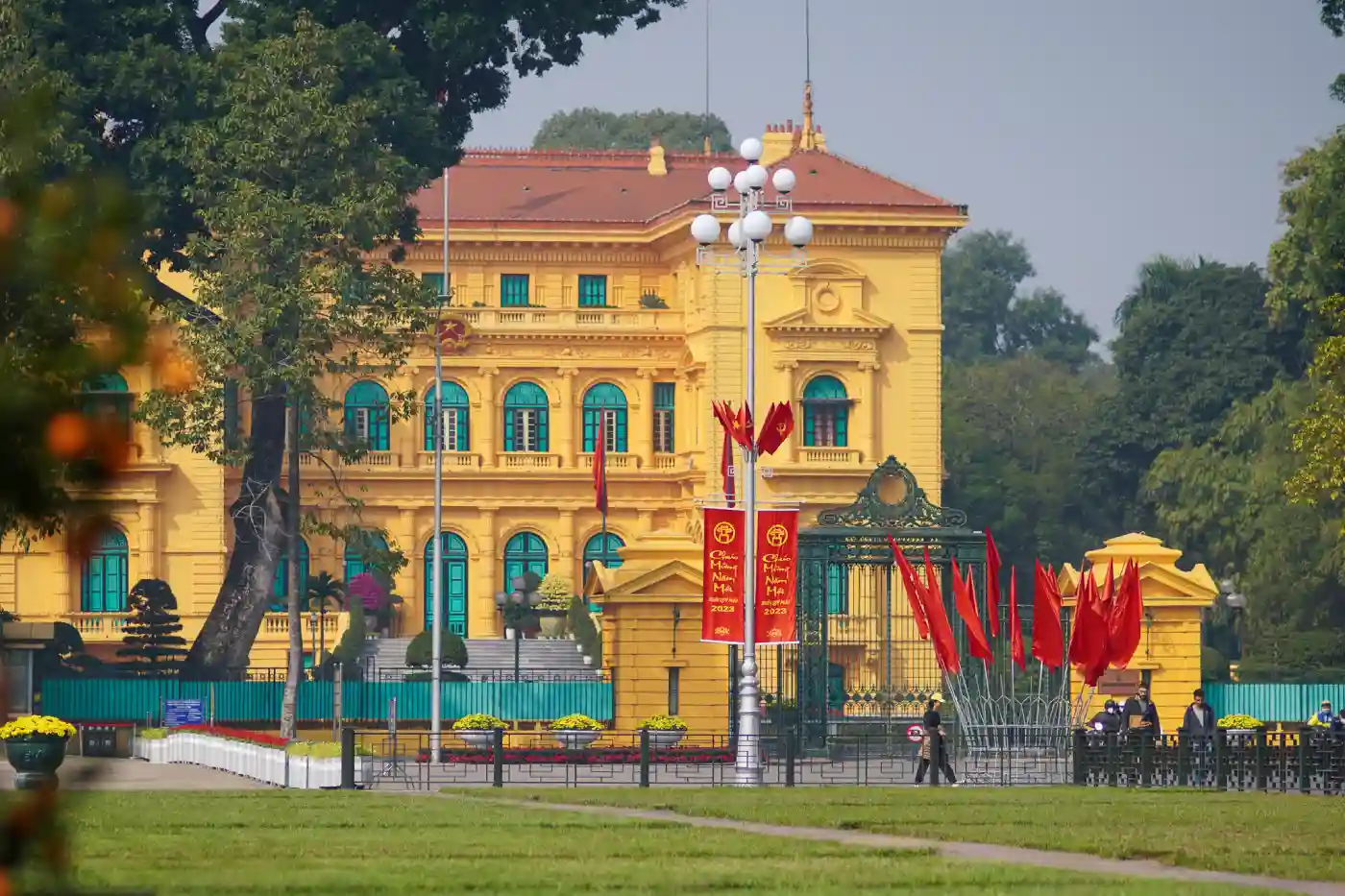
Vietnamese religious and state memorial sites enforce shoulders covered, knees covered, no hats inside prayer halls. Ho Chi Minh Mausoleum and pagodas apply strict checks.
Pack specifically:
- Lightweight scarf or shawl — converts t-shirt to temple-ready in seconds
- Long trousers or long skirt — not gym shorts
- Socks — many pagodas require shoe removal; easy-on shoes help
- Avoid tank tops, crop tops, short shorts at Ba Dinh and pagoda clusters
Link: complete guide to visiting Hanoi for mausoleum and temple sequencing.
Destination-specific add-ons
Ha Long / Lan Ha overnight cruise
Add to core capsule:
- Casual evening wear — no formal dress code on most vessels; smart-c casual fine
- Non-slip deck shoes — boat surfaces wet
- Small dry bag — kayak splash, tender transfers
- Motion-sickness remedy if susceptible — Gulf of Tonkin can swell
- One warmer layer — deck wind after sunset
Skip: hard-shell suitcase (soft bag easier for tender transfers); excessive jewellery overboard risk.
Book context: Ha Long Bay overnight cruise · Lan Ha Bay overnight cruise
Ninh Binh day trip
Add:
- Sun hat — open boat routes, Mua Cave climb
- Same temple modesty — Bich Dong pagoda, Hoa Lu
- Optional light long-sleeve — sun on water
Minimal add-on — Ninh Binh day tour fits core city packing.
Sapa trekking (2D1N or longer)
Add:
- Trail shoes with grip — mud and stone steps
- Rain pants or convertible trousers — sudden mountain rain
- Warm mid-layer and fleece — homestay evenings unheated
- Small daypack (20–25L) — water, layers, camera
- Trekking poles (optional) — homestays sometimes lend; collapsible travel pair fine
- Plastic bag for wet clothes — separates mud from clean in pack
Book context: Sapa trekking tour 2 days 1 night. Full destination detail: Sapa guide.
Ha Giang loop
Add beyond Sapa list:
- Warm layers for mountain passes — wind chill on bike
- Buff or face covering — dust on dry season roads
- Sturdy gloves if self-riding — vibration and sun
- Minimal luggage — soft compact bag strapped to bike
Most travellers on Ha Giang easy rider 3 days store main bag in Hanoi hotel — pack a small overnight subset.
Pu Luong valley
Similar to Sapa but warmer nights, less extreme altitude. Quick-dry clothing, trail sandals acceptable on dry paths, swim option in stream season. See Pu Luong guide.
Comparison table — pack emphasis by trip type
| Trip shape | Extra priority | Can skip |
|---|---|---|
| Hanoi city only (3–4 nights) | Walking shoes, modest temple outfit | Trail gear, down jacket (Oct–Mar: keep fleece) |
| Hanoi + Ha Long 2D1N | Rain layer, deck shoes, soft bag | Formal wear, heavy boots |
| Hanoi + Ninh Binh day | Sun hat, modest layers | Full trekking kit |
| Hanoi + Sapa 2D1N | Trail shoes, warm layer, daypack | Multiple dressy outfits |
| 7-day north combo | Full capsule + laundry plan | More than one "just in case" outfit |
| Ha Giang 3-day | Minimal bike subset, dust protection | Large roller luggage on bike |
Itinerary frameworks: 7-day northern Vietnam itinerary · day trips from Hanoi
Toiletries, health and documents
Toiletries
- Sunscreen SPF 50+ — tropical sun on water and ridges
- Insect repellent — evening lakeside, homestays, cruise dusk
- Basic first aid — blister plasters, antiseptic, pain relief, rehydration salts
- Personal medications — pharmacies exist in Hanoi; bring prescriptions in original packaging
- Hand sanitiser — street food adventures
- Toilet paper/tissues — rural toilets inconsistent
Health notes
- Travel insurance documents accessible offline
- Motion sickness for bay and mountain roads
- Antidiarrheal — food is generally safe; new cuisines happen
Electronics
- Universal adapter — Vietnam uses Type A/C, 220V
- Power bank — long tour days
- Waterproof phone pouch — kayak and rain
- Camera protection — humidity and splash
Connectivity: Hanoi SIM and WiFi guide
Luggage choice — Old Quarter reality
Hanoi Old Quarter hotels often feature narrow stairs, no lift, alley access. Hard-shell four-wheelers fight cobbles and stairwells. Soft duffel, travel backpack or hybrid roller-backpack converts misery into manageable carries.
Packing strategy:
- Cube organisers for mixed-weather layers
- Laundry mid-trip at hotel (often 24-hour return, modest cost)
- Leave room for souvenirs — lacquer, coffee, textiles tempt
Base hotel selection affects daily carry — where to stay in Hanoi for lift-access notes if mobility limited.
What not to pack — save the weight
- Multiple heavy jeans — slow-dry, hot; one lightweight trouser suffices
- Excessive formal wear — Hanoi dining is casual-smart at most
- Full-size toiletries — buy locally or use hotel minis first days
- Drone without permit research — restrictive; assume leave at home
- Entire pharmacy — Hanoi pharmacies stock basics; bring specifics only
- More than two pairs of shoes unless trekking — wear one, pack one
- Cotton everything in summer — humidity punishment
- Valuables you cannot lose — leave unnecessary jewellery home
Carry-on vs checked — the seven-day decision
Most 7-day northern itineraries fit carry-on plus personal item if you laundry once and avoid duplicate "just in case" outfits. Checked bag justified when:
- December–February with Sapa or Ha Giang — bulkier warm layers
- Photography gear — drone excluded; lenses and tripod add volume
- Family travel — child supplies difficult to source mid-trip
- Souvenir certainty — lacquerware and coffee add weight homeward
Carry-on strategy: Wear trail shoes and jacket on plane; cubes for mixed climates; liquids bag for sunscreen and repellent under 100 ml limits. Checked strategy: Soft-sided duffel only — hard shells crack on Ha Long tender transfers and Old Quarter stairs.
Roll clothing instead of fold where possible — humidity makes folded cotton crease permanently. A small portable clothesline (hotel hook or balcony) dries quick-dry layers overnight after Sapa or cruise spray days.
If Ha Giang easy rider features in your week, main bag stays in Hanoi hotel storage — confirm front desk policy at booking per where to stay in Hanoi.
Money belt, daypack and theft-conscious packing
Hanoi and tourist corridors are generally safe, but crowded Old Quarter evenings and open-top daypacks invite pickpockets. Pack:
- Cross-body bag or theft-resistant daypack for city days
- Hotel safe use for passport backup and spare cards — carry photocopy or digital scan walking
- Minimal wallet walk — enough cash for one meal plus Grab, not entire trip float
- Zippered pockets on trekking days — homestay dormitories shared
This is habit, not paranoia — same logic as any dense Asian capital.
Tet and cultural event packing notes
Lunar New Year (Tet) brings cooler weather, closed shops and festive dress in streets — modest, cheerful colours welcome; no special dress code for foreigners but expect crowds and plan extra snacks (restaurants limited). Book transport early; pack patience alongside fleece.
Rainy-season packing — May to October module
Northern showers concentrate in the May–October window, but short bursts hit outside that band too. Do not invent a second packing Story for rain — fold the kit here, and read season timing on Hanoi rainy season guide plus month strategy on best time to visit Hanoi.
| Item | Why it earns suitcase space |
|---|---|
| Compact waterproof shell | Old Quarter alleys flood faster than umbrellas dry |
| Quick-dry trousers ×2 | Cotton stays wet through lunch |
| Trail shoes with tread | Wet marble temple steps and cruise tenders |
| Dry bag for phone + passport pouch | Scooter splash and boat spray |
| Light sandals that drain | Hotel and short wet walks |
| Small microfibre towel | Homestay laundry lag on wet days |
Skip packing: bulky gumboots (buy cheap local if needed), second formal umbrella (hotel lobbies loan), full rain pants unless Ha Giang in active monsoon. Cruise decks still need the shell even in “dry” months — bay spray is not calendar rain.
If your trip is mostly indoor museums and cafés, rain is inconvenience; if it includes Sapa terraces or Ha Giang passes, the shell becomes non-negotiable. Match destination modules above; match calendar honesty on the rainy-season guide.
Closing — layers, modesty, broken-in shoes
Northern Vietnam packing is not about preparing for every catastrophe — it is about three repeatable outfits that handle heat, respect temples, survive a Sapa night, and dry before tomorrow. Anchor to your travel month via best time to visit Hanoi, add destination modules for bay or mountains, choose soft luggage for Old Quarter stairs, and leave room for the coffee and lacquer you will inevitably carry home.
Read next: best time to visit Hanoi · planning your trip to Hanoi · 7-day northern Vietnam itinerary · day trips from Hanoi
Book: Sapa trekking tour · Ha Long Bay overnight cruise · free tour of Hanoi
FAQ — quick answers
Question: What should I wear to temples and the Ho Chi Minh Mausoleum?
Answer: Shoulders and knees covered, no hats in prayer halls, remove shoes where indicated. Carry a light scarf to convert summer tops. Mausoleum security rejects shorts and sleeveless shirts — plan one modest outfit and repeat it.
Question: Do I need warm clothes for Sapa if I visit in summer?
Answer: Yes — a fleece or light jacket for evenings. Sapa nights stay 10–15°C cooler than Hanoi. Trekking layers matter year-round; winter (Dec–Feb) demands proper warm coat and long trousers.
Question: Can I wear shorts in Hanoi?
Answer: City streets — yes, especially heat months. Temples, mausoleum and some pagodas — no. Pack at least one long-trouser/modest option for sacred sites and air-conditioned museums.
Question: What shoes should I bring for northern Vietnam?
Answer: Broken-in walking shoes for city and Ba Dinh distances daily. Add trail shoes if Sapa or Ha Giang trekking included. Sandals for hotel and cruise cabins; avoid flip-flops as primary walking footwear on wet cobbles.
Question: Should I pack a suitcase or backpack?
Answer: Soft duffel or travel backpack beats hard roller for Old Quarter stairs and alley hotels. Overnight cruises prefer compact soft bags for tender transfers. Verify lift access in where to stay in Hanoi.
Question: What is the best season to pack light?
Answer: October–November and March–April allow smallest viable bags — one light warm layer usually enough. December–February and mountain trekking demand more volume regardless of Hanoi daytime mildness.
Question: Do I need formal clothes for Ha Long Bay cruises?
Answer: No. Smart-c casual for dinner — trousers or neat shorts, collared shirt optional. Prioritise wind layer and non-slip shoes over dressy outfits. Compare cruise types in Ha Long Bay guide.
Question: Can I buy forgotten items in Hanoi?
Answer: Yes for basics — sunscreen, repellent, umbrellas, cheap sandals, adapters at convenience stores and pharmacies. Specific trail gear and quality rain shells harder; bring known-fit shoes and jacket.
Local tips
- →Wear your bulkiest items on the plane — trail shoes and jacket save suitcase litres.
- →One temple outfit, repeated — travellers overpack "modest options" for three pagoda days.
- →Quick-dry trumps cute — humidity defeats cotton by day two.
- →Laundry on day four — seven-day trip stays carry-on viable.
- →Pack a sarong or large scarf — temple cover, beach cover, picnic sit, sudden rain.
- →Test walking shoes before flying — blisters on Hoan Kiem first morning ruin the mood.
- →Small medical kit in daypack — not buried in checked bag on cruise.
- →Photograph bag contents — insurance claims and repacking after homestay shuffle.
Good to know
- What to Pack for Northern Vietnam assumes typical 2026 transfer times — festivals and storms add buffer needs.
- What to Pack for Northern Vietnam: Family, solo and accessible variants of Hanoi travel change the same skeleton plan.
- Near What to Pack for Northern Vietnam, Hanoi street vendors often need small cash even when hotels take cards.
- Tet and festival weeks change opening patterns for What to Pack for Northern Vietnam — verify that week’s hours.
Before you go
- Before you go: save offline copies of What to Pack for Northern Vietnam and key vouchers.
- Tell travelling companions the “must keep” days from What to Pack for Northern Vietnam versus optional swaps.
- Screenshot offline maps for the blocks around What to Pack for Northern Vietnam before you enter dense Hanoi lanes.
Common mistakes
- ✕Packing only for Hanoi forecast — Sapa same trip, different planet. Check best time to visit per destination.
- ✕Temple shorts — Turned away at mausoleum or pagoda; wasted taxi time.
- ✕New shoes on arrival day — Old Quarter is a blister factory. Break in beforehand.
- ✕No rain layer in "dry season" — Northern showers ignore calendar optimism. See the rainy-season packing module above.
- ✕Hard roller in stair-only hotel — Where to stay mentions lift access; verify booking.
- ✕One giant checked bag for Ha Giang — Store in Hanoi; ride with subset.
- ✕Forgetting modest cruise dinner isn't black tie — Space better used for wind layer.
- ✕Skipping sun protection on cloudy bay days — Reflection burns regardless.
Practical information
- How to get there
- See Getting there / planning sections in the article body.
- Best time to visit
- Follow seasonal and daily timing advice in the Quick Facts and body.
- Suggested itinerary
- Use the itinerary and pairing sections in the article, then book related tours if logistics are heavy.
- Nearby attractions
- Hanoi Old Quarter
- Hoan Kiem Lake
- Related destination hubs
Frequently asked questions
- What should I wear to temples and the Ho Chi Minh Mausoleum?
- Shoulders and knees covered, no hats in prayer halls, remove shoes where indicated. Carry a light scarf to convert summer tops. Mausoleum security rejects shorts and sleeveless shirts — plan one modest outfit and repeat it.
- Do I need warm clothes for Sapa if I visit in summer?
- Yes — a fleece or light jacket for evenings. Sapa nights stay 10–15°C cooler than Hanoi. Trekking layers matter year-round; winter (Dec–Feb) demands proper warm coat and long trousers.
- Can I wear shorts in Hanoi?
- City streets — yes, especially heat months. Temples, mausoleum and some pagodas — no. Pack at least one long-trouser/modest option for sacred sites and air-conditioned museums.
- What shoes should I bring for northern Vietnam?
- Broken-in walking shoes for city and Ba Dinh distances daily. Add trail shoes if Sapa or Ha Giang trekking included. Sandals for hotel and cruise cabins; avoid flip-flops as primary walking footwear on wet cobbles.
- Should I pack a suitcase or backpack?
- Soft duffel or travel backpack beats hard roller for Old Quarter stairs and alley hotels. Overnight cruises prefer compact soft bags for tender transfers. Verify lift access in where to stay in Hanoi.
- What is the best season to pack light?
- October–November and March–April allow smallest viable bags — one light warm layer usually enough. December–February and mountain trekking demand more volume regardless of Hanoi daytime mildness.
- Do I need formal clothes for Ha Long Bay cruises?
- No. Smart-c casual for dinner — trousers or neat shorts, collared shirt optional. Prioritise wind layer and non-slip shoes over dressy outfits. Compare cruise types in Ha Long Bay guide.
- Can I buy forgotten items in Hanoi?
- Yes for basics — sunscreen, repellent, umbrellas, cheap sandals, adapters at convenience stores and pharmacies. Specific trail gear and quality rain shells harder; bring known-fit shoes and jacket.
From the road
Related real moment
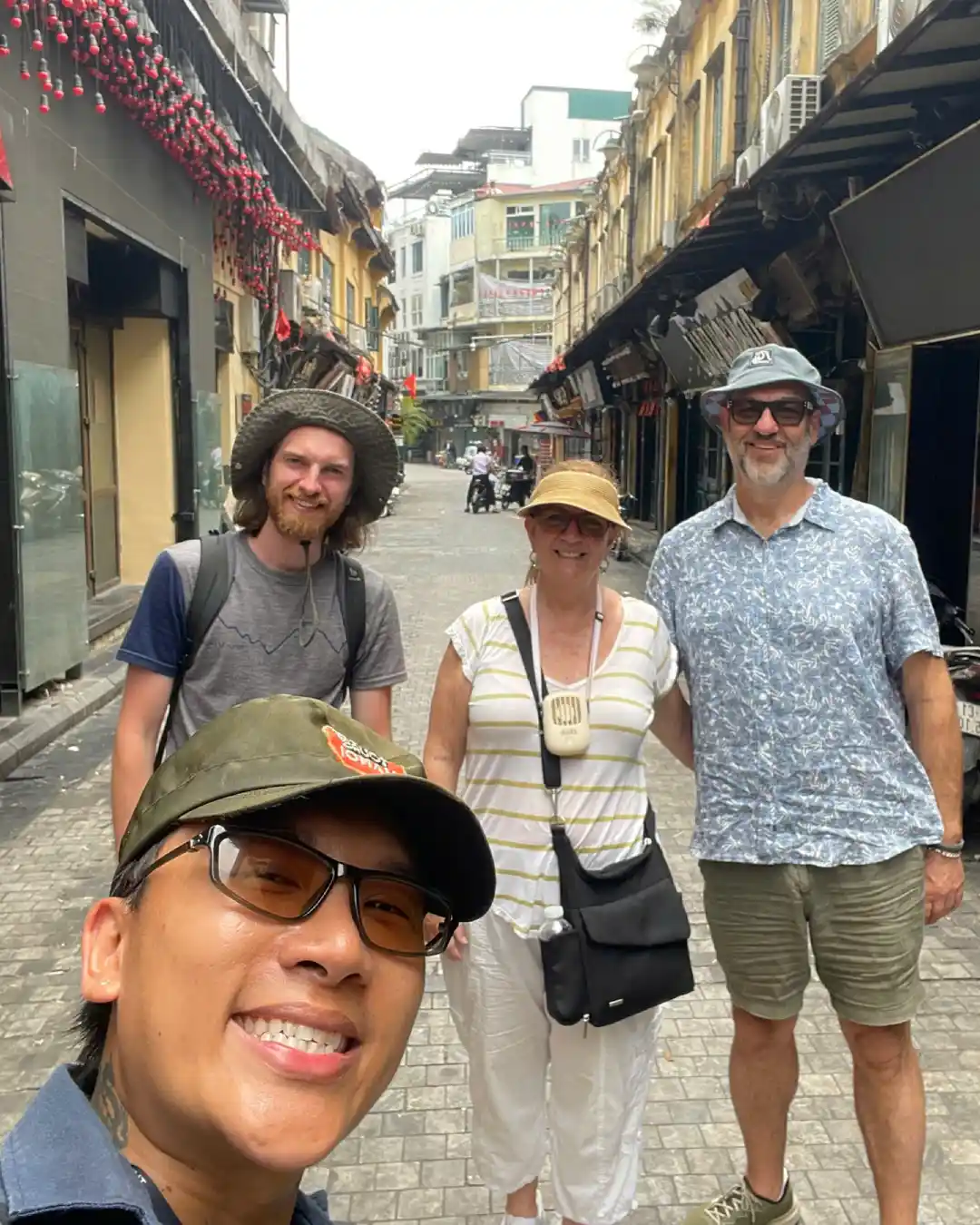
A photo journal from Hanoi — not a traveller review, and not proof that every detail in this guide happened on that walk.
Related content
Destination hub
Hanoi →Related stories
- Best Time to Visit Hanoi: Complete Seasonal GuideWhen to visit Hanoi — month-by-month weather, rainy season, festivals, walking tours, food seasons and packing advice from local tour operators who work the city year-round.
- Planning Your Trip to Hanoi: Step-by-Step ChecklistA sequenced planning checklist for Hanoi — dates, visa, hotel, skeleton itinerary, tour bookings and arrival day — without duplicating the complete city guide.
- Northern Vietnam Itinerary 7 Days: Hanoi Plus Two DestinationsBuild a realistic 7-day northern Vietnam trip — Hanoi base plus Ninh Binh/Ha Long, Sapa or Ha Giang patterns — with transfer honesty and day-by-day pacing.
- Vietnamese Etiquette for Travelers: Temples, Dining & PhotosTravel Vietnam with respectful habits — temple dress, dining manners, photography consent, tipping norms and how etiquette changes between Old Quarter streets and sacred sites.
- Day Trips from Hanoi: Complete Comparison GuideCompare every major day trip and overnight escape from Hanoi — Ninh Binh, Ha Long, Sapa, craft villages and more — with honest travel times, booking advice and tour picks.
- Hanoi Rainy Season Guide: What to Do When It PoursVisit Hanoi in the rainy season with a working plan — indoor museums, coffee hours, food tours, footwear and how rain differs from the general best-time overview.