Xẩm Singing in Hanoi: Blind Balladry and Urban Folk Memory
How xẩm ballads once moved through Hanoi's markets and crossroads, what blind-roving singers carried in their repertoires, and how today's revival differs from casual street performance.
By Anna14 min readHanoi Old Quarter and Red River Delta
Introduction — answer first
Travellers ask: "What is xẩm and did it really belong to blind street singers in Hanoi?" Xẩm (hát xẩm) is a northern Vietnamese narrative ballad form historically associated with visually impaired wandering musicians who sang morality tales, news, and humour at markets, ferry points, and guild streets. Hà Nội's Old Quarter was among the urban circuits where xẩm intersected merchant life and festival bustle.
Xẩm is not UNESCO-inscribed as a standalone element. National tourism and radio heritage bodies document it alongside other Red River Delta folk genres. It sits psychologically between salon ca trù and communal chèo — portable, oral, and socially frank.
History and repertoire
VOV World and Vietnam National Administration of Tourism materials describe xẩm developing from late medieval–early modern northern oral culture, with professional blind singers organised in loose guild-like networks. Repertoire mixed Buddhist karma stories, satirical commentary on officials, and romantic plot fragments — a mobile newspaper and sermon in song.
Twentieth-century urban change, hospitalisation programmes, and broadcast media sharply reduced roving xẩm. By the 1990s, few active blind masters remained. Revival projects since the 2000s train sighted and visually impaired students to recover melodic modes (điệu) once tied to specific streets.
Performance style
Xẩm uses đàn bầu monochord or đàn nhị fiddle accompaniment, with call-and-response between lead singer and chorus claps. Unlike ca trù, there is no phách metre bar or seated literati circle; unlike tuồng, there are no painted masks or battle mime.
Hà Nội visitors may encounter xẩm at heritage club nights, television specials, or Old Quarter cultural events — not as guaranteed daily busking. For evening stage contrast, see the water puppet theatre guide (a different folk performance economy, also not UNESCO-listed).
Preservation and ethics
Revival groups emphasise disability-inclusive training and respect for blind-master lineages. Treating xẩm as quaint street content for social media clips disrespects a genre rooted in livelihood struggle. Ask permission before filming close portraits; tip through official programme channels when provided — not by thrusting cash mid-song.
Contextualise xẩm within Thăng Long's popular culture layers in Thăng Long history and within festival seasonality via the Vietnamese festival calendar.
Etiquette for listeners
Sit, listen, and read programme translations when offered. Applause norms follow folk-club customs — moderate clapping between pieces, not mid-verse. Pair a xẩm evening with daytime Old Quarter heritage walking to see guild street names that once anchored singer circuits.
For comparative call-and-response folk song, see trống quân singing; for temple-season public culture, see Buddhism in Hanoi (xẩm repertoire often borrowed moral tales from Buddhist oral lore without being liturgical music).
Local tips
- →Read Xẩm Singing in Hanoi before you walk the related district — context changes what you notice in Hanoi.
- →Pair one museum or heritage stop with café time so Xẩm Singing in Hanoi does not become lecture fatigue.
- →Group Xẩm Singing in Hanoi with nearby sights in the same Hanoi district to cut cross-town Grab time.
- →Walk to Xẩm Singing in Hanoi early; Hanoi heat and scooter density rise after 09:30.
Good to know
- Xẩm Singing in Hanoi spans living culture, not only monuments — markets and meals are part of the evidence.
- Festival timing can reshape access to sites mentioned in Xẩm Singing in Hanoi.
- Near Xẩm Singing in Hanoi, Hanoi street vendors often need small cash even when hotels take cards.
- Tet and festival weeks change opening patterns for Xẩm Singing in Hanoi — verify that week’s hours.
Before you go
- Before you go: note which sites in Xẩm Singing in Hanoi need covered shoulders or silence.
- Carry a small notebook if you like linking museum labels back to Xẩm Singing in Hanoi.
- Screenshot offline maps for the blocks around Xẩm Singing in Hanoi before you enter dense Hanoi lanes.
Common mistakes
- ✕Skimming Xẩm Singing in Hanoi then expecting a single façade to “explain” Hanoi history.
- ✕Photographing worship or private moments without consent while exploring Xẩm Singing in Hanoi themes.
- ✕Cramming Xẩm Singing in Hanoi into a multi-district sprint that ignores Hanoi traffic reality.
- ✕Relying only on hotel concierge timing for Xẩm Singing in Hanoi without a backup route.
Practical information
- How to get there
- Old Quarter heritage walks.
- Best time to visit
- Festival or museum context.
Frequently asked questions
- Is xẩm UNESCO World Heritage?
- No standalone UNESCO inscription exists for xẩm. It is documented and revived as national folk heritage through Vietnamese cultural institutions.
- Will I hear xẩm automatically in the Old Quarter?
- Not reliably. Scheduled heritage performances and occasional festivals are the realistic paths — not ambient daily street singing as in pre-war Hanoi.
- How is xẩm different from ca trù?
- Ca trù is elite salon chamber song with phách rhythm and đàn đáy; xẩm is roaming narrative balladry historically tied to blind musicians and đàn bầu/đàn nhị.
From the road
Related real moment
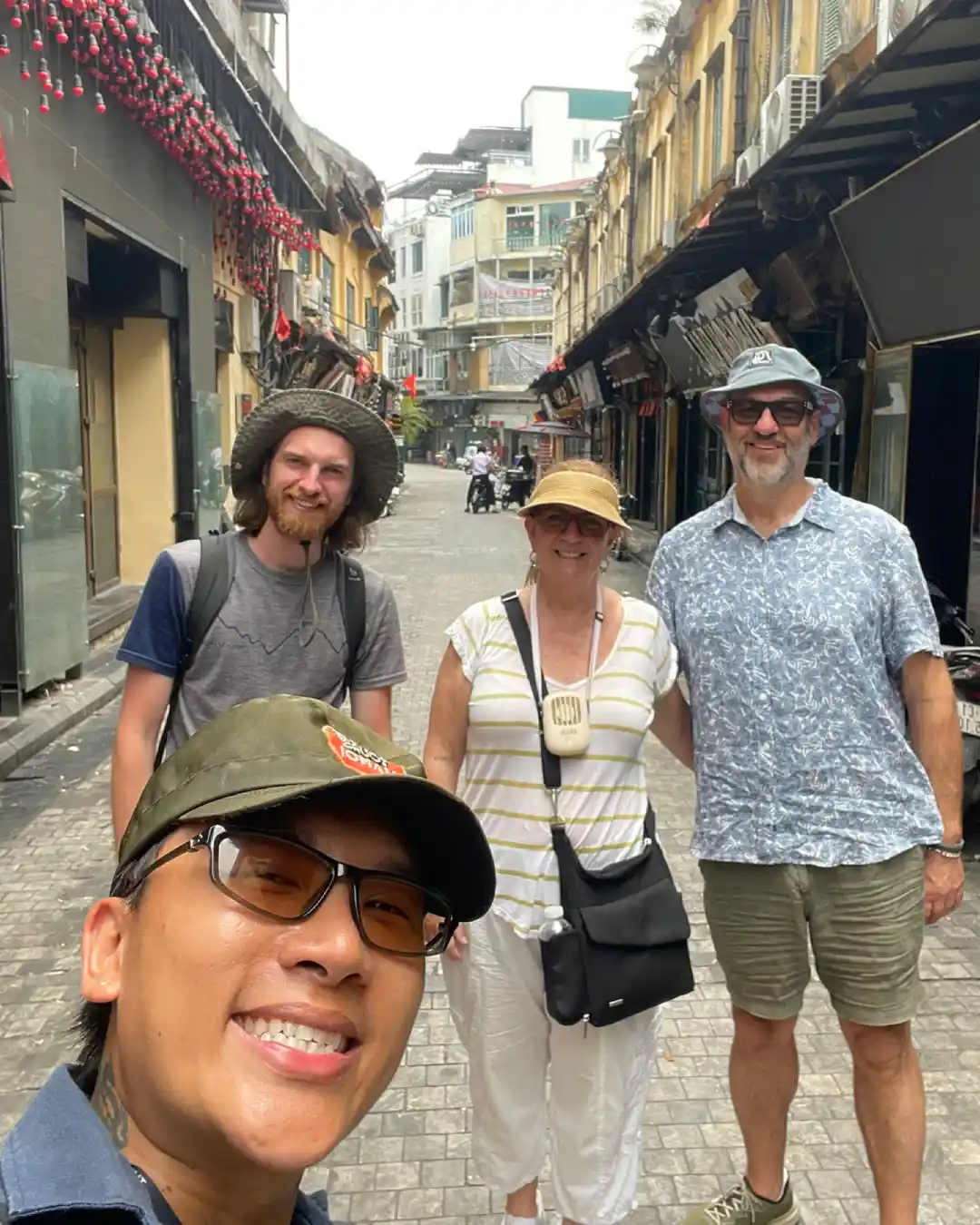
A photo journal from Hanoi — not a traveller review, and not proof that every detail in this guide happened on that walk.
Related content
Knowledge hub
Culture & History →Explore the history, traditions, religions and cultural influences that shaped Hanoi and Vietnam through the centuries.
Destination hub
Hanoi →Related stories
- Ca Trù in Hanoi: Chamber Song Between Court Memory and Living RevivalWhat ca trù singing is, why UNESCO placed it on the Urgent Safeguarding List in 2009, and where Hanoi visitors encounter revival ensembles without treating ritual song as background entertainment.
- Chèo Folk Theatre: Red River Delta Comedy on the Hanoi StageWhy chèo is northern Vietnam's spoken-and-sung folk theatre, how Hà Nội hosts national troupes, and why chèo is not UNESCO-inscribed — it appears among Viet Nam's files pending priority treatment on the UNESCO ICH state page.
- Trống Quân Folk Singing: Call-and-Response Songs of the Red RiverWhat trống quân duet singing is, how couples traded poetic riddles at festivals, and where Hanoi visitors might hear it during Tet and village communal house events.
- The History of Thang Long and Modern Hanoi: A Thousand Years of ChangeDiscover the history of Hanoi from the founding of Thang Long in 1010 to the modern capital of Vietnam, including dynasties, colonial heritage and cultural landmarks.
- Hanoi Water Puppet Theatre GuidePlan a Hanoi water puppet evening — Thang Long theatre basics, booking tips, seating, etiquette, tourist-trap honesty and how to pair a show with Old Quarter food and Hoan Kiem walks.
- Hanoi Old Quarter Guide: Streets, Food & Walking LogicNavigate Hanoi's Old Quarter with local walking logic — guild streets, markets, food timing, night energy and how to pair the lake without turning the district into a checklist sprint.