Hanoi Accessible Travel Guide: Mobility, Temples & Transport
Plan an accessible Hanoi visit — honest Old Quarter limits, lift hotels, GrabCar discipline, temple access and paced itineraries without false promises.
By Dinh15 min readHanoi, Vietnam
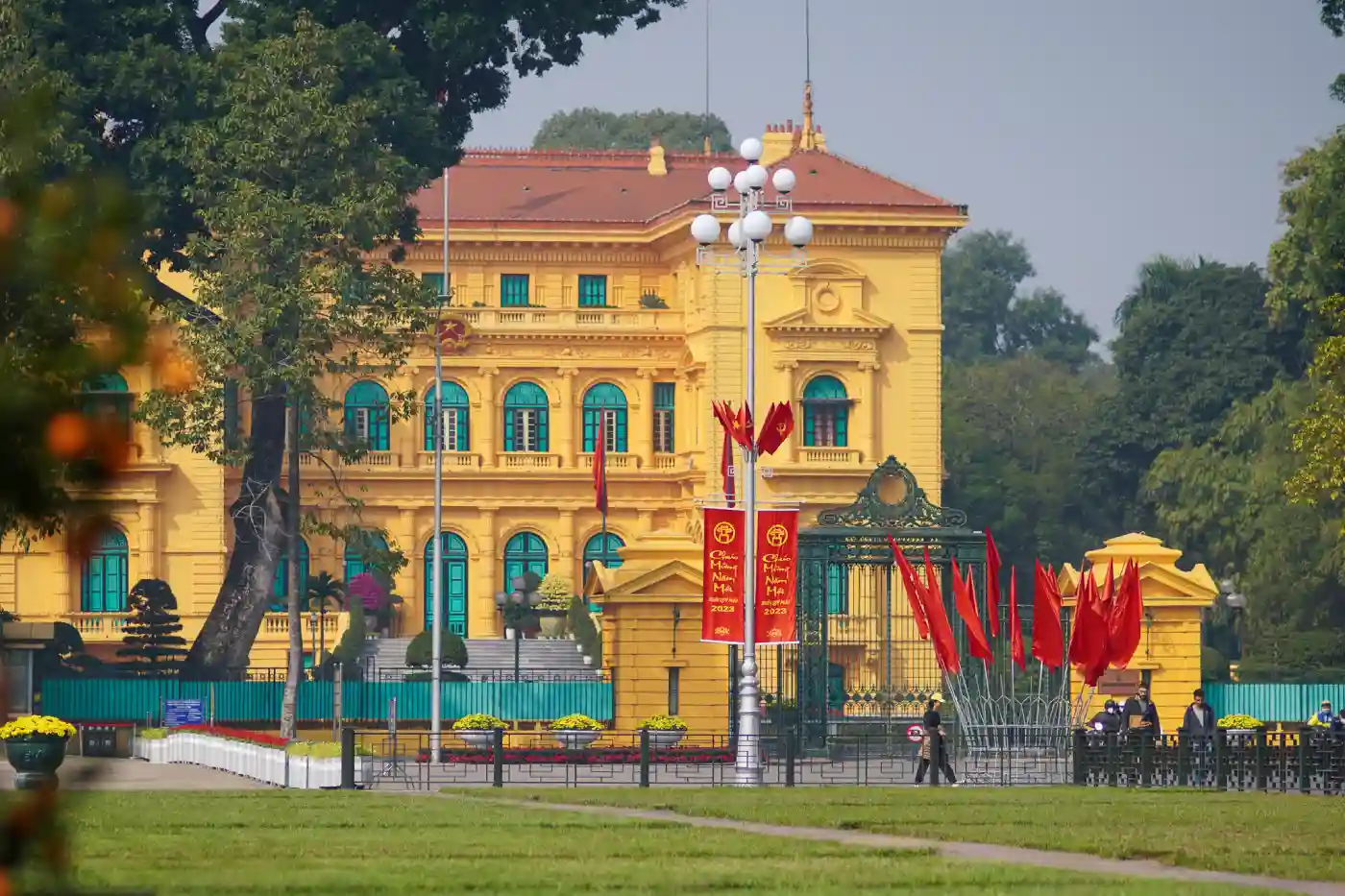
Introduction — answer first
Travellers ask: "Is Hanoi wheelchair accessible?" Partially — not uniformly. Hoan Kiem Lake's paved loop, several Ba Dinh museums, the Vietnam Museum of Ethnology, and modern hotels with lifts offer the strongest access. The Old Quarter's tube houses, stepped thresholds, and motorbike-packed ngõ alleys are difficult for wheelchairs and painful for walkers with limited stamina. Temples including Temple of Literature and pagodas often require steps at entrance gates — confirm ramp or side access locally; do not trust stock photos.
This page is Hanoi's accessibility planning guide — honest limits, workable routes, hotel filters, and transport choices — not a promise of European-grade continuous rollability. For general city rhythm on three days, adapt the 3-day Hanoi itinerary with one major sight per half-day instead of two. For family pacing overlap, see Hanoi family travel guide.
Paul's editorial line: "Accessible Hanoi" means strategic routing and GrabCar discipline — not every iconic alley on every blog list.
Set expectations before you fly
What Hanoi does well
| Strength | Examples |
|---|---|
| Flat lakeside paths | Hoan Kiem Lake loop — morning exercisers, paved sections |
| Modern museum buildings | Vietnam Museum of Ethnology — ramps, wide halls |
| GrabCar door-to-door | Reduces ngõ walking — taxi and Grab guide |
| International hotels | Lifts, roll-in showers in tier — confirm when booking |
| French Quarter boulevards | Wider sidewalks than Old Quarter — still uneven |
What Hanoi struggles with
| Challenge | Impact |
|---|---|
| Stepped curbs | Common — no consistent cutouts |
| Old Quarter ngõ | 1–2 m wide, motorbikes, market stalls |
| Temple / pagoda steps | Temple of Literature, Tran Quoc, One Pillar |
| Mausoleum queues | Standing time, security — confirm priority access locally |
| Street-food stools | Low plastic chairs — difficult transfer |
| Heat and humidity | May–September fatigue — plan indoor midday |
Anna: Accessibility here is itinerary design — not a single "accessible Hanoi" app.
Hotel selection — lifts, showers, location
Where you sleep determines daily friction more than any single sight.
Filters when booking
- Elevator confirmed — email hotel: "Lift to all floors? Room on floor accessible if lift fails?"
- Roll-in or step-free shower — photos lie; ask for recent room photo
- Ground-floor room — if lift uncertain; trade street noise for access
- Grab pickup on main road — not deep inside ngõ — Dinh: pin intersection, not alley midpoint
- Distance to flat sights — Hoan Kiem fringe or French Quarter often beats deep Old Quarter shophouse
Full district tradeoffs: where to stay in Hanoi. Paul recommends French Quarter or Hoan Kiem east fringe for mobility-reduced travellers who still want Quarter atmosphere without five ngõ exits daily.
Chains vs boutique
| Type | Access pros | Access cons |
|---|---|---|
| International chain | Predictable lifts, wider doors | Farther from street-food core |
| Heritage boutique Old Quarter | Atmosphere | Stairs, no lift common |
| West Lake (Tay Ho) | Quieter, some ramp hotels | Grab to Old Quarter daily |
Confirm airport transfer vehicle fits wheelchair if applicable — getting from Hanoi airport to the city centre for arrival; departure mirror in airport transfer guides.
Transport — GrabCar, taxi, and what to avoid
From Hanoi taxi and Grab guide:
Default: GrabCar — air conditioning, trunk space, drop at nearest drivable corner to ngõ hotel. Driver walks last 50 m with you only if you ask — normal stop short of alley.
Avoid GrabBike for mobility-limited travellers — mounting pillion with balance issues is unsafe.
Mai Linh / G7 taxi from hotel rank when app fails — insist meter, receipt if needed.
Avoid cyclo unless route and price pre-agreed — unstable boarding, traffic exposure.
Shaw: Build 10-minute buffer for every Grab — pickup pin errors cost more when walking detours hurt.
Airport and station
Noi Bai and Hanoi Railway Station — request larger vehicle in app notes or hotel booking. Bus 86 not recommended for wheelchair users — steps, crowding — confirm locally if policies changed.
Accessible-friendly sights — tier list
Confirm hours, ramps, and closure days locally before taxi — Vietnamese sites upgrade slowly.
Tier 1 — Strongest access
| Sight | Access notes | Link |
|---|---|---|
| Hoan Kiem Lake loop | Paved path segments; Ngoc Son bridge has steps to temple — lake loop alone works | Hoan Kiem guide |
| Vietnam Museum of Ethnology | Ramps, indoor AC, outdoor houses mixed — some steps to stilt houses | Ethnology guide |
| Hoa Lo Prison museum | Mostly indoor, historical exhibit — confirm current layout locally | |
| Fine Arts Museum | Elevator in main building — verify on arrival | |
| French Quarter walk | Opera house exterior, Trang Tien — wide boulevard vs ngõ |
Tier 2 — Partial access
| Sight | Access notes | Link |
|---|---|---|
| Temple of Literature | Courtyards beautiful; stone steps at gates — partial view from lower courtyard possible | Temple guide |
| Ho Chi Minh Mausoleum complex | Flat paths in parts; mausoleum queue standing; stilt house may have steps | |
| Thang Long Citadel | Mixed terrain — flag tower steps | Ba Dinh day guide |
| West Lake shore | Tran Quoc Pagoda — steps; lakeside walk segments flat |
Tier 3 — Difficult
| Sight | Why |
|---|---|
| Deep Old Quarter ngõ tours | Stairs, crowds, no continuous ramp path |
| Train Street | Narrow, illegal track access — avoid regardless |
| Water puppet theatre | Fixed seating — aisle access varies by venue — confirm |
| Street-food deep alleys | Stools, wet floors |
Anna's accessible three-day skeleton adapts 3-day itinerary:
- Day 1: Hoan Kiem loop + French Quarter edge — no deep ngõ mandate
- Day 2: Ethnology morning + mausoleum exterior grounds if queue unsuitable — confirm locally
- Day 3: Museum or West Lake flat segment — one sight only afternoon
Temples, pagodas, and etiquette
Vietnamese etiquette for travelers applies regardless of mobility — modest dress, calm voice, ask before photos of worshippers.
Steps are cultural architecture — not oversight. Some sites add temporary ramps for events — rare. Do not expect universal wheelchair lifts at heritage pagodas.
| Approach | Recommendation |
|---|---|
| Full entry priority | Email tour operator or site day-before — Vietnamese groups sometimes assist |
| View from gate | Valid experience — courtyard photos, incense atmosphere |
| Alternative same day | Pair failed temple with flat museum |
Temple of Literature rewards lower courtyard even if upper stelae garden unreachable — confirm ticket desk advice locally.
Tours — pacing and route negotiation
Pre-book with written access request:
| Tour | Adaptation |
|---|---|
| Hanoi city tour | Vehicle-based — best for low walking days |
| City highlights walking tour | Request flat route, slow pace, fewer stops — shorter distance |
| Free tip tours | Often fast youth pace — may not suit — confirm before joining |
Anna: Private half-day beats group marathon — cost trade for energy saved.
Dinh: Morning tours beat afternoon heat — May–September critical for stamina.
Cross-read Hanoi family travel guide — family tours often already slow — ask same operator.
Food and rest — practical access
Street-food culture assumes low plastic stools. Accessible-friendly patterns:
- Hotel breakfast reliable — energy bank for day
- French Quarter cafés — chairs, AC — egg coffee without ngõ crawl
- Mall food courts — uninspired but seated — Trang Tien Plaza area
- Hotel restaurant dinner — one night OK — not failure
- Grab to known seated pho — not random stall
Explore Hanoi on a budget links budget — accessibility sometimes costs slightly more for Grab and hotels; honest editorial.
Medical, equipment, and emergencies
Bring what you rely on — rental wheelchairs limited in Hanoi; confirm with hotel or international clinic locally.
Pharmacies — Pharmacity chain common — basic supplies.
Hospitals — International clinics Vinmec, Family Medical — English possible; confirm insurance.
Power wheelchair battery — hotel lift and voltage OK — carry charger adapter per planning your trip to Hanoi electronics notes.
Confirm travel insurance covers mobility equipment — Shaw editorial standard.
Rain, heat, and seasonal access
From best time to visit Hanoi — season changes accessibility practically, not only comfort:
May–September: Heat and humidity reduce walking endurance — plan indoor museum midday, Grab between zones. Wet ngõ slippery — mobility aid users extra caution.
October–November: Best lake loop and boulevard weather — run accessible skeleton as written.
December–February: Cool — layer clothing for mausoleum queues; rain fine-mist common — paved paths still best.
Storms: Grab surge and flooded curb cuts — confirm hotel backup car; see Hanoi taxi and Grab guide surge section.
Anna: Accessibility planning includes weather — same sight, different season, different energy budget.
Travelling with a companion or carer
Companion roles: One able-bodied partner does not eliminate planning need — both benefit from GrabCar default and seated lunches.
| Task | Split suggestion |
|---|---|
| Hotel research | Companion verifies lift photos; traveller verifies shower |
| Grab booking | Companion pins corner; traveller boards first |
| Temple attempts | Companion scouts steps; traveller waits at accessible point |
| Market shopping | Seated companion guards bags while other browses — etiquette |
Group tours: private vehicle day — Hanoi city tour — beats group march when one member needs pace control.
Cross-read Hanoi family travel guide for multi-generational trips where grandparent mobility overlaps this page.
Sample accessible pacing — three days
Adapt from hanoi itinerary 3 days:
Day 1 — Lake and boulevard
- Morning: Hoan Kiem Lake flat loop — 60–90 min
- Midday: French Quarter café — AC rest
- Afternoon: Opera exterior, post office — wide sidewalks
- Evening: Hotel or boulevard restaurant — skip deep ngõ food crawl Day 1
Day 2 — Museum and Ba Dinh exterior
- Morning: Vietnam Museum of Ethnology — 2–3 hours
- Lunch: museum café or Grab to Ba Dinh
- Afternoon: Mausoleum complex grounds if queue unsuitable — or Temple of Literature partial
- Evening: Grab home — early sleep
Day 3 — Choice buffer
- Option A: Hoa Lo Prison + shopping Trang Tien
- Option B: West Lake flat shore segment only — skip pagoda steps
- Option C: City tour vehicle day — consolidate sights
One major block per half-day — success metric.
Closing — strategic Hanoi, honestly told
Accessible travel in Hanoi means choosing flat wins — lake loops, ethnology halls, GrabCar discipline, lift hotels — and releasing guilt about ngõ alleys you cannot roll. The capital rewards slow pacing and one great museum day more than thirty stepped temples photographed from bus windows. Build from Hoan Kiem outward, confirm every ramp locally, and treat the 3-day itinerary as modular blocks not a marathon contract.
Read next: Hanoi family travel guide · where to stay in Hanoi · Hanoi taxi and Grab guide · Vietnamese etiquette for travelers
Book: Hanoi city tour · Hanoi city highlights walking tour — note pacing when booking
FAQ — quick answers
Question: Is Hanoi wheelchair friendly?
Answer: Partially — not city-wide. Hoan Kiem lake path, Vietnam Museum of Ethnology, and many French Quarter boulevards work well. Old Quarter ngõ and most temple entrances are step-heavy. Plan strategically; confirm locally.
Question: Can I visit the Old Quarter in a wheelchair?
Answer: Perimeter streets yes; deep alleys difficult. Hang Dao and lake-edge routes are most realistic. Use Grab to Quarter edge; avoid "all 36 streets" expectations — Old Quarter guide context.
Question: Which Hanoi museum is most accessible?
Answer: Vietnam Museum of Ethnology — ramps, indoor AC, best major museum access. Outdoor ethnic houses vary — some steps.
Question: Is the Temple of Literature wheelchair accessible?
Answer: Limited — stone steps at gates. Lower courtyard may be partially reachable; upper stelae garden often not. Confirm on arrival — Temple of Literature guide.
Question: Should I stay in the Old Quarter for accessibility?
Answer: Often no — prefer French Quarter or Hoan Kiem fringe with confirmed lift. Deep Old Quarter heritage hotels frequently lack elevators — where to stay in Hanoi.
Question: Is Grab safe for travellers with mobility limits?
Answer: GrabCar yes — specify pickup pin on drivable corner. Avoid GrabBike. Details: Hanoi taxi and Grab guide.
Question: Are Hanoi walking tours suitable?
Answer: Only with pace and route request. Hanoi city tour vehicle days suit low-walking travellers better than fast highlights walks unless customised.
Question: How many days do I need for accessible Hanoi?
Answer: Three full days minimum at reduced pace — adapt 3-day itinerary to one sight per half-day. Add a fourth buffer for heat or closure days.
Local tips
- →Email hotel access questions before paying — lift photo, shower, pickup pin on main road.
- →GrabCar every inter-neighbourhood move — conserve steps for sights that reward them — Grab guide.
- →Ethnology over citadel if choosing one — Ethnology guide access wins for many travellers.
- →Morning Old Quarter perimeter only — deep ngõ optional, not mandatory.
Good to know
- Hanoi Accessible Travel Guide assumes typical 2026 transfer times — festivals and storms add buffer needs.
- Hanoi Accessible Travel Guide: Family, solo and accessible variants of Hanoi travel change the same skeleton plan.
- Near Hanoi Accessible Travel Guide, Hanoi street vendors often need small cash even when hotels take cards.
- Tet and festival weeks change opening patterns for Hanoi Accessible Travel Guide — verify that week’s hours.
Before you go
- Before you go: save offline copies of Hanoi Accessible Travel Guide and key vouchers.
- Tell travelling companions the “must keep” days from Hanoi Accessible Travel Guide versus optional swaps.
- Screenshot offline maps for the blocks around Hanoi Accessible Travel Guide before you enter dense Hanoi lanes.
Common mistakes
- ✕Assuming "Old Quarter hotel" equals accessible — Heritage shophouses often stair-only — where to stay.
- ✕Following standard 3-day checklist literally — 3-day itinerary pace breaks mobility — adapt.
- ✕GrabBike to save money — False economy for balance-limited travellers.
- ✕Skipping museum for only temples — Temples step-heavy; ethnology delivers culture with ramps.
Practical information
- How to get there
- See Getting there / planning sections in the article body.
- Best time to visit
- Follow seasonal and daily timing advice in the Quick Facts and body.
- Suggested itinerary
- Use the itinerary and pairing sections in the article, then book related tours if logistics are heavy.
- Nearby attractions
- Related destination hubs
- Hanoi planning Stories
- Northern Vietnam itinerary
Frequently asked questions
- Is Hanoi wheelchair friendly?
- Partially — not city-wide. Hoan Kiem lake path, Vietnam Museum of Ethnology, and many French Quarter boulevards work well. Old Quarter ngõ and most temple entrances are step-heavy. Plan strategically; confirm locally.
- Can I visit the Old Quarter in a wheelchair?
- Perimeter streets yes; deep alleys difficult. Hang Dao and lake-edge routes are most realistic. Use Grab to Quarter edge; avoid "all 36 streets" expectations — Old Quarter guide context.
- Which Hanoi museum is most accessible?
- Vietnam Museum of Ethnology — ramps, indoor AC, best major museum access. Outdoor ethnic houses vary — some steps.
- Is the Temple of Literature wheelchair accessible?
- Limited — stone steps at gates. Lower courtyard may be partially reachable; upper stelae garden often not. Confirm on arrival — Temple of Literature guide.
- Should I stay in the Old Quarter for accessibility?
- Often no — prefer French Quarter or Hoan Kiem fringe with confirmed lift. Deep Old Quarter heritage hotels frequently lack elevators — where to stay in Hanoi.
- Is Grab safe for travellers with mobility limits?
- GrabCar yes — specify pickup pin on drivable corner. Avoid GrabBike. Details: Hanoi taxi and Grab guide.
- Are Hanoi walking tours suitable?
- Only with pace and route request. Hanoi city tour vehicle days suit low-walking travellers better than fast highlights walks unless customised.
- How many days do I need for accessible Hanoi?
- Three full days minimum at reduced pace — adapt 3-day itinerary to one sight per half-day. Add a fourth buffer for heat or closure days.
From the road
Related real moment
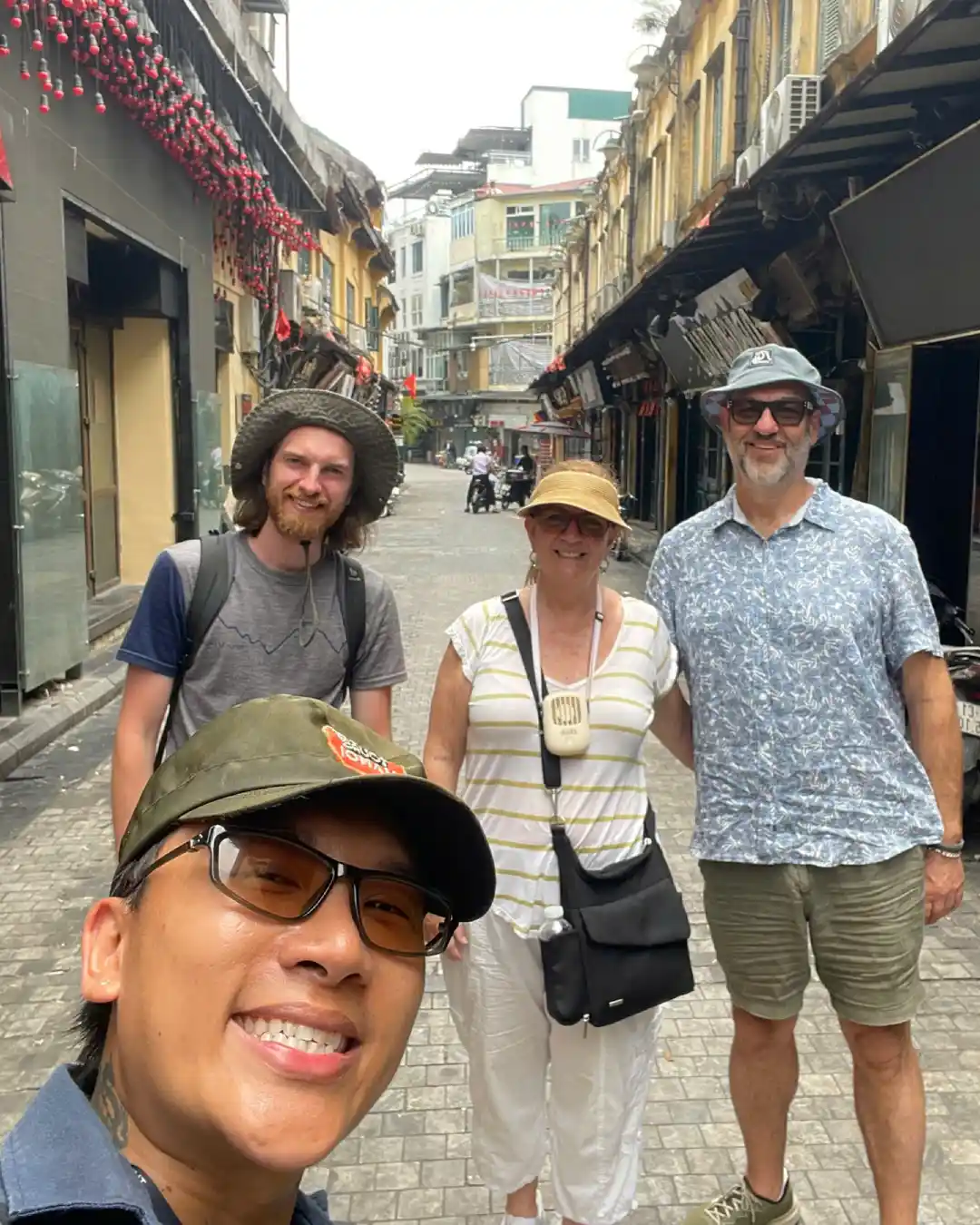
A photo journal from Hanoi — not a traveller review, and not proof that every detail in this guide happened on that walk.
Related content
Destination hub
Hanoi →Related stories
- Hanoi Family Travel Guide: Kids, Pacing & Kid-Friendly DaysVisit Hanoi with children — realistic pacing, kid-friendly sights, food tips, walking tours and day-trip choices without adult-only itinerary assumptions.
- Vietnamese Etiquette for Travelers: Temples, Dining & PhotosTravel Vietnam with respectful habits — temple dress, dining manners, photography consent, tipping norms and how etiquette changes between Old Quarter streets and sacred sites.
- Hanoi Taxi and Grab Guide: Apps, Ranks & Fair FaresChoose Grab, Be or metered taxis in Hanoi — app tips, rank etiquette, typical fare ranges and how city rides differ from Noi Bai airport transfers.
- Where to Stay in Hanoi: Neighbourhood Guide for Every TravellerChoose the right Hanoi neighbourhood before you book — Old Quarter, French Quarter, West Lake, Ba Dinh and more — with honest comparisons for families, food lovers, nightlife and budget.
- Hanoi Itinerary 3 Days: Old Quarter, Ba Dinh & BeyondA practical 3-day Hanoi city itinerary — Old Quarter and Hoan Kiem, Ba Dinh heritage, French Quarter or craft villages — with walking tours, food stops and honest pacing.
- Hanoi Solo Travel Guide: Safety, Pacing & Social DaysTravel Hanoi solo with confidence — neighbourhood bases, walking tours, night safety, Grab habits and how free tours accelerate orientation on day one.