Traditional Vietnamese Calligraphy in Hanoi
Thư pháp and the Van Mieu spring calligraphy festival — ritual context distinct from everyday Temple of Literature sightseeing.
14 min readHanoi, Vietnam
Introduction — answer first
Hanoi calligraphy peaks around Tết as the xin chữ đầu năm custom — auspicious characters (Phúc, Lộc, Thọ) written with brush and ink. Municipal sources describe the organised Hội chữ Xuân at Văn Miếu – Quốc Tử Giám (Hồ Văn area) with screened calligraphers — distinct from everyday Temple of Literature sightseeing. Historical sidewalk "phố ông đồ" framing still appears in journalism; current official events centre on Văn Miếu per recent culture-department releases.
We publish no calligraphy price list — fees vary by size, language (Hán or quốc ngữ), and festival rules. Compare year-round book streets: Dinh Le and 19 December Book Street.
Etiquette
Requesting characters is a spiritual/customary act in sources — not a performance for social media without permission. See etiquette guide.
Local tips
- →Read Traditional Vietnamese Calligraphy in Hanoi before you walk the related district — context changes what you notice in Hanoi.
- →Pair one museum or heritage stop with café time so Traditional Vietnamese Calligraphy in Hanoi does not become lecture fatigue.
- →Group Traditional Vietnamese Calligraphy in Hanoi with nearby sights in the same Hanoi district to cut cross-town Grab time.
- →Walk to Traditional Vietnamese Calligraphy in Hanoi early; Hanoi heat and scooter density rise after 09:30.
Good to know
- Traditional Vietnamese Calligraphy in Hanoi spans living culture, not only monuments — markets and meals are part of the evidence.
- Festival timing can reshape access to sites mentioned in Traditional Vietnamese Calligraphy in Hanoi.
- Near Traditional Vietnamese Calligraphy in Hanoi, Hanoi street vendors often need small cash even when hotels take cards.
- Tet and festival weeks change opening patterns for Traditional Vietnamese Calligraphy in Hanoi — verify that week’s hours.
Before you go
- No published calligraphy fee list.
Common mistakes
- ✕Skimming Traditional Vietnamese Calligraphy in Hanoi then expecting a single façade to “explain” Hanoi history.
- ✕Photographing worship or private moments without consent while exploring Traditional Vietnamese Calligraphy in Hanoi themes.
- ✕Cramming Traditional Vietnamese Calligraphy in Hanoi into a multi-district sprint that ignores Hanoi traffic reality.
- ✕Relying only on hotel concierge timing for Traditional Vietnamese Calligraphy in Hanoi without a backup route.
Practical information
- How to get there
- Văn Miếu area in Tết season.
- Best time to visit
- Lunar New Year window.
Frequently asked questions
- Year-round calligraphy?
- Festival concentration is Tết-season. Book streets offer related culture but not full ông đồ rows daily.
- Same as Temple of Literature tour?
- Temple tour is heritage architecture. This slug is calligraphy custom and festival context.
- Walking tour include calligraphy?
- HTM heritage walks do not guarantee festival access or ông đồ commissions.
From the road
Related real moment
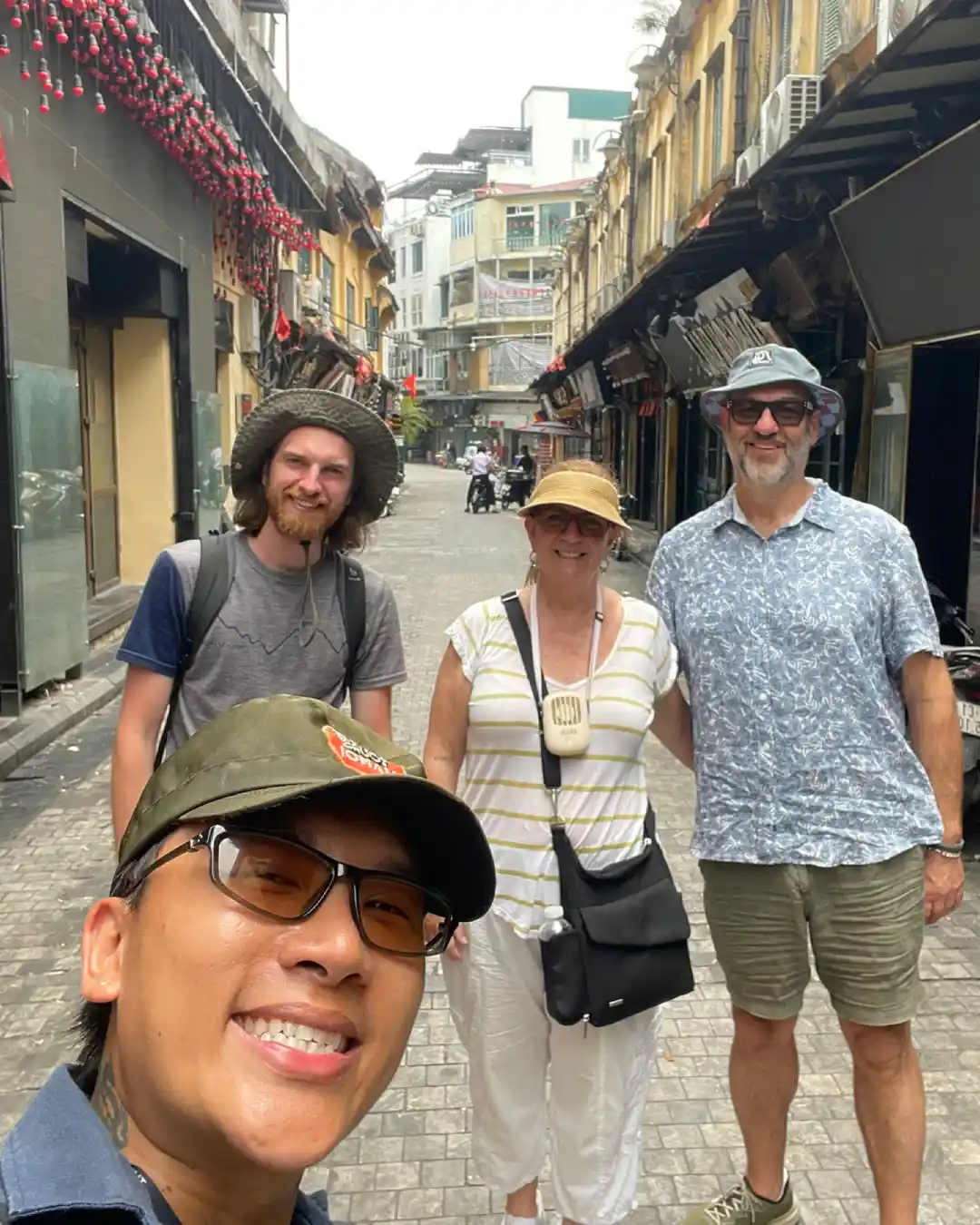
A photo journal from Hanoi — not a traveller review, and not proof that every detail in this guide happened on that walk.
Related content
Knowledge hub
Culture & History →Explore the history, traditions, religions and cultural influences that shaped Hanoi and Vietnam through the centuries.
Destination hub
Hanoi →Related stories
- Tet in Hanoi: Lunar New Year Visitor GuidePlan Hanoi during Tet (Lunar New Year) — honest closure patterns, flower markets, transport spikes, etiquette and whether your dates should lean into festival atmosphere or avoid peak shutdown.
- Dinh Le Book Street: Hanoi's Reading CultureWhat Hanoi's book street around Dinh Le and Trang Tien offers, what to buy as cultural souvenirs, and how it fits a lake walk.
- 19 December Book Street: Hanoi's Dedicated Literary PromenadeWhat Phố Sách Hà Nội on 19/12 Street is — opened 2017 — and how it differs from the Dinh Le shop cluster.
- Confucian Influences on Vietnamese CultureUnderstand Confucian influence in Vietnamese culture — education ideals, social values and why the Temple of Literature matters — then visit the entity page for practical courtyard guidance.
- Temple of Literature Hanoi: Vietnam's First UniversityVisit the Temple of Literature — courtyard sequence, tickets, dress code, photo etiquette and how Confucian heritage connects to a practical Ba Dinh half-day.
- Vietnamese Etiquette for Travelers: Temples, Dining & PhotosTravel Vietnam with respectful habits — temple dress, dining manners, photography consent, tipping norms and how etiquette changes between Old Quarter streets and sacred sites.